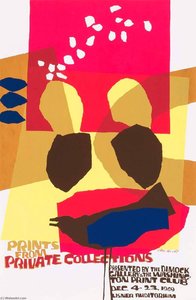
Koop een digitale afbeelding in hoge resolutie met verbeterde kwaliteit, die veel superieur is aan de online voorvertoning.
Elk bestand wordt met uiterste precisie voorbereid door onze interne specialisten, met behulp van geavanceerde tools en deskundige handmatige retouche. Wij garanderen dat elke afbeelding een uitzonderlijke helderheid, nauwkeurige kleurweergave en verfijnde details bezit.
Het uiteindelijke bestand wordt binnen 72 uur per e-mail geleverd, geoptimaliseerd voor direct gebruik in professionele, redactionele en printomgevingen. Dit is dezelfde kwaliteit waarop vooraanstaande designstudio's, uitgevers en galerieën vertrouwen.
Download een bestand met hoge resolutie voor persoonlijke weergave, afdrukken en creatieve projecten. ( Bestel print Bestel handgeschilderde reproductie)
Wanneer u kiest voor BuyPopArt.com, ontvangt u niet alleen een afbeelding – u krijgt een professioneel verbeterd digitaal kunstwerk, met precisie vervaardigd en voorzien van een tevredenheidsgarantie. Dit is alles wat automatisch bij uw bestelling is inbegrepen:

Uw hoogwaardige digitale afbeeldingsbestand wordt binnen 72 uur na bestelling naar u gemaild – klaar voor direct gebruik.

Uw kunstwerk wordt professioneel geoptimaliseerd met behulp van geavanceerde AI-tools en handmatige bewerkingen, waardoor maximale details, helderheid en kleurnauwkeurigheid worden gegarandeerd.

Je bestand per ongeluk verwijderd of kwijtgeraakt? Geen zorgen – we sturen het u op elk gewenst moment gratis opnieuw toe.

Geniet direct van uw kunstwerk zonder invoerrechten, belastingen of verzendkosten – digitale downloads zijn altijd belastingvrij.

Met behulp van professionele hulpmiddelen en kleurbeheer zorgen wij ervoor dat uw digitale afbeelding de originele kleuren zo nauwkeurig mogelijk weergeeft.

Als u niet tevreden bent met uw digitale afbeelding, passen wij deze aan of storten wij 100% terug binnen 60 dagen – zonder vragen gesteld.

Niet tevreden? Ontvang binnen 60 dagen na ontvangst van uw digitale bestand uw volledige aankoopbedrag terug – zonder vragen te stellen.

Koop 3 afbeeldingen, bespaar 10% - Koop 5, bespaar 15% - Koop 10+, bespaar 20%. Ideaal voor creatieve projecten, galerieën en bureaus.

Born in Cape Town, South Africa, in 1953, Marlene Dumas’s life has been a journey of profound displacement and artistic reinvention. Her early years were shaped by the complexities of apartheid, an experience that would indelibly inform her work, not through overt political statements, but through a deeply felt exploration of identity, memory, and the human condition. Moving to Amsterdam in 1976, she established herself as one of the most significant figures in contemporary art, renowned for her intensely personal and often unsettling portraits – images that seem to simultaneously emerge from and transcend the realm of autobiography.
Dumas’s artistic trajectory began with a rigorous training in classical drawing at the Rhode Island School of Design. However, she quickly rejected academic conventions, seeking instead a more direct engagement with the raw materials of painting—pigment, canvas, and gesture. This shift is evident in her early work, characterized by a deliberate crudeness and a rejection of illusionistic representation. She began to build an extensive archive of images – photographs, magazine clippings, newspaper articles, and even portraits she’d drawn herself – which served as the foundation for her later paintings. These weren't mere source material; they were fragments of experience, echoes of lives lived, and potent symbols waiting to be reconfigured.
A pivotal moment in Dumas’s artistic development occurred in the early 1980s when she began working from photographs, a practice that would become central to her oeuvre. She rarely painted directly from life, instead relying on these found images as points of departure. This process allowed her to distance herself from specific individuals and transform them into archetypes – representations of vulnerability, desire, sorrow, and resilience. Her subjects are often ambiguous, their identities obscured by a deliberate lack of detail, inviting viewers to project their own experiences and emotions onto the canvas.
Dumas’s technique is characterized by a remarkable fluidity and spontaneity. She employs a variety of tools – brushes, palette knives, rags, even her hands – to apply paint in layers of varying thickness and texture. The surface of her paintings is rarely smooth; it's often marked by visible brushstrokes, drips, and the remnants of previous applications. This tactile quality invites close examination, encouraging viewers to trace the contours of the figures and decipher the stories embedded within the marks.
The use of color is equally significant. Dumas’s palette is typically muted – dominated by shades of gray, brown, blue, and ochre – but she frequently introduces bursts of vibrant color that disrupt the overall mood and draw attention to specific areas of the composition. These flashes of color can be interpreted as expressions of emotion, symbols of hope or despair, or simply as a reflection of the artist’s own subjective experience.
Crucially, Dumas's work is not about literal representation. It’s about capturing an *impression*, a feeling, a resonance. She often describes her process as “a dance,” a continuous negotiation between image and gesture, between memory and imagination. The paintings are not finished products but rather ongoing investigations – explorations of the complexities of human experience.
At the heart of Dumas’s work lies a profound meditation on identity—not as a fixed or stable entity, but as a fluid and ever-changing construct. Her portraits are not simply likenesses; they are explorations of how we perceive ourselves and others, how we construct narratives around our lives, and how those narratives shape our identities.
The recurring motif of the female figure in Dumas’s work is particularly compelling. These women are often depicted in states of vulnerability or isolation, their faces obscured by shadows or distorted features. They represent a spectrum of experiences – grief, longing, desire, and resilience—and invite viewers to contemplate the complexities of female identity.
Furthermore, Dumas's use of appropriated images raises questions about representation and authorship. By reworking existing photographs, she challenges traditional notions of originality and highlights the ways in which images can be manipulated and reinterpreted. Her work serves as a reminder that all art is, to some extent, derivative—a process of borrowing, transforming, and reimagining.
Throughout her career, Marlene Dumas has exhibited extensively in major museums and galleries around the world, including the Tate Modern, MoMA, Centre Pompidou, and the Guggenheim. Her work has been the subject of numerous retrospectives and monographs, solidifying her position as one of the most important artists of her generation.
Dumas’s influence extends far beyond the art world. Her paintings have resonated with audiences across a wide range of disciplines—literature, film, music, and performance art—demonstrating the power of her work to provoke thought and inspire creativity. She has received numerous awards and honors, including the Golden Lion at the Venice Biennale (1997) and the Hasselblad Foundation Grant (2018).
Marlene Dumas’s legacy is one of profound artistic integrity, intellectual rigor, and emotional depth. Her paintings continue to challenge viewers to confront uncomfortable truths about themselves and the world around them—a testament to her enduring power as an artist.

1953 -


Blijf op de hoogte van het laatste kunstnieuws, exclusieve aanbiedingen en decoratie-ideeën.
Vertel ons over uw project en onze kunstexperts geven u 3 gepersonaliseerde kunstsuggesties.
Wij stellen drie opties speciaal voor u samen – gratis!


 Voorvertoning
 Verstuur
 Delen
Delen
 Details bekijken

 Download
 Vergelijkbare items
 Röntgenonderzoek
 Diavoorstelling


 Lees meer