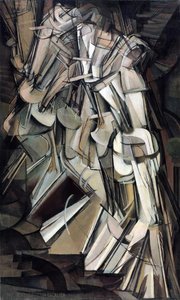
Met de hand geschilderd in olieverf op canvas in uw gewenste maat en lijst, op bestelling gemaakt door onze kunstenaars. ( Bestel print Koop afbeelding)
Kies uit onze vooraf ingestelde maten die overeenkomen met de originele verhoudingen van het kunstwerk.

U kunt uw eigen afmetingen invoeren om in een specifieke lijst of ruimte te passen. Als de door u gekozen maat niet overeenkomt met de verhoudingen van het originele beeld, zullen we het kunstwerk bijsnijden of het schilderij uitbreiden met extra handgeschilderde elementen. Een digitale mockup wordt ter goedkeuring naar u verzonden voordat de productie begint.
Houd er rekening mee dat de preview op het scherm niet de werkelijke uitsnede of uitbreiding weergeeft. Alleen de mockup toont de uiteindelijke compositie nauwkeurig.
Hoewel aangepaste afmetingen mogelijk zijn, raden we aan een maat uit de vooraf gedefinieerde lijst te selecteren om de originele verhoudingen te behouden.
Wereldwijde levering () binnen 3 tot 4 weken in plaats van de standaard 5 weken. (16 augustus). Zonder concessies aan de kwaliteit.


Trébuchet (Trap)
Afmetingen reproductie
In the quiet intersection of domesticity and disruption lies Marcel Duchamp’s Trébuchet (Trap), a work that defies the traditional boundaries of sculpture to exist as a profound philosophical inquiry. At first glance, the piece presents an unassuming silhouette: a simple wooden plank punctuated by four strategically placed metal hooks. Yet, to look upon this work is to engage with one of the most radical shifts in twentieth-century art history. This is not merely an object of wood and metal; it is a readymade, a concept that Duchamp pioneered to elevate the mundane into the realm of the monumental. The piece captures a moment where the utilitarian becomes poetic, inviting the viewer to reconsider the very objects that populate our daily lives.
The history of this particular iteration is as captivating as its form. While the conceptual seeds were sown in 1917 with an original version—a lost coat rack that famously cluttered Duchamp's studio floor—the 1964 version stands as a deliberate, reconstructed meditation on that initial impulse. Duchamp recounted how the original object, constantly obstructing his path, drove him to a state of near-madness, prompting the thought: "If it wants to stay on the floor, all right, I’m going to nail it." This act of "nailing down" the obstacle transformed a nuisance into a masterpiece, turning a functional household item into a permanent, sculptural statement that challenges our relationship with space and movement.
Technically, the sculpture relies on a stark, minimalist aesthetic that finds beauty in its raw, industrial honesty. The choice of materials—the organic warmth of the wood contrasted against the cold, precise rigidity of the metal hooks—creates a subtle tension within the composition. There is no ornate decoration here; instead, the artistry resides in the deliberate placement and the textural dialogue between the grain of the timber and the smooth, unyielding surface of the hardware. For the collector or the interior designer, this piece offers a sophisticated architectural element that brings a sense of structured minimalism to any curated space.
Beyond its physical presence, Trébuchet is rich with layered symbolism. The title itself evokes the medieval siege engine, suggesting a calculated strategy and the sudden, forceful impact of an idea. In the lexicon of chess—an obsession that permeated much of Duchamp’s later work—a "trebuchet" refers to a pawn placed to trip an opponent. This linguistic pun is physically manifested in the sculpture; it is a piece designed to "trip up" the viewer, both mentally and, metaphorically, physically. The hooks, which might resemble the rungs of a ladder or the pegs of a coat rack, suggest themes of aspiration and upward mobility, yet their fixed, grounded nature simultaneously hints at entrapment and the constraints of modern existence.
For those seeking to infuse their environment with intellectual depth and avant-garde elegance, a high-quality reproduction of Trébuchet (Trap) serves as more than just decoration; it acts as a conversation starter. It is an invitation to contemplate the thin line between art and life, between the obstacle and the masterpiece. Whether placed in a contemporary gallery setting or integrated into a sophisticated residential interior, the work commands attention through its quiet authority and historical weight.
Owning a piece that embodies the spirit of Dadaism allows one to celebrate the rebellious, transformative power of the human intellect. It is an investment in a legacy of innovation—a tribute to the artist who dared to look at a common object and see not just a tool, but a revolution. In every curve of the wood and every point of the metal, Trébuchet continues to perform its original function: it catches the eye, interrupts the mundane, and traps the wandering mind in a state of beautiful, permanent wonder.


1887 - 1968 , Frankrijk

Discover the art of minimalist living with our expert guide to curating sophisticated interiors. Learn how to use sculptural depth, intentional color palettes, and timeless statement pieces to transform your home into a serene, high-end sanctuary of modern elegance.


Blijf op de hoogte van het laatste kunstnieuws, exclusieve aanbiedingen en decoratie-ideeën.
Vertel ons over uw project en onze kunstexperts geven u 3 gepersonaliseerde kunstsuggesties.
Wij stellen drie opties speciaal voor u samen – gratis!


 Verstuur
 Delen
Delen
 Details bekijken

 Download
 Vergelijkbare items
 Diavoorstelling


 Lees meer




































 De optie voor glas is alleen beschikbaar bij een formaat kleiner dan 110 cm.