

Koop een digitale afbeelding in hoge resolutie met verbeterde kwaliteit, die veel superieur is aan de online voorvertoning.
Elk bestand wordt met uiterste precisie voorbereid door onze interne specialisten, met behulp van geavanceerde tools en deskundige handmatige retouche. Wij garanderen dat elke afbeelding een uitzonderlijke helderheid, nauwkeurige kleurweergave en verfijnde details bezit.
Het uiteindelijke bestand wordt binnen 72 uur per e-mail geleverd, geoptimaliseerd voor direct gebruik in professionele, redactionele en printomgevingen. Dit is dezelfde kwaliteit waarop vooraanstaande designstudio's, uitgevers en galerieën vertrouwen.
Download een bestand met hoge resolutie voor persoonlijke weergave, afdrukken en creatieve projecten. ( Bestel print Bestel handgeschilderde reproductie)
Wanneer u kiest voor BuyPopArt.com, ontvangt u niet alleen een afbeelding – u krijgt een professioneel verbeterd digitaal kunstwerk, met precisie vervaardigd en voorzien van een tevredenheidsgarantie. Dit is alles wat automatisch bij uw bestelling is inbegrepen:

Uw hoogwaardige digitale afbeeldingsbestand wordt binnen 72 uur na bestelling naar u gemaild – klaar voor direct gebruik.

Uw kunstwerk wordt professioneel geoptimaliseerd met behulp van geavanceerde AI-tools en handmatige bewerkingen, waardoor maximale details, helderheid en kleurnauwkeurigheid worden gegarandeerd.

Je bestand per ongeluk verwijderd of kwijtgeraakt? Geen zorgen – we sturen het u op elk gewenst moment gratis opnieuw toe.

Geniet direct van uw kunstwerk zonder invoerrechten, belastingen of verzendkosten – digitale downloads zijn altijd belastingvrij.

Met behulp van professionele hulpmiddelen en kleurbeheer zorgen wij ervoor dat uw digitale afbeelding de originele kleuren zo nauwkeurig mogelijk weergeeft.

Als u niet tevreden bent met uw digitale afbeelding, passen wij deze aan of storten wij 100% terug binnen 60 dagen – zonder vragen gesteld.

Niet tevreden? Ontvang binnen 60 dagen na ontvangst van uw digitale bestand uw volledige aankoopbedrag terug – zonder vragen te stellen.

Koop 3 afbeeldingen, bespaar 10% - Koop 5, bespaar 15% - Koop 10+, bespaar 20%. Ideaal voor creatieve projecten, galerieën en bureaus.
Mark Rothko's "Untitled 48" isn’t a painting that demands immediate, literal interpretation. Instead, it invites a prolonged engagement, a quiet contemplation of color and form as they wrestle with fundamental human experiences. Born in 1903 amidst the anxieties of a Jewish family in Latvia—a landscape marked by displacement and political unrest—Rothko carried within him a profound sensitivity to suffering, a theme that would become a recurring motif throughout his career. This early environment instilled a deep awareness of the complexities of existence, shaping his artistic vision long before he began exploring the luminous fields of color that would define his mature style. “Untitled 48” feels like a distillation of this inner world—a visual echo of the emotional turbulence and searching spirit that fueled his creative process.
The work exists as a study, or perhaps an early iteration, of Rothko’s later color field paintings. It's characterized by loose, gestural lines and washes of layered paint, creating a dynamic composition that eschews traditional notions of perspective and focal points. The canvas isn’t dominated by a single image; rather, it presents a dense visual field—a chaotic yet strangely harmonious arrangement of amorphous shapes and muted colors. The horizontal band at the bottom acts as a grounding element, dividing the space while simultaneously suggesting an underlying structure, punctuated by vertical forms that emerge from its base.
Rothko’s palette in “Untitled 48” is deliberately restrained—a symphony of grays, browns, creams, and subtle pinks. These earthy tones are punctuated by flashes of red and blue, creating a delicate balance between warmth and coolness. The application of paint itself is crucial to understanding the work's character. It appears remarkably quick and spontaneous, as if Rothko were driven by an urgent impulse rather than meticulously planned composition. The texture is layered and uneven—a testament to the use of washes and scribbled marks that contribute to a sense of roughness and immediacy. The technique suggests a deliberate rejection of polished surfaces, favoring instead a raw, tactile quality.
Notice how Rothko doesn’t attempt to define the shapes within these color fields; they remain ambiguous, almost dissolving into one another. This lack of precision is intentional—Rothko sought to evoke an emotional response rather than create representational images. The suggestion of facial features – fleeting glimpses of eyes and mouths – adds a layer of psychological complexity, hinting at suppressed emotions or hidden identities. These fragments are not portraits in the traditional sense but rather symbolic representations of the human condition.
“Untitled 48” is often interpreted as an exploration of anxiety, tension, and perhaps even psychological turmoil. The chaotic lines and fragmented forms resonate with a sense of inner conflict—a feeling that Rothko himself experienced throughout his life. His early experiences in Latvia, marked by displacement and loss, undoubtedly informed this emotional landscape. The work can be seen as a visual manifestation of the existential questions he grappled with: mortality, trauma, and the persistent search for meaning in a seemingly indifferent universe. It’s not a comfortable painting; it demands engagement and invites viewers to confront their own anxieties and uncertainties.
Rothko's early work, like "Untitled 48," predates his signature color field paintings, leaning towards Expressionism with its emphasis on gestural marks and subjective expression. The piece’s influence can also be seen in the work of Cindy Sherman, particularly her “Untitled Film Stills” series, which shares a similar interest in exploring identity through fragmented imagery and theatrical presentation. The painting's enduring power lies in its ability to tap into universal human emotions—a testament to Rothko’s profound understanding of the complexities of the inner world.
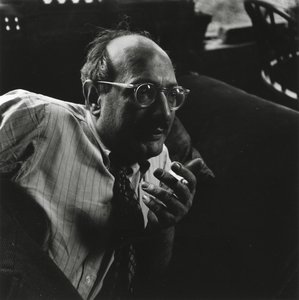
1903 - 1970 , Letland


Blijf op de hoogte van het laatste kunstnieuws, exclusieve aanbiedingen en decoratie-ideeën.
Vertel ons over uw project en onze kunstexperts geven u 3 gepersonaliseerde kunstsuggesties.
Wij stellen drie opties speciaal voor u samen – gratis!


 Voorvertoning
 Verstuur
 Delen
Delen
 Details bekijken

 Download
 Vergelijkbare items
 Röntgenonderzoek
 Diavoorstelling

 Lees meer