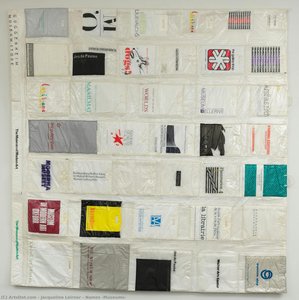
Met de hand geschilderd in olieverf op canvas in uw gewenste maat en lijst, op bestelling gemaakt door onze kunstenaars. ( Print kopen Afbeelding kopen)
Kies uit onze vooraf ingestelde maten die overeenkomen met de originele verhoudingen van het kunstwerk.

U kunt uw eigen afmetingen invoeren om in een specifieke lijst of ruimte te passen. Als de door u gekozen maat niet overeenkomt met de verhoudingen van het originele beeld, zullen we het kunstwerk bijsnijden of het schilderij uitbreiden met extra handgeschilderde elementen. Een digitale mockup wordt ter goedkeuring naar u verzonden voordat de productie begint.
Houd er rekening mee dat de preview op het scherm niet de werkelijke uitsnede of uitbreiding weergeeft. Alleen de mockup toont de uiteindelijke compositie nauwkeurig.
Hoewel aangepaste afmetingen mogelijk zijn, raden we aan een maat uit de vooraf gedefinieerde lijst te selecteren om de originele verhoudingen te behouden.
Wereldwijde levering () binnen 3 tot 4 weken in plaats van de standaard 5 weken. (13 augustus). Zonder concessies aan de kwaliteit.


Tramway
Formaat reproductie
In the golden twilight of the nineteenth century, a period defined by profound transition and the dawn of modern visual culture, Michel Eugène Courret emerged as a transformative force in the art of photography. Born in 1839 in the historic French town of Angoulême, Courret’s journey was one of remarkable geographical and artistic expansion. His early years were steeped in the sophisticated photographic traditions of Paris, where he sought mastery under the guidance of Eugène Maunoury. This apprenticeship was far more than mere technical instruction; it was an immersion into the delicate science of the albumen print, a method that allowed for unprecedented clarity and tonal depth. Through Maunoury, Courret learned to treat light not merely as a tool for visibility, but as a medium for storytelling, capturing the subtle textures of skin, fabric, and shadow with a precision that would later define his legendary career.
The trajectory of Courret’s life took a decisive turn in 1860 when he arrived in Lima, Peru. This move from the established artistic hubs of Europe to the burgeoning cultural landscape of South America proved to be a stroke of historical genius. Finding a society on the cusp of significant intellectual and social evolution, Courret recognized an untapped opportunity for photographic artistry. Alongside his brother, Aquiles, he founded Photo Central, a studio that would quickly become the beating heart of Peruvian portraiture. His arrival coincided with a period where the local elite sought to document their status and intellect, and Courret provided the perfect aesthetic vehicle for this self-expression. His work was not merely about capturing faces; it was about documenting the very soul of a nation in flux.
The significance of Courret’s oeuvre lies in its ability to bridge the gap between technical documentation and high art. His studio became a sanctuary for the intellectual luminaries of Peru, capturing portraits of figures who would shape the country's literary and political future. One can see his profound impact through his depictions of individuals such as Mercedes Cabello Llona de Carbonera, a pioneering female essayist, and Jose Galvez Barrenechea, a vital poet and politician. In these portraits, Courret utilized the formal language of Victorian portraiture—careful posing, symbolic props, and dramatic lighting—to imbue his subjects with a sense of permanence and dignity.
Beyond the elite circles of Lima, Courret’s work holds immense historical value for its ethnographic breadth. While he was celebrated for his sophisticated studio portraits, his lens also captured the diverse social strata of Peruvian life. His ability to navigate between the high-society elegance of the carte de visite and the raw, unvarnished reality of everyday existence makes his collection a vital archive of nineteenth-century Andean society. The technical mastery he brought from France—specifically his expertise in the albumen process—ensured that these fleeting moments were preserved with a luminous quality that has allowed them to endure for over a century.
As we reflect on the contributions of Michel Eugène Courret, we recognize an artist who did more than just take photographs; he helped construct a visual identity for Peru. His life serves as a testament to the power of cultural exchange and the enduring impact of a single, visionary eye. Through his lens, the history of a nation was not just recorded, but beautifully composed, leaving behind a legacy that continues to inspire awe in the hearts of art historians and photography enthusiasts alike.

1839 - 1920 , France


Blijf op de hoogte van het laatste kunstnieuws, exclusieve aanbiedingen en inspirerende interieurideeën.
Vertel ons over uw project en onze kunstexperts geven u 3 gepersonaliseerde kunstsuggesties.
Wij stellen 3 opties speciaal voor u samen – Gratis!


 Bekijk op ware grootte
 Verstuur
 Delen
Delen
 Details bekijken

 Download
 Vergelijkbare werken
 Röntgenonderzoek
 Diavoorstelling
 Lees meer




































 De optie voor glas is alleen beschikbaar bij een formaat kleiner dan 110 cm.