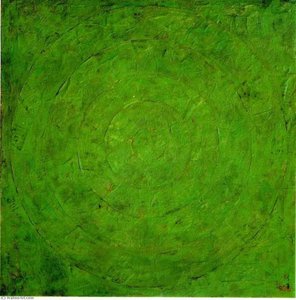
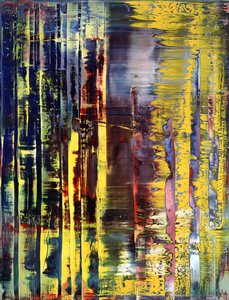
Abstract Expressionism
 1994
1994 1469.0 x 1666.0 cm
 National Museum of Singapore
Koop een digitale afbeelding in hoge resolutie met verbeterde kwaliteit, die veel superieur is aan de online voorvertoning.
Elk bestand wordt met uiterste precisie voorbereid door onze interne specialisten, met behulp van geavanceerde tools en deskundige handmatige retouche. Wij garanderen dat elke afbeelding een uitzonderlijke helderheid, nauwkeurige kleurweergave en verfijnde details bezit.
Het uiteindelijke bestand wordt binnen 72 uur per e-mail geleverd, geoptimaliseerd voor direct gebruik in professionele, redactionele en printomgevingen. Dit is dezelfde kwaliteit waarop vooraanstaande designstudio's, uitgevers en galerieën vertrouwen.
Download een bestand met hoge resolutie voor persoonlijke weergave, afdrukken en creatieve projecten. ( Bestel print Bestel handgeschilderde reproductie)
Wanneer u kiest voor BuyPopArt.com, ontvangt u niet alleen een afbeelding – u krijgt een professioneel verbeterd digitaal kunstwerk, met precisie vervaardigd en voorzien van een tevredenheidsgarantie. Dit is alles wat automatisch bij uw bestelling is inbegrepen:

Uw hoogwaardige digitale afbeeldingsbestand wordt binnen 72 uur na bestelling naar u gemaild – klaar voor direct gebruik.

Uw kunstwerk wordt professioneel geoptimaliseerd met behulp van geavanceerde AI-tools en handmatige bewerkingen, waardoor maximale details, helderheid en kleurnauwkeurigheid worden gegarandeerd.

Je bestand per ongeluk verwijderd of kwijtgeraakt? Geen zorgen – we sturen het u op elk gewenst moment gratis opnieuw toe.

Geniet direct van uw kunstwerk zonder invoerrechten, belastingen of verzendkosten – digitale downloads zijn altijd belastingvrij.

Met behulp van professionele hulpmiddelen en kleurbeheer zorgen wij ervoor dat uw digitale afbeelding de originele kleuren zo nauwkeurig mogelijk weergeeft.

Als u niet tevreden bent met uw digitale afbeelding, passen wij deze aan of storten wij 100% terug binnen 60 dagen – zonder vragen gesteld.

Niet tevreden? Ontvang binnen 60 dagen na ontvangst van uw digitale bestand uw volledige aankoopbedrag terug – zonder vragen te stellen.

Koop 3 afbeeldingen, bespaar 10% - Koop 5, bespaar 15% - Koop 10+, bespaar 20%. Ideaal voor creatieve projecten, galerieën en bureaus.
Born in Birmingham, Alabama, on October 17, 1955, Kerry James Marshall’s life and artistic journey are inextricably linked to the experiences of being Black in America – specifically, the legacy of the Great Migration and the realities of urban life in the mid-20th century. Raised in Los Angeles’ South Central neighborhood, a region grappling with racial tensions and economic hardship, Marshall developed an acute awareness of visual representation and its limitations. His childhood was marked by exposure to both the vibrant culture of Black communities and the stark inequalities that defined his surroundings. This formative environment profoundly shaped his artistic vision, driving him to challenge conventional notions of art history and create a space for marginalized voices.
Marshall’s early education laid the groundwork for his future success. He honed his skills at the Otis Art Institute of Los Angeles County, where he studied under Charles White, a prominent social realist painter who instilled in him a deep appreciation for figurative representation and its potential to address social issues. White's mentorship proved crucial, providing Marshall with the technical foundation and philosophical guidance necessary to embark on his ambitious artistic project: to redress the historical absence of Black figures within Western art’s canon. As he himself stated, “I want to make visible what has been invisible.”
Marshall's most celebrated work revolves around a deliberate and complex strategy – what he termed a "counter-archive." Rejecting the traditional narratives of art history that largely ignored or misrepresented Black subjects, Marshall began creating paintings depicting scenes from African American life in the 1980s. These weren’t simply portraits; they were meticulously researched compositions drawing heavily on historical painting techniques—particularly those of the Old Masters—but applied to contemporary Black figures and settings. He studied Renaissance frescoes, Baroque altarpieces, and classical mythology, painstakingly replicating their compositional structures, lighting schemes, and color palettes.
This appropriation wasn’t intended as a simple imitation. Instead, Marshall used these established visual languages to expose the inherent biases within them. By placing Black figures within these familiar frameworks—a pose reminiscent of Titian's *Venus of Urbino*, a scene echoing Rembrandt’s *The Night Watch*—he highlighted the ways in which art history had systematically excluded and misrepresented Black experiences. His paintings are not merely representations; they are critical interventions, demanding recognition and challenging viewers to confront their own assumptions about representation and power.
Marshall’s work is deeply rooted in themes of identity, race, and social justice. He frequently depicts Black men engaged in everyday activities—fishing, working, playing—often within the context of urban landscapes. These scenes are imbued with a quiet dignity and resilience, reflecting the strength and complexity of Black culture. His subject matter draws heavily from his own upbringing in Los Angeles, particularly the experiences of growing up near the Black Panther Party headquarters in Watts.
Beyond painting, Marshall’s artistic practice extends to drawing, sculpture, and public art installations. He has also explored printmaking as a means of disseminating his ideas and engaging with broader audiences. The influence of figures like Charles White, Jacob Lawrence, and Romare Bearden is evident in his work, but Marshall ultimately forged his own distinctive voice—one that is both historically informed and profoundly contemporary.
Kerry James Marshall’s impact on the art world is undeniable. His work has been exhibited extensively at major museums and galleries around the globe, including the Museum of Contemporary Art Chicago, The Metropolitan Museum of Art, and the Royal Academy of Arts in London. He was awarded a MacArthur Fellowship in 1991, recognizing his exceptional creativity and contributions to the arts. In 2017, he was included on *Time* magazine’s annual list of the 100 most influential people in the world – a testament to the profound impact of his artistic vision.
Marshall's retrospective exhibition, *Kerry James Marshall: Mastry*, curated by Lisa Dennison at the Museum of Contemporary Art Chicago in 2016, was widely hailed as a landmark event. It offered a comprehensive overview of his career and solidified his position as one of the most important artists of our time. His work continues to inspire dialogue about representation, identity, and the power of art to challenge social injustice. Kerry James Marshall passed away on March 30, 2007, leaving behind a rich and enduring legacy that will continue to resonate for generations to come.

1955 - 2007 , Malaysia


Blijf op de hoogte van het laatste kunstnieuws, exclusieve aanbiedingen en decoratie-ideeën.
Vertel ons over uw project en onze kunstexperts geven u 3 gepersonaliseerde kunstsuggesties.
Wij stellen drie opties speciaal voor u samen – gratis!


 Voorvertoning
 Verstuur
 Delen
Delen
 Details bekijken

 Download
 Vergelijkbare items
 Röntgenonderzoek
 Diavoorstelling
 Lees meer