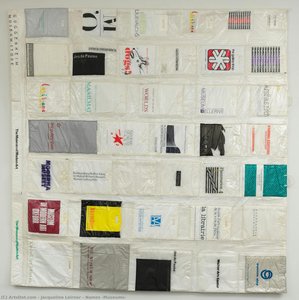
1990
1990 74.0 x 108.0 cm
Koop een digitale afbeelding in hoge resolutie met verbeterde kwaliteit, die veel superieur is aan de online voorvertoning.
Elk bestand wordt met uiterste precisie voorbereid door onze interne specialisten, met behulp van geavanceerde tools en deskundige handmatige retouche. Wij garanderen dat elke afbeelding een uitzonderlijke helderheid, nauwkeurige kleurweergave en verfijnde details bezit.
Het uiteindelijke bestand wordt binnen 72 uur per e-mail geleverd, geoptimaliseerd voor direct gebruik in professionele, redactionele en printomgevingen. Dit is dezelfde kwaliteit waarop vooraanstaande designstudio's, uitgevers en galerieën vertrouwen.
Download een bestand met hoge resolutie voor persoonlijke weergave, afdrukken en creatieve projecten. ( Bestel print Bestel handgeschilderde reproductie)
Wanneer u kiest voor BuyPopArt.com, ontvangt u niet alleen een afbeelding – u krijgt een professioneel verbeterd digitaal kunstwerk, met precisie vervaardigd en voorzien van een tevredenheidsgarantie. Dit is alles wat automatisch bij uw bestelling is inbegrepen:

Uw hoogwaardige digitale afbeeldingsbestand wordt binnen 72 uur na bestelling naar u gemaild – klaar voor direct gebruik.

Uw kunstwerk wordt professioneel geoptimaliseerd met behulp van geavanceerde AI-tools en handmatige bewerkingen, waardoor maximale details, helderheid en kleurnauwkeurigheid worden gegarandeerd.

Je bestand per ongeluk verwijderd of kwijtgeraakt? Geen zorgen – we sturen het u op elk gewenst moment gratis opnieuw toe.

Geniet direct van uw kunstwerk zonder invoerrechten, belastingen of verzendkosten – digitale downloads zijn altijd belastingvrij.

Met behulp van professionele hulpmiddelen en kleurbeheer zorgen wij ervoor dat uw digitale afbeelding de originele kleuren zo nauwkeurig mogelijk weergeeft.

Als u niet tevreden bent met uw digitale afbeelding, passen wij deze aan of storten wij 100% terug binnen 60 dagen – zonder vragen gesteld.

Niet tevreden? Ontvang binnen 60 dagen na ontvangst van uw digitale bestand uw volledige aankoopbedrag terug – zonder vragen te stellen.

Koop 3 afbeeldingen, bespaar 10% - Koop 5, bespaar 15% - Koop 10+, bespaar 20%. Ideaal voor creatieve projecten, galerieën en bureaus.
Moshe Kupferman (1926-2003) stands as a profoundly significant figure in Israeli art, his work inextricably linked to the harrowing experiences of his youth and the subsequent forging of a unique artistic voice. Born in Jarosław, Poland, during a period of immense upheaval, Kupferman’s life was shaped by displacement, exile, and ultimately, survival – events that deeply informed the raw emotionality and layered complexity of his abstract paintings. His journey from the shadows of wartime trauma to recognition as a leading Israeli artist is a testament to both artistic resilience and the enduring power of expression.
Kupferman’s early life was marked by tragedy. In 1941, he and his family were forcibly relocated to camps in the Ural Mountains and Kazakhstan – sites synonymous with unimaginable suffering during the Holocaust. This period of confinement and deprivation became a foundational element within his artistic process. As he himself described, “First I put in emotion and expression. Then I cover it up. Then I put in silence.” This cyclical approach—a volatile outpouring followed by deliberate obscuration—became a defining characteristic of his work, reflecting the struggle to reconcile personal pain with the need for creative articulation.
Following the war, Kupferman immigrated to Israel and played an active role in establishing Kibbutz Lohamei Hagetaot (Ghetto Fighters’ Kibbutz), a community founded by survivors of the Holocaust. This experience profoundly shaped his identity and provided a context for his art. He began to paint seriously in the late 1940s, initially exploring lyrical abstraction influenced by artists like Joan Miró and Paul Klee. However, it was the indelible imprint of his wartime experiences that ultimately dictated the trajectory of his work. His paintings are not simply abstract compositions; they are visual diaries, imbued with a palpable sense of anxiety, memory, and the lingering weight of trauma.
Kupferman’s artistic style is immediately recognizable for its dynamic gestural quality. Thick, layered brushstrokes dominate his canvases, creating surfaces that appear both chaotic and meticulously constructed. He employed a technique of “erasure,” systematically covering up earlier layers with subsequent applications of paint – a process he described as attempting to bury the initial emotional outpouring. This deliberate act of concealment is not merely a stylistic choice; it represents a conscious effort to grapple with the overwhelming nature of his past, to transform raw emotion into something more controlled and ultimately, more profound.
The use of color in Kupferman’s paintings is equally significant. He frequently employed stark contrasts – vibrant reds and yellows juxtaposed against deep blues and blacks – mirroring the emotional intensity he sought to convey. The application of paint itself—often applied with a palette knife or other tools—added another layer of texture and physicality to his work, further emphasizing the gestural nature of his process.
While Kupferman’s work is undeniably rooted in his personal experiences, it also draws upon broader artistic currents. He was influenced by both European modernism – particularly the expressive gestures of Abstract Expressionists like Jackson Pollock – and the lyrical abstraction of artists such as Miró and Klee. However, he ultimately forged a distinctly individual style, one characterized by its raw emotionality, its deliberate act of erasure, and its profound engagement with themes of memory, trauma, and resilience.
Kupferman’s work has been exhibited internationally, including at the Musée National d'Art Moderne in Paris, the Stedelijk Museum in Amsterdam, and the Moore College of Art and Design in Philadelphia. He received numerous accolades throughout his career, including the prestigious Israel Prize for Painting in 2000 – a testament to his enduring influence on Israeli art. His legacy extends beyond his individual paintings; he represents a powerful voice articulating the complexities of the Holocaust experience and its lasting impact on the human psyche.
Moshe Kupferman’s art remains profoundly relevant today. His willingness to confront difficult subject matter—particularly the trauma of the Holocaust—and his innovative approach to abstraction continue to resonate with viewers. He demonstrated that even from the depths of despair, it is possible to create works of extraordinary beauty and emotional power. Kupferman's paintings are not simply representations of the past; they are invitations to engage with our own memories, our own struggles, and ultimately, our shared humanity.

1926 - 2003 , Poland


Blijf op de hoogte van het laatste kunstnieuws, exclusieve aanbiedingen en decoratie-ideeën.
Vertel ons over uw project en onze kunstexperts geven u 3 gepersonaliseerde kunstsuggesties.
Wij stellen drie opties speciaal voor u samen – gratis!


 Voorvertoning
 Verstuur
 Delen
Delen
 Details bekijken

 Download
 Vergelijkbare items
 Röntgenonderzoek
 Diavoorstelling
 Lees meer