Giclée- of canvasafdruk van museumkwaliteit met een snelle productie en flexibele afwerkingsmogelijkheden. ( Bestel handgeschilderde reproductie Koop afbeelding)





























Kies uit onze vooraf ingestelde maten die overeenkomen met de originele verhoudingen van het kunstwerk.

U kunt uw eigen afmetingen opgeven om in een specifieke lijst of ruimte te passen. Als de door u gekozen maat niet overeenkomt met de proporties van het originele kunstwerk, zullen wij de afbeelding bijsnijden of uitbreiden met een gespiegelde of effen rand. Een digitaal mockup wordt ter goedkeuring naar u verzonden voordat de productie begint.
Houd er rekening mee dat de preview op het scherm de werkelijke bijsneding of uitbreiding niet weergeeft. Alleen de mockup toont de uiteindelijke compositie nauwkeurig.
Hoewel aangepaste maten beschikbaar zijn, raden wij aan een afmeting uit de vooraf bepaalde lijst te kiezen om de originele proporties te behouden.
Wereldwijde levering () binnen 2 weken in plaats van de standaard 4/5 weken. (19 augustus)


Hope
Afmetingen reproductie
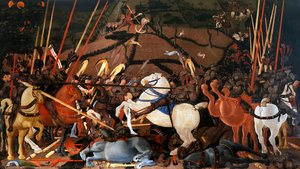
Paolo Uccello's “Hope,” painted around 1435, is not merely a depiction of a woman reaching towards the heavens; it’s a profound exploration of faith, perspective, and the burgeoning humanist ideals of the Early Renaissance. This captivating work, housed within the Duomo di Firenze (Florence Cathedral), offers a glimpse into Uccello's unique artistic vision – one characterized by an obsessive pursuit of mathematical precision blended with a vibrant, almost theatrical use of color and movement.
Uccello’s background as a barber-surgeon, coupled with his family’s noble lineage, instilled in him both a practical eye for detail and an appreciation for refined aesthetics. He wasn't simply a painter; he was a meticulous investigator, fascinated by the mechanics of sight and how to translate three-dimensional space onto a two-dimensional surface. This intellectual curiosity is strikingly evident in “Hope,” where he masterfully employs linear perspective – a technique still relatively new at this time – to create an illusion of depth that draws the viewer into the scene.
At the heart of the painting stands a woman, her posture radiating both serenity and fervent aspiration. She’s draped in a simple yet elegant green gown, its color echoing the lush foliage surrounding her – a subtle nod to nature's enduring symbolism of hope and renewal. Her hands are raised towards the sky, not in supplication, but with an expression of confident expectation. The gesture is crucial; it isn’t passive waiting, but active reaching, suggesting a belief in a future filled with promise.
The figure's face remains partially obscured, adding to her enigmatic quality and allowing viewers to project their own hopes and desires onto the image. She appears to be gazing at an unseen celestial event – perhaps a radiant angel or a divine manifestation – further emphasizing the painting’s spiritual core. The composition is carefully balanced; the woman occupies the central space, while the surrounding figures—a man on the left and two others on the right—create a dynamic backdrop that reinforces her upward trajectory.
Uccello's mastery of color is immediately apparent. He utilizes a rich palette – yellows, blues, reds, and whites – to create a luminous effect, particularly in the depiction of the sky. The use of layered glazing techniques gives the colors depth and vibrancy, while strategically placed highlights draw attention to key elements within the composition. Notice how he employs atmospheric perspective, with distant objects appearing paler and less distinct, further enhancing the illusion of space.
The painting’s surface is characterized by a smooth, polished finish, indicative of Uccello's meticulous preparation and application of paint. His attention to detail extends beyond color; he carefully renders the folds of the woman’s gown, the textures of the surrounding foliage, and even the subtle expressions on the faces of the supporting figures. This dedication to realism, combined with his innovative use of perspective, distinguishes “Hope” as a landmark achievement in Renaissance art.
"Hope" was likely commissioned for the Chapel of Our Lady of the Assumption within Florence’s Duomo. The chapel's design reflects the broader artistic trends of the period, incorporating elements of Gothic and Early Renaissance styles. The painting’s theme—hope—resonates deeply with the religious context of the commission, aligning with the church’s desire to inspire faith and devotion among its congregation.
Beyond its immediate religious significance, “Hope” embodies the humanist ideals that were gaining momentum during the Early Renaissance. The focus on human experience, particularly the aspiration for a better future, reflects a shift away from purely theological concerns towards a more worldly perspective. Uccello’s innovative use of perspective and his masterful rendering of space demonstrate a desire to understand and represent the world in a more accurate and compelling way – a hallmark of Renaissance art.
BuyPopArt offers meticulously crafted, hand-painted reproductions of Paolo Uccello's “Hope,” allowing you to bring this iconic masterpiece into your home or office. Our skilled artists replicate Uccello’s distinctive style and techniques with the utmost care, ensuring that each reproduction captures the painting’s original beauty and emotional impact. Choose from a range of sizes and canvas materials to perfectly complement your décor. Experience the timeless allure of “Hope” – a testament to Renaissance artistry and enduring human aspiration.
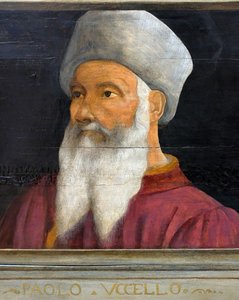
1397 - 1475 , Italië

Discover the pinnacle of bespoke interior transformation with BuyPopArt.com. Our master fresco artists create exquisite, hand-painted wall murals and ceiling masterpieces tailored to your estate. Elevate your architectural space with timeless, museum-quality artistry.


Blijf op de hoogte van het laatste kunstnieuws, exclusieve aanbiedingen en decoratie-ideeën.
Vertel ons over uw project en onze kunstexperts geven u 3 gepersonaliseerde kunstsuggesties.
Wij stellen drie opties speciaal voor u samen – gratis!


 Voorvertoning
 Verstuur
 Delen
Delen
 Details bekijken

 Download
 Vergelijkbare items
 Röntgenonderzoek
 Diavoorstelling


 Lees meer







 De optie voor glas is alleen beschikbaar bij een formaat kleiner dan 110 cm.