Olieverf op canvasWanddecoratiePost-Impressionism
 1890Modern
 73.0 x 92.0 cm
Giclée- of canvasafdruk van museumkwaliteit met een snelle productie en flexibele afwerkingsmogelijkheden. ( Bestel een handgeschilderde reproductie van dit verzamelobject Naar afbeelding wisselen)





























Kies uit onze vooraf ingestelde maten die overeenkomen met de originele verhoudingen van het kunstwerk.

U kunt uw eigen afmetingen opgeven om in een specifieke lijst of ruimte te passen. Als de door u gekozen maat niet overeenkomt met de proporties van het originele kunstwerk, zullen wij de afbeelding bijsnijden of uitbreiden met een gespiegelde of effen rand. Een digitaal mockup wordt ter goedkeuring naar u verzonden voordat de productie begint.
Houd er rekening mee dat de preview op het scherm de werkelijke bijsneding of uitbreiding niet weergeeft. Alleen de mockup toont de uiteindelijke compositie nauwkeurig.
Hoewel aangepaste maten beschikbaar zijn, raden wij aan een afmeting uit de vooraf bepaalde lijst te kiezen om de originele proporties te behouden.
Wereldwijde levering () binnen 2 weken in plaats van de standaard 4/5 weken. (1 augustus)


Vier Batheren
Formaat reproductie
Paul Cézanne's “Four Bathers” (1878), housed within the Ny Carlsberg Glyptotek in Copenhagen, isn’t merely a depiction of nude figures enjoying a summer afternoon; it represents a seismic shift in artistic perception. This oil on canvas transcends simple representation, embodying Cézanne’s groundbreaking approach to capturing reality – not as it appears fleetingly, but as its underlying structure. The painting immediately draws the eye with its harmonious composition: four women, arranged at varying angles across a grassy hillside, overlooking a tranquil riverbank. Yet, beneath this idyllic surface lies a profound intellectual exploration of form and space, foreshadowing the radical innovations that would define the Cubist movement.
Cézanne’s genius lay in his ability to bridge the gap between Impressionism's emphasis on capturing light and color and the nascent desire to analyze and reconstruct visual experience. Unlike his Impressionist contemporaries who sought to render momentary sensations, Cézanne meticulously dissected his subjects into geometric planes – a technique he relentlessly pursued throughout his career. Observe how the figures aren’t simply painted; they are broken down into fundamental shapes, suggesting an understanding that objects exist not as unified forms but as collections of intersecting planes. This deliberate fragmentation isn't arbitrary; it reflects Cézanne’s conviction that art should represent objects from multiple viewpoints simultaneously, offering a more complete and enduring portrayal than traditional perspective could achieve.
The arrangement of the four women is far from casual. Cézanne doesn't present them as a static group; instead, he creates an illusion of movement and interaction. One woman dominates the central space, while others are positioned on the left and right sides, subtly engaging with each other. The artist’s deliberate use of perspective – the hillside receding into the distance – adds depth to the composition, grounding these figures within a carefully constructed landscape. This isn't simply a picturesque vista; it’s a calculated effort to convey Cézanne’s belief that art should capture not just what is seen but also the underlying structure of reality itself. The subtle shifts in angle and posture suggest a quiet conversation, a shared moment of contemplation amidst the natural beauty.
Cézanne’s style was undeniably shaped by his early exposure to Romanticism's emphasis on emotion and imagination, evident in his initial murals at Jas de Bouffan. However, he swiftly moved beyond the fleeting impressions of Impressionism towards a new pictorial language rooted in the principles of Cubism. His brushstrokes are instantly recognizable – small, overlapping planes of color that build up to form complex fields, rejecting the blending techniques favored by Impressionists. Instead, he deliberately fragmented forms into geometric shapes, mirroring his intense study of his subjects as seen in “Four Bathers.” This technique wasn’t merely stylistic; it reflected Cézanne's belief that art should represent objects from multiple viewpoints simultaneously – a concept that would become central to Cubist theory. The resulting images convey a sense of solidity and permanence, contrasting sharply with the ephemeral qualities of Impressionism.
Initially, Cézanne’s work provoked considerable criticism and ridicule from fellow artists and critics who clung to traditional artistic ideals. Many dismissed his fragmented forms as chaotic and unfinished. However, figures like Camille Pissarro and Ambroise Vollard championed his vision, recognizing its transformative potential, and were among the first to acquire his paintings. Vollard’s courageous decision to organize Cézanne’s debut solo exhibition in 1895 proved instrumental in fostering a broader appreciation for his oeuvre. Henri Matisse and Pablo Picasso famously declared that Cézanne “is the father of us all,” acknowledging his indelible influence on subsequent generations of artists – particularly those experimenting with Cubism. His legacy extends far beyond painting, shaping artistic thought and inspiring movements as diverse as Proto-Cubism and Surrealism. “Four Bathers” stands not just as a beautiful artwork but as a pivotal moment in the history of art, demonstrating the power of observation, analysis, and a relentless pursuit of new ways to represent reality.
Useful Links:
Photo Description: The painting is a post-impressionist piece by Paul Cézanne titled "Four Bathers." The scene features four naked women standing in the grass near a hillside. They are positioned at various angles, with one woman on the left side of the image, another in the center, and two more towards the right side. The women appear to be enjoying their time together outdoors, possibly engaging in conversation or simply relaxing. The grassy area provides a natural setting for this gathering, while the hillside adds an element of depth and perspective to the painting.Artist Information: Artist:** Paul Cézanne Birth Year:* 1839 Death Year:* 1906 Birth City:* Aix-en-Provence Birth Country:* France Biography:
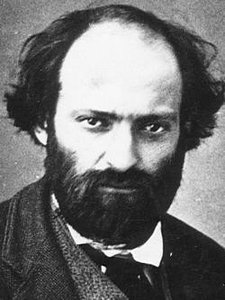
1839 - 1906 , Frankrijk
Ontdek de 25 meest iconische schilderijen van Paul Cézanne! Duik in zijn kleurrijke wereld, leer over impressionisme & post-impressionisme en bewonder meesterwerken als 'De Baders'. Vind museumkwaliteit reproducties & interieurinspiratie op BuyPopArt.com.

Ontdek de top 25 meesterwerken van Paul Klee! Duik in zijn kleurrijke wereld vol abstracte kunst, Bauhaus invloeden & expressieve composities. Vind museumkwaliteit reproducties en woondecoratie inspiratie op BuyPopArt.com.
Ontdek de top 25 meesterwerken uit het Metropolitan Museum of Art, New York! Van Van Gogh tot Monet – leer over kunstgeschiedenis en bewonder iconische schilderijen. Vind museumkwaliteit reproducties & interieurinspiratie op BuyPopArt.com.
Ontdek de top 25 meesterwerken van National Gallery Washington! Van Cézanne tot Picasso, leer het verhaal achter iconische kunst. Vind museumkwaliteit reproducties & interieurinspiratie op BuyPopArt.com.
Ontdek de top 25 meesterwerken van het Detroit Institute of Arts! Van Van Gogh tot Monet, bewonder iconische schilderijen en hun verhaal. Vind museumkwaliteit reproducties & woondecoratie inspiratie op BuyPopArt.com.


Blijf op de hoogte van het laatste kunstnieuws, exclusieve aanbiedingen en inspirerende interieurideeën.
Vertel ons over uw project en onze kunstexperts geven u 3 gepersonaliseerde kunstsuggesties.
Wij stellen 3 opties speciaal voor u samen – Gratis!


 Bekijk op ware grootte
 Verstuur
 Delen
Delen
 Details bekijken

 Download
 Vergelijkbare werken
 Röntgenonderzoek
 Diavoorstelling
 Lees meer







 De optie voor glas is alleen beschikbaar bij een formaat kleiner dan 110 cm.