Giclée- of canvasafdruk van museumkwaliteit met een snelle productie en flexibele afwerkingsmogelijkheden. ( Handgemaakt schilderij kopen Afbeelding kopen)





























Kies uit onze vooraf ingestelde maten die overeenkomen met de originele verhoudingen van het kunstwerk.

U kunt uw eigen afmetingen opgeven om in een specifieke lijst of ruimte te passen. Als de door u gekozen maat niet overeenkomt met de proporties van het originele kunstwerk, zullen wij de afbeelding bijsnijden of uitbreiden met een gespiegelde of effen rand. Een digitaal mockup wordt ter goedkeuring naar u verzonden voordat de productie begint.
Houd er rekening mee dat de preview op het scherm de werkelijke bijsneding of uitbreiding niet weergeeft. Alleen de mockup toont de uiteindelijke compositie nauwkeurig.
Hoewel aangepaste maten beschikbaar zijn, raden wij aan een afmeting uit de vooraf bepaalde lijst te kiezen om de originele proporties te behouden.
Wereldwijde levering () binnen 2 weken in plaats van de standaard 4/5 weken. (12 augustus)


Composition
Formaat reproductie
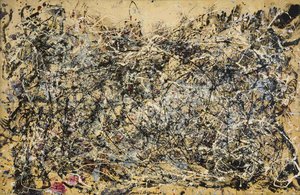
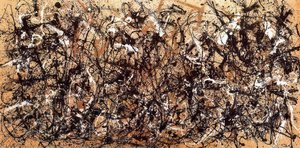
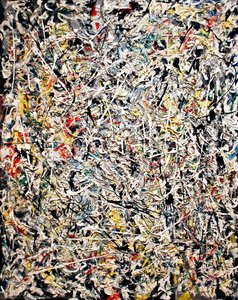
Paul Jackson Pollock’s “Composition” stands as a cornerstone of Abstract Expressionism, encapsulating the movement's core tenets – spontaneity, gesture, and an uncompromising exploration of emotion. Executed in 1949, this monumental drip painting transcends mere pigment application; it’s a visceral embodiment of artistic liberation.
Pollock pioneered the “drip technique,” abandoning traditional brushstrokes for a revolutionary method where paint was flung or dripped onto canvas laid horizontally. This process, meticulously documented by Lee Krasner, his collaborator and wife, wasn’t about precise control but rather embracing chance encounters between pigment and surface. The resulting textured expanse resembles geological formations—a deliberate echo of the American West landscapes that profoundly influenced Pollock's formative years.
Born in Cody, Wyoming, in 1912, Pollock emerged during a period of seismic change within the art world. The Second World War fueled anxieties about artistic tradition and spurred artists to seek new forms of expression. Rejecting Cubism’s fragmentation and Surrealism's dreamlike imagery, Pollock aligned himself with fellow pioneers like Willem de Kooning and Franz Kline, forging a path toward unfiltered emotion and subconscious exploration—a reaction against the perceived constraints of European art.
The painting’s color scheme is deliberately muted yet impactful. Dominant hues of blue and white intertwine with splashes of red and black, creating a dynamic interplay that defies easy categorization. These colors aren't merely decorative; they resonate with psychological associations—blue representing tranquility and contemplation alongside melancholy, while red embodying passion and urgency. The deliberate asymmetry contributes to the artwork’s unsettling beauty.
"Composition" isn't simply a visual spectacle; it aims to evoke a profound emotional response in the viewer. Pollock sought to capture what he termed “the sublime”—that feeling of awe and terror experienced when confronted with overwhelming grandeur or power. The painting’s chaotic surface invites contemplation, prompting viewers to grapple with questions of existence and artistic intention. Like other masterpieces from SFMOMA's collection, it continues to inspire collectors and interior designers alike.

1912 - 1956 , Verenigde Staten van Amerika

Explore the revolutionary art of Jackson Pollock & Abstract Expressionism. Discover his iconic drip paintings, lasting impact, and considerations for collecting this pivotal American artist. Expert insights at BuyPopArt.
Explore the life & work of Jacob Kainen, a pivotal figure in American Abstract Expressionism and Color Field painting. Discover his journey from Social Realism to vibrant abstraction and lasting influence on 20th-century art.

Transform your cherished travel photos into timeless oil paintings with expert artists at BuyPopArt.com. Museum-quality reproductions & custom portraits – preserve your memories beautifully.

Commission breathtaking bespoke fantasy art with skilled oil painters. Explore techniques, artist selection & preservation tips. Invest in a unique masterpiece today!

Ontdek de 10 meest legendarische olieverf meesterwerken die kunstgeschiedenis schreven! Van Van Gogh tot Rembrandt, leer over iconische technieken & emotionele impact. Vind museumkwaliteit reproducties en woondecoratie inspiratie op BuyPopArt.com.


Blijf op de hoogte van het laatste kunstnieuws, exclusieve aanbiedingen en inspirerende interieurideeën.
Vertel ons over uw project en onze kunstexperts geven u 3 gepersonaliseerde kunstsuggesties.
Wij stellen 3 opties speciaal voor u samen – Gratis!


 Bekijk op ware grootte
 Verstuur
 Delen
Delen
 Details bekijken

 Download
 Vergelijkbare werken
 Röntgenonderzoek
 Diavoorstelling
 Lees meer







 De optie voor glas is alleen beschikbaar bij een formaat kleiner dan 110 cm.