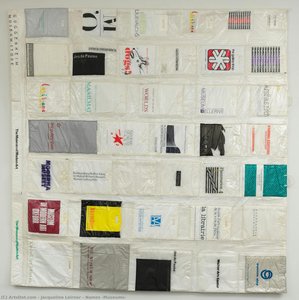
1978
1978 50.0 x 35.0 cm
 American University of Beirut
Koop een digitale afbeelding in hoge resolutie met verbeterde kwaliteit, die veel superieur is aan de online voorvertoning.
Elk bestand wordt met uiterste precisie voorbereid door onze interne specialisten, met behulp van geavanceerde tools en deskundige handmatige retouche. Wij garanderen dat elke afbeelding een uitzonderlijke helderheid, nauwkeurige kleurweergave en verfijnde details bezit.
Het uiteindelijke bestand wordt binnen 72 uur per e-mail geleverd, geoptimaliseerd voor direct gebruik in professionele, redactionele en printomgevingen. Dit is dezelfde kwaliteit waarop vooraanstaande designstudio's, uitgevers en galerieën vertrouwen.
Download een bestand met hoge resolutie voor persoonlijke weergave, afdrukken en creatieve projecten. ( Bestel print Bestel handgeschilderde reproductie)
Wanneer u kiest voor BuyPopArt.com, ontvangt u niet alleen een afbeelding – u krijgt een professioneel verbeterd digitaal kunstwerk, met precisie vervaardigd en voorzien van een tevredenheidsgarantie. Dit is alles wat automatisch bij uw bestelling is inbegrepen:

Uw hoogwaardige digitale afbeeldingsbestand wordt binnen 72 uur na bestelling naar u gemaild – klaar voor direct gebruik.

Uw kunstwerk wordt professioneel geoptimaliseerd met behulp van geavanceerde AI-tools en handmatige bewerkingen, waardoor maximale details, helderheid en kleurnauwkeurigheid worden gegarandeerd.

Je bestand per ongeluk verwijderd of kwijtgeraakt? Geen zorgen – we sturen het u op elk gewenst moment gratis opnieuw toe.

Geniet direct van uw kunstwerk zonder invoerrechten, belastingen of verzendkosten – digitale downloads zijn altijd belastingvrij.

Met behulp van professionele hulpmiddelen en kleurbeheer zorgen wij ervoor dat uw digitale afbeelding de originele kleuren zo nauwkeurig mogelijk weergeeft.

Als u niet tevreden bent met uw digitale afbeelding, passen wij deze aan of storten wij 100% terug binnen 60 dagen – zonder vragen gesteld.

Niet tevreden? Ontvang binnen 60 dagen na ontvangst van uw digitale bestand uw volledige aankoopbedrag terug – zonder vragen te stellen.

Koop 3 afbeeldingen, bespaar 10% - Koop 5, bespaar 15% - Koop 10+, bespaar 20%. Ideaal voor creatieve projecten, galerieën en bureaus.
Rafic Charaf (1932–2003) stands as a pivotal figure in the development of modern Lebanese art, a painter whose work resonated deeply with both the social and political realities of his nation and the enduring spirit of its folklore. Born in Baalbek, a region steeped in ancient history and layered cultural traditions, Charaf’s artistic journey was shaped by a rich heritage that manifested in a distinctive style characterized by poetic abstractions. His canvases often blended sociopolitical commentary with elements of autobiography and vibrant folk art, offering a compelling narrative of an artist deeply connected to his roots and committed to portraying the complexities of Lebanese identity.
His early years were spent in a modest village setting, far removed from the established artistic circles of Beirut. Despite this isolation, he cultivated a keen eye for observation, capturing scenes of daily life and the surrounding landscape on scraps of paper—a habit that would later inform his distinctive visual language. Crucially, his family’s background as blacksmiths instilled in him a profound respect for craftsmanship and an appreciation for the transformative power of materials. This early exposure to both manual labor and artistic expression laid the groundwork for his future explorations of form and texture, creating a bridge between the tactile reality of his upbringing and the ethereal nature of his later abstractions.
Charaf’s formal education began at the Académie Libanaise des Beaux-Arts (ALBA) in Beirut, where he honed his technical skills and developed a foundational understanding of Western art traditions. His talent eventually earned him prestigious scholarships that allowed him to expand his horizons far beyond the Levant. From 1955 to 1957, he studied at the Real Academia de Bellas Artes de San Fernando in Madrid, an experience that significantly impacted his palette and perspective. During this Spanish period, his work often reflected a more somber, melancholic tone, featuring muted colors and landscapes crisscrossed by wires and dead trees—a reflection of a bleak perception of life rooted in his difficult childhood.
The artist's pursuit of mastery continued in Italy, where he attended the Pietro Vanucci Academy in Perugia around 1960. This period of international study allowed him to synthesize various European influences with his Middle Eastern sensibilities. While his technical training was rooted in academic excellence, Charaf’s artistic heart remained tethered to the evocative depictions of mythology and folklore found in the works of Syrian artist Abou Subhi al Tinawi. This blend of Western technique and Eastern storytelling became the cornerstone of his mature style.
As Charaf returned to Beirut, his work underwent a transformative evolution. During the vibrant 1960s, his paintings began to move away from the starker landscapes of his youth toward more expressive and whimsical forms. In many of these works, one can observe simple forms rendered with visible, expressive brushstrokes alongside large planes of flat color, foreshadowing the signature abstraction that would define his career. His art became a tapestry of memory and social observation, where the boundaries between the personal and the political often blurred.
His contributions to the Lebanese art scene were both prolific and influential:
Ultimately, the work of Rafic Charaf remains a testament to the resilience of the human spirit and the power of art to navigate through periods of profound change. Through his poetic abstractions, he captured not just the landscape of Lebanon, but the very soul of its people, leaving behind a legacy that continues to inspire awe and reflection in the contemporary art world.

1932 - 2003 , Lebanon


Blijf op de hoogte van het laatste kunstnieuws, exclusieve aanbiedingen en decoratie-ideeën.
Vertel ons over uw project en onze kunstexperts geven u 3 gepersonaliseerde kunstsuggesties.
Wij stellen drie opties speciaal voor u samen – gratis!


 Voorvertoning
 Verstuur
 Delen
Delen
 Details bekijken

 Download
 Vergelijkbare items
 Röntgenonderzoek
 Diavoorstelling
 Lees meer