Giclée- of canvasafdruk van museumkwaliteit met een snelle productie en flexibele afwerkingsmogelijkheden. ( Bestel een handgeschilderde reproductie van dit verzamelobject Naar afbeelding wisselen)





























Kies uit onze vooraf ingestelde maten die overeenkomen met de originele verhoudingen van het kunstwerk.

U kunt uw eigen afmetingen opgeven om in een specifieke lijst of ruimte te passen. Als de door u gekozen maat niet overeenkomt met de proporties van het originele kunstwerk, zullen wij de afbeelding bijsnijden of uitbreiden met een gespiegelde of effen rand. Een digitaal mockup wordt ter goedkeuring naar u verzonden voordat de productie begint.
Houd er rekening mee dat de preview op het scherm de werkelijke bijsneding of uitbreiding niet weergeeft. Alleen de mockup toont de uiteindelijke compositie nauwkeurig.
Hoewel aangepaste maten beschikbaar zijn, raden wij aan een afmeting uit de vooraf bepaalde lijst te kiezen om de originele proporties te behouden.
Wereldwijde levering () binnen 2 weken in plaats van de standaard 4/5 weken. (11 augustus)


Memory
Formaat reproductie
René Magritte's "Memory," painted in 1948, is not merely a depiction of a statue; it’s an immersion into the unsettling realm of the subconscious, a testament to the artist’s profound engagement with themes of loss, memory, and the deceptive nature of reality. The painting immediately arrests the viewer with its stark contrast: the cold, impassive face of the marble bust, stained with a vibrant red – a color traditionally associated with passion, violence, and, crucially, blood – against the muted tones of the cloudy sky and the delicate pink of the roses. This juxtaposition creates an immediate tension, forcing us to confront uncomfortable questions about representation and the fragility of recollection.
Magritte was a key figure in the Surrealist movement, yet his approach differed from the overtly fantastical works often associated with the group. “Memory” exemplifies his meticulous attention to detail and his ability to create unsettling effects through seemingly ordinary subjects. The composition is carefully constructed; the roses, placed strategically in the foreground, serve as both focal points and symbols of beauty amidst decay. Their presence suggests a futile attempt to preserve or embellish a painful memory. The ball, positioned near the right edge, adds another layer of ambiguity – perhaps representing a lost opportunity, a sphere of influence, or simply an object caught within the confines of recollection.
Magritte’s technique is characterized by precise brushwork and a masterful use of light and shadow. He employed oil paints with a delicate touch, building up layers to achieve a smooth, almost polished surface – a characteristic feature of his work. This meticulousness contrasts sharply with the unsettling subject matter, further enhancing the painting's impact.
The image of the statue’s face, obscured by the red stain, is deeply rooted in Magritte’s personal history. The suicide of his mother, a recurring motif in his work, undoubtedly informed this piece. The veiled figure can be interpreted as a representation of suppressed grief or the inability to fully confront painful memories. Painted in 1948, “Memory” reflects the post-war anxieties and disillusionment prevalent at the time. The painting’s exploration of psychological states aligns with the broader Surrealist interest in exploring the irrational and unconscious mind.
Furthermore, Magritte's work engages with the philosophical debates surrounding perception and representation that were gaining momentum in the mid-20th century. He challenges the viewer to question what they see – is it a faithful reflection of reality, or merely an illusion constructed by the artist’s hand and our own subjective interpretations?
"Memory" possesses a haunting beauty that transcends its unsettling subject matter. It evokes a profound sense of melancholy and invites contemplation on the nature of memory, loss, and the enduring power of the past. This reproduction captures Magritte’s meticulous technique and vibrant color palette, offering an authentic representation of this iconic work. It is a piece perfect for collectors seeking to own a significant example of Surrealist art or for interior designers looking to introduce a touch of enigmatic beauty into their spaces – a reminder that even in the face of darkness, there can be a strange and compelling allure.
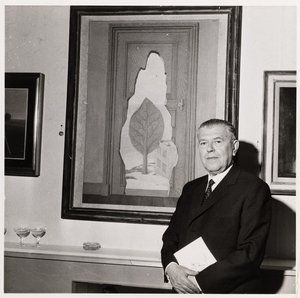
1898 - 1967 , België

Dive into the visceral world of Surrealist Expressionism. Explore how dream logic meets raw emotion through a visual journey of iconic techniques, post-war history, and bold aesthetics to transform your modern space with high-impact, unforgettable art.


Blijf op de hoogte van het laatste kunstnieuws, exclusieve aanbiedingen en inspirerende interieurideeën.
Vertel ons over uw project en onze kunstexperts geven u 3 gepersonaliseerde kunstsuggesties.
Wij stellen 3 opties speciaal voor u samen – Gratis!


 Bekijk op ware grootte
 Verstuur
 Delen
Delen
 Details bekijken

 Download
 Vergelijkbare werken
 Röntgenonderzoek
 Diavoorstelling

 Lees meer







 De optie voor glas is alleen beschikbaar bij een formaat kleiner dan 110 cm.