Giclée- of canvasafdruk van museumkwaliteit met een snelle productie en flexibele afwerkingsmogelijkheden. ( Bestel een handgeschilderde reproductie van dit verzamelobject Naar afbeelding wisselen)





























Kies uit onze vooraf ingestelde maten die overeenkomen met de originele verhoudingen van het kunstwerk.

U kunt uw eigen afmetingen opgeven om in een specifieke lijst of ruimte te passen. Als de door u gekozen maat niet overeenkomt met de proporties van het originele kunstwerk, zullen wij de afbeelding bijsnijden of uitbreiden met een gespiegelde of effen rand. Een digitaal mockup wordt ter goedkeuring naar u verzonden voordat de productie begint.
Houd er rekening mee dat de preview op het scherm de werkelijke bijsneding of uitbreiding niet weergeeft. Alleen de mockup toont de uiteindelijke compositie nauwkeurig.
Hoewel aangepaste maten beschikbaar zijn, raden wij aan een afmeting uit de vooraf bepaalde lijst te kiezen om de originele proporties te behouden.
Wereldwijde levering () binnen 2 weken in plaats van de standaard 4/5 weken. (10 augustus)


Waltz eclipse
Formaat reproductie
René Magritte’s “Waltz Eclipse,” painted in 1958, isn't merely a depiction of two apples suspended in an ethereal space; it’s a deliberate provocation—a masterful exercise in Surrealist philosophy designed to unsettle the viewer and invite contemplation about the nature of reality itself. Created during Magritte’s prolific Vache Period, this artwork embodies the core tenets of Surrealism: juxtaposing incongruous elements to expose hidden contradictions within our everyday experience.
The central figures—two green apples adorned with masks—immediately capture attention. Magritte’s choice isn't accidental; apples have long been symbols of temptation, knowledge, and innocence, while masks represent concealment and disguise. Their placement side-by-side suggests a duality – the visible versus the hidden, the conscious versus the unconscious – mirroring the Surrealist preoccupation with accessing subconscious desires and anxieties. The masks’ blank faces amplify this sense of mystery, forcing us to confront what lies beneath the surface of appearances.
Dominating the upper right corner is a clock face—also suspended in air—a motif recurrent throughout Magritte’s oeuvre. Like the apples, it defies logic and challenges our understanding of time as linear progression. This element reinforces the Surrealist critique of rational thought, suggesting that time itself is subjective and malleable, much like perception. The clock serves as a visual reminder that what we perceive isn't necessarily what *is*, prompting viewers to question accepted truths.
Executed in gouache on paper, “Waltz Eclipse” showcases Magritte’s meticulous attention to detail within an overall atmospheric haze. Gouache—a pigment binder that creates opaque watercolor effects—allowed Magritte to achieve a luminous quality while maintaining precise tonal control. The muted palette contributes to the painting's dreamlike atmosphere, enhancing its emotional impact and immersing the viewer in a realm of subconscious imagery.
"Waltz Eclipse" stands as a testament to Magritte’s enduring legacy as one of the most influential Surrealist artists. It exemplifies his ability to transform familiar objects into symbols laden with philosophical significance, inviting viewers to engage in an intellectual dialogue about perception and representation. Its quiet grandeur—combined with its unsettling ambiguity—continues to inspire admiration and discussion decades after its creation, cementing its place among the masterpieces of 20th-century art.
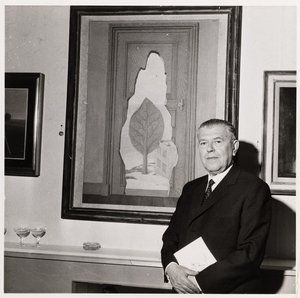
1898 - 1967 , België

Ontdek de 10 meest iconische surrealistische meesterwerken van Dalí, Magritte & Miró. Duik in hun droomwereld en symboliek! Museumkwaliteit kunst reproducties voor uw interieur op BuyPopArt.com.
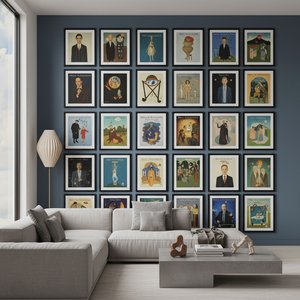
Ontdek de top 25 meesterwerken van René Magritte! Duik in de surrealistische wereld van iconische schilderijen als 'De Zoon van de Mens' en 'Golconda'. Vind museumkwaliteit kunst reproducties & wooninspiratie op BuyPopArt.com.

Ontdek de 10 meest iconische surrealistische meesterwerken van Dalí, Magritte & Miró. Duik in hun droomwerelden en laat je inspireren door deze baanbrekende kunst. Museumkwaliteit reproducties op BuyPopArt.com – Kunst voor elke wand!
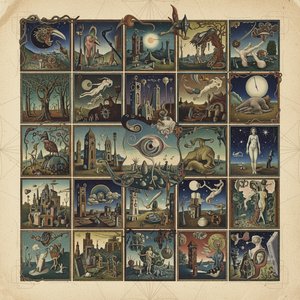
Ontdek de top 25 meesterwerken van Max Ernst, pionier van het surrealisme & dadaïsme. Duik in zijn droombeelden en unieke technieken. Museumkwaliteit kunst reproducties voor uw interieur op BuyPopArt.com. Exploreer de collectie online!

Ontdek de 10 meest iconische surrealistische schilderijen van Dalí, Magritte & Miró. Duik in de droomwereld en onbewuste kunst met BuyPopArt's collectie hoogwaardige reproducties. Vind jouw perfecte wandkunst! Explore the full collection online.


Blijf op de hoogte van het laatste kunstnieuws, exclusieve aanbiedingen en inspirerende interieurideeën.
Vertel ons over uw project en onze kunstexperts geven u 3 gepersonaliseerde kunstsuggesties.
Wij stellen 3 opties speciaal voor u samen – Gratis!


 Bekijk op ware grootte
 Verstuur
 Delen
Delen
 Details bekijken

 Download
 Vergelijkbare werken
 Röntgenonderzoek
 Diavoorstelling
 Lees meer







 De optie voor glas is alleen beschikbaar bij een formaat kleiner dan 110 cm.