Giclée- of canvasafdruk van museumkwaliteit met een snelle productie en flexibele afwerkingsmogelijkheden. ( Bestel handgeschilderde reproductie Koop afbeelding)





























Kies uit onze vooraf ingestelde maten die overeenkomen met de originele verhoudingen van het kunstwerk.

U kunt uw eigen afmetingen opgeven om in een specifieke lijst of ruimte te passen. Als de door u gekozen maat niet overeenkomt met de proporties van het originele kunstwerk, zullen wij de afbeelding bijsnijden of uitbreiden met een gespiegelde of effen rand. Een digitaal mockup wordt ter goedkeuring naar u verzonden voordat de productie begint.
Houd er rekening mee dat de preview op het scherm de werkelijke bijsneding of uitbreiding niet weergeeft. Alleen de mockup toont de uiteindelijke compositie nauwkeurig.
Hoewel aangepaste maten beschikbaar zijn, raden wij aan een afmeting uit de vooraf bepaalde lijst te kiezen om de originele proporties te behouden.
Wereldwijde levering () binnen 2 weken in plaats van de standaard 4/5 weken. (14 augustus)


Breadbag
Afmetingen reproductie
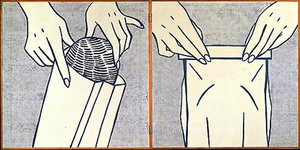
Roy Lichtenstein's "Breadbag," painted in 1961, isn’t a grand statement or a complex allegory; it’s deceptively simple. Yet, within its stark black and white palette and precise execution lies a potent distillation of the Pop Art movement’s core tenets – an interrogation of mass culture through the lens of familiar imagery. The artwork depicts two hands, rendered with bold, graphic lines characteristic of Lichtenstein's style, engaged in the mundane act of folding a paper bag containing bread. It’s a scene utterly devoid of drama or narrative, yet profoundly evocative of the era and the artist’s unique approach to representation.
The painting’s power resides in its meticulous detail and deliberate flatness. Lichtenstein consciously rejected traditional notions of illusionistic depth, opting instead for a style that mimicked the look of commercial printing – specifically, the flat, colored areas and Ben-Day dots found on comic books and advertisements. This technique, borrowed from the world of mass production, elevates an ordinary domestic task to the level of art. The thick outlines defining the hands and bag aren’t meant to create a realistic image; they are deliberately stylized, emphasizing the graphic nature of the work and echoing the visual language of advertising and popular culture.
“Breadbag” exemplifies Lichtenstein's signature Pop Art style with remarkable clarity. The limited color palette – a stark contrast between black and white – immediately draws attention to the composition’s structure and the precision of the lines. The hands, simplified into geometric shapes, are rendered with an almost mechanical accuracy, reflecting the artist’s fascination with industrial processes and consumer goods. Notice how Lichtenstein utilizes subtle variations in tone within the black areas, creating a sense of texture that mimics the appearance of printed paper. This attention to detail, combined with the deliberate flatness of the image, reinforces the artwork's connection to its source materials – commercial printing and mass-produced imagery.
The painting’s construction is remarkably straightforward. Lichtenstein likely employed oil paint on canvas, applying it in layers to achieve the desired effect. The use of Ben-Day dots, though subtle here, would have been a key element in creating the image's characteristic mottled appearance – a technique borrowed from comic book printing that adds visual interest and simulates the effects of halftone patterns.
While seemingly innocuous, “Breadbag” can be interpreted as a subtle critique of consumer culture. By focusing on such a commonplace activity—the simple act of preparing food—Lichtenstein forces us to consider the pervasiveness of packaging and the way in which everyday objects are transformed into symbols of consumption. The repetitive nature of the hands folding the bag mirrors the relentless cycle of production and consumption that defined much of 1960s America. The artwork’s stark simplicity serves as a reminder of the often-overlooked beauty and significance found within the mundane aspects of daily life.
Reproductions of “Breadbag” offer a compelling way to experience Lichtenstein's artistic vision. BuyPopArt’s hand-painted reproductions capture the essence of the original, faithfully recreating the bold lines, limited color palette, and subtle textures that define this iconic work. Whether displayed in a contemporary interior or as a collector’s piece, “Breadbag” continues to resonate with viewers today, serving as a testament to Lichtenstein's innovative approach to art and his enduring influence on Pop Art.
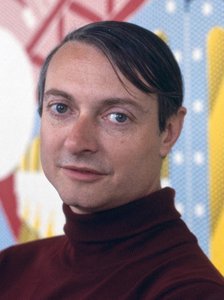
1923 - 1997 , Verenigde Staten van Amerika
Ontdek de 10 meest legendarische 'Acryl op Canvas' meesterwerken die kunstgeschiedenis schreven! Van Pollock tot Rothko, leer over abstract expressionisme & pop art. Vind museumkwaliteit reproducties en interieurinspiratie op BuyPopArt.com.
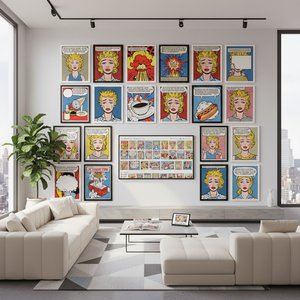
Ontdek de 25 meest iconische werken van Roy Lichtenstein! Duik in de wereld van Pop Art, stripkunst & Ben-Day dots. Vind museumkwaliteit reproducties en inspiratie voor uw interieurdecoratie op BuyPopArt.com.

Ontdek de subtiele kracht van zwart, wit en grijs in hoteldesign. Expert tips voor licht, textuur & moderne architectuur. Creëer rustgevende, luxe ruimtes met BuyPopArt.
Laat je favoriete foto's handgeschilderd vereeuwigen als uniek Pop Art schilderij bij BuyPopArt.com! Kwaliteit, vakmanschap & persoonlijke service. Investeer in een tijdloos kunstwerk voor jouw interieur.
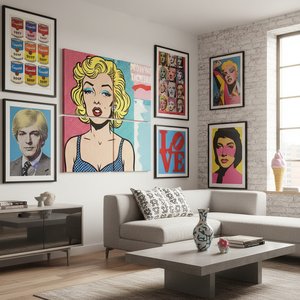
Ontdek de 10 meest iconische Pop Art meesterwerken van Andy Warhol, Roy Lichtenstein & meer. Leer over hun verhaal en techniek! Museumkwaliteit reproducties voor uw interieur. Explore the full collection on BuyPopArt.com.


Blijf op de hoogte van het laatste kunstnieuws, exclusieve aanbiedingen en decoratie-ideeën.
Vertel ons over uw project en onze kunstexperts geven u 3 gepersonaliseerde kunstsuggesties.
Wij stellen drie opties speciaal voor u samen – gratis!


 Voorvertoning
 Verstuur
 Delen
Delen
 Details bekijken

 Download
 Vergelijkbare items
 Röntgenonderzoek
 Diavoorstelling

 Lees meer







 De optie voor glas is alleen beschikbaar bij een formaat kleiner dan 110 cm.