Bekijk op ware grootteBekijk op ware grootte Bekijk in ARBekijk in AR Bestel een print Bestel een printBestel een handgeschilderde reproductie van dit verzamelobject Bestel een handgeschilderde reproductie van dit verzamelobject VerstuurVerstuur
Details bekijkenDetails bekijken Toevoegen aan favorieten Toevoegen aan favorieten DownloadDownload Vergelijkbare werkenVergelijkbare werken RöntgenonderzoekRöntgenonderzoek DiavoorstellingDiavoorstelling

Untitled 2

This evocative painting by William Blake captures a moment of contemplation and instruction amidst a group gathered outdoors. The presence of a bird adds an element of serenity to the scene, reflecting Blake’s profound spiritual vision.

Een krachtige tekening van William Blake, *De Grote Draak en de vrouw gekleed in het zonlicht*, illustreert Revelatie 12 en symboliseert een kosmische strijd tussen goed en kwaad met een prachtige stijl.

Koop een digitale afbeelding in hoge resolutie met verbeterde kwaliteit, die veel superieur is aan de online voorvertoning.

Elk bestand wordt met uiterste precisie voorbereid door onze interne specialisten, met behulp van geavanceerde tools en deskundige handmatige retouche. Wij garanderen dat elke afbeelding een uitzonderlijke helderheid, nauwkeurige kleurweergave en verfijnde details bezit.

Het uiteindelijke bestand wordt binnen 72 uur per e-mail geleverd, geoptimaliseerd voor direct gebruik in professionele, redactionele en printomgevingen. Dit is dezelfde kwaliteit waarop topontwerpstudio's, uitgevers en galerieën vertrouwen.

Digitale afbeeldingen

Download een bestand met hoge resolutie voor persoonlijke weergave, afdrukken en creatieve projecten. (Bestel een print Bestel een printBestel een handgeschilderde reproductie van dit verzamelobject Bestel een handgeschilderde reproductie van dit verzamelobject)

Eindtotaal

$9.99

Inbegrepen bij elke bestelling van een digitale afbeelding

Professionele digitale levering, gegarandeerd

Wanneer u kiest voor BuyPopArt.com, ontvangt u niet alleen een afbeelding – u krijgt een professioneel verbeterd digitaal kunstwerk, met precisie vervaardigd en voorzien van een tevredenheidsgarantie. Dit is alles wat automatisch bij uw bestelling is inbegrepen:

shipping_icon
Direct per e-mail ontvangen

Uw hoogwaardige digitale afbeeldingsbestand wordt binnen 72 uur na bestelling naar u gemaild – klaar voor direct gebruik.

canvas_icon
Met AI verbeterd digitaal bestand

Uw kunstwerk wordt professioneel geoptimaliseerd met behulp van geavanceerde AI-tools en handmatige bewerkingen, waardoor maximale details, helderheid en kleurnauwkeurigheid worden gegarandeerd.

insurance_icon
Gratis levenslange herlevering

Je bestand per ongeluk verwijderd of kwijtgeraakt? Geen zorgen – we sturen het u op elk gewenst moment gratis opnieuw toe.

tax_icon
Geen invoerkosten – nooit

Geniet direct van uw kunstwerk zonder invoerrechten, belastingen of verzendkosten – digitale downloads zijn altijd belastingvrij.

color_icon
Garantie op kleurgetrouwheid

Met behulp van professionele hulpmiddelen en kleurbeheer zorgen wij ervoor dat uw digitale afbeelding de originele kleuren zo nauwkeurig mogelijk weergeeft.

return_icon
60 dagen tevredenheidsgarantie

Als u niet tevreden bent met uw digitale afbeelding, passen wij deze aan of storten wij 100% terug binnen 60 dagen – zonder vragen gesteld.

guarantee_icon
100% Geld-terug-garantie

Niet tevreden? Ontvang binnen 60 dagen na ontvangst van uw digitale bestand uw volledige aankoopbedrag terug – zonder vragen te stellen.

discount_icon
Korting bij grote bestellingen

Koop 3 afbeeldingen, bespaar 10% - Koop 5, bespaar 15% - Koop 10+, bespaar 20%. Ideaal voor creatieve projecten, galerieën en bureaus.
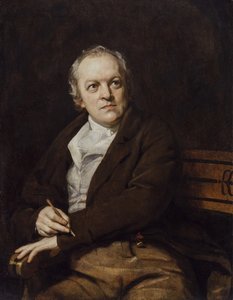
Belangrijkste kenmerken

  • Artistic style: Visionary Romantic
  • Artist: William Blake
  • Dimensions: 345 × 275 mm
  • Medium: Printmaking (etching)
  • Notable elements or techniques: Complex etching process; Symbolic imagery
  • Location: British Museum, London
  • Movement: Romanticism

Beschrijving verzamelobject

William Blake’s “The Poet” – A Symphony of Visionary Symbolism

Blake's "The Poet," completed in 1820, stands as an emblem of Romantic idealism and a testament to the artist's unparalleled ability to translate inner experience into visual form. It depicts a solitary figure—often interpreted as Blake himself—seated upon a stone throne amidst a landscape dominated by towering mountains and swirling clouds. This image transcends mere representation; it embodies a profound meditation on creativity, solitude, and the transformative power of imagination.
  • Subject Matter: The central figure is presented in profile, gazing upwards with an expression of serene contemplation. He wears a robe adorned with symbols—a laurel wreath signifying poetic honor, and a serpent coiled around his thigh representing both temptation and divine wisdom.
  • Style: Blake’s style is unmistakably Romantic, characterized by its dramatic use of color, expressive brushstrokes, and an emphasis on emotional intensity. The composition deliberately isolates the Poet against the vastness of nature, reinforcing the theme of inner contemplation.

Technique – Engraving and Watercolor Collaboration

Blake’s masterful technique involved a collaborative effort between engraving and watercolor. Initially conceived as a printmaking project, Blake painstakingly etched the image onto copper plates using intricate burr tools—a method he perfected during his apprenticeship with James Basire. These engraved lines established the foundational structure of the composition, while subsequent washes of watercolor added depth, luminosity, and atmospheric haze to create an immersive visual experience. The resulting print is remarkably detailed, capturing the textures of stone, fabric, and cloud formations with astonishing accuracy.
  • Engraving Process: Blake’s engraving technique demanded exceptional precision and patience—a reflection of his unwavering commitment to artistic excellence. He employed a burr tool to create microscopic ridges on the copper plate surface, ensuring that every line etched into the metal would faithfully reproduce in the final print.
  • Watercolor Layering: Blake skillfully layered watercolor pigments onto the engraved plates, achieving subtle gradations of color and capturing the ethereal quality of the mountainous landscape. This technique allowed him to convey not only visual beauty but also emotional resonance—a palpable sense of grandeur and spiritual aspiration.

Historical Context – The Spirit of Romantic Rebellion

“The Poet” emerged during a period of fervent intellectual and artistic ferment—the Romantic Age in England. This era witnessed a rejection of Enlightenment rationalism in favor of emotion, intuition, and imagination as guiding forces for understanding the human condition. Blake’s work aligns seamlessly with these Romantic ideals, articulating a vision of art as a conduit for spiritual enlightenment and challenging conventional notions of beauty and morality.
  • Romantic Ideals: The Romantic movement championed individualism, spontaneity, and an appreciation for the sublime—experiences that transcend ordinary sensory perception. Blake’s depiction of the Poet embodies these ideals, portraying him as a figure who dwells in communion with nature and pursues truth through contemplation.
  • Blake's Influence: Blake’s artistic innovations profoundly impacted subsequent generations of artists and writers. His pioneering use of engraving and watercolor techniques served as inspiration for countless printmakers and painters alike, establishing him as a cornerstone of Romantic art history.

Symbolism – Layers of Meaning Beyond Appearances

The artwork is replete with symbolic imagery—each element contributing to a complex tapestry of meaning. The stone throne symbolizes stability and authority, yet it also represents the Poet’s vulnerability—his precarious position amidst the forces of nature. The laurel wreath signifies poetic honor but simultaneously acknowledges the serpent's influence—the inescapable presence of temptation and doubt.
  • Iconography: Blake meticulously crafted his iconography to convey profound spiritual truths. The serpent, for instance, embodies both destructive impulses and transformative potential—a reminder that darkness can illuminate the path toward enlightenment.
  • Emotional Resonance: Ultimately, “The Poet” evokes a powerful emotional response—inspiring awe at the majesty of creation and prompting reflection on the enduring quest for inner peace and artistic integrity.

Conclusion – An Enduring Legacy of Imagination

William Blake’s “The Poet” remains an unparalleled achievement of Romantic art—a masterpiece that continues to captivate audiences worldwide. Its masterful technique, evocative symbolism, and profound historical context solidify its place as a cornerstone of artistic heritage. More than simply a depiction of a solitary figure, it is an invitation to embark on a journey into the depths of imagination—a timeless reminder of the transformative power of art to illuminate the human spirit.

Biografie van de kunstenaar

A Visionary’s Journey: The Life and Art of William Blake

William Blake, born in London on November 28, 1757, was a figure perpetually out of step with his time, yet destined to become one of the most celebrated artists and poets of the Romantic Age. His life unfolded against the backdrop of a rapidly changing England—a world grappling with industrialization, political upheaval, and shifting spiritual beliefs. From humble beginnings as the son of a hosier, Blake’s early years were marked by an intensely vivid imagination and a propensity for visionary experiences that would profoundly shape his artistic trajectory. Though largely self-taught in formal academics, he received drawing instruction at a young age, quickly revealing a talent that hinted at the extraordinary path ahead. His apprenticeship with engraver James Basire proved pivotal, providing him not only with technical mastery but also an understanding of printmaking techniques he would later revolutionize. These early influences—the Gothic grandeur of Westminster Abbey, the classical forms of Raphael and Michelangelo—served as foundational elements in his developing aesthetic, though Blake was never one to remain bound by convention.

The Illuminated World: Technique and Innovation

Blake’s artistic innovation wasn't merely about subject matter; it resided fundamentally in *how* he created. Dissatisfied with conventional engraving methods, he developed a unique process known as “illuminated printing.” This involved etching both text and illustrations onto copper plates, then hand-coloring the resulting prints—a laborious but deeply personal approach that allowed for complete artistic control. This wasn’t simply illustration accompanying poetry; it was an integrated art form where image and verse were inextricably linked, each enhancing the meaning of the other. His relief etching technique, born from a claimed visionary experience following his brother's death, further distinguished his work, granting it
  • A distinctive textural quality
  • Greater artistic freedom than traditional methods
Beyond printmaking, Blake also worked with watercolors and tempera paints, often depicting biblical scenes or fantastical subjects imbued with symbolic weight. A key characteristic of his style was a deliberate rejection of linear perspective in favor of a more emotive, symbolic representation—a flattening of space that drew the viewer into the heart of his visionary world. He believed that true artistic expression demanded an abandonment of rational constraints and embraced instead the realm of dreams and intuition.

Themes of Innocence, Experience, and Rebellion

The core of Blake’s artistic output lies in its exploration of profound themes: the duality of innocence and experience, the constraints of reason versus the liberating power of imagination, and a fierce critique of societal norms.
  • Songs of Innocence and of Experience (1794), perhaps his most accessible work, presents a contrasting vision of childhood—one idyllic and untainted, the other marked by hardship and corruption.
  • The Marriage of Heaven & Hell (1793) is a provocative prose poem that challenges conventional morality, celebrating energy, desire, and rebellion against restrictive doctrines.
  • His illustrations for Dante’s *Divine Comedy* showcase his dramatic vision and ability to translate complex narratives into powerful visual imagery.
Blake's symbolism is intensely personal yet universally resonant. The tiger, in his famous poem, embodies both the awe-inspiring beauty and terrifying power of creation. Jerusalem, a sprawling epic poem that occupied him for years, reflects his spiritual and political beliefs—a vision of a renewed Albion (ancient name for Britain) free from oppression. He wasn’t merely depicting stories; he was constructing an entire mythology, populated with archetypal figures representing states of mind, forces of nature, and the eternal struggle between good and evil.

A Legacy Rediscovered: Blake's Enduring Influence

During his lifetime, William Blake remained largely marginalized, misunderstood by many of his contemporaries. His work was often dismissed as eccentric or even mad. He struggled financially throughout much of his life, relying on commissions and the support of a small circle of patrons like Thomas Butts. However, in the decades following his death on August 12, 1827, Blake’s reputation began to grow steadily. The Pre-Raphaelites, captivated by his visionary style and symbolic imagery, embraced him as a kindred spirit. Later movements—Symbolism and Modernism—found resonance in his emphasis on imagination, subjective experience, and spiritual themes. Blake's influence extends far beyond the realm of art; he inspired writers like Dylan Thomas and poets such as Ted Hughes. Today, William Blake is recognized as a pivotal figure in the Romantic movement, an artist whose work continues to provoke contemplation and inspire creativity—a testament to the enduring power of visionary imagination in confronting societal conventions and exploring the deepest recesses of human consciousness. His unwavering commitment to artistic freedom cemented his place as one of the most original voices of his era.
William Blake

William Blake

1757 - 1827 , Verenigd Koninkrijk

Kerngegevens

  • Artistic Movement Or Style: Romantiek
  • Artists Who Influenced This Artist:
    • Raphael
    • Michelangelo
  • Date Of Birth: November 28, 1757
  • Date Of Death: August 12, 1827
  • Full Name: William Blake
  • Nationality: Britse kunstenaar
  • Notable Artworks:
    • Songs of Innocence & Exp.
    • The Tyger
    • Jerusalem
  • Place Of Birth: London, UK
