PaintingGeometric Abstraction
 2008Contemporary
 900.0 x 1500.0 cm
 Korean Art Museum Association
Giclée- of canvasafdruk van museumkwaliteit met een snelle productie en flexibele afwerkingsmogelijkheden. ( Handgemaakt schilderij kopen Afbeelding kopen)





























Kies uit onze vooraf ingestelde maten die overeenkomen met de originele verhoudingen van het kunstwerk.

U kunt uw eigen afmetingen opgeven om in een specifieke lijst of ruimte te passen. Als de door u gekozen maat niet overeenkomt met de proporties van het originele kunstwerk, zullen wij de afbeelding bijsnijden of uitbreiden met een gespiegelde of effen rand. Een digitaal mockup wordt ter goedkeuring naar u verzonden voordat de productie begint.
Houd er rekening mee dat de preview op het scherm de werkelijke bijsneding of uitbreiding niet weergeeft. Alleen de mockup toont de uiteindelijke compositie nauwkeurig.
Hoewel aangepaste maten beschikbaar zijn, raden wij aan een afmeting uit de vooraf bepaalde lijst te kiezen om de originele proporties te behouden.
Wereldwijde levering () binnen 2 weken in plaats van de standaard 4/5 weken. (12 augustus)


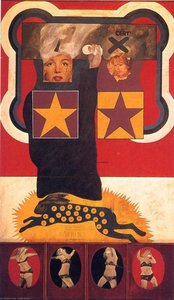
Doubt-Star
Formaat reproductie

Born in the quiet countryside of Yangpyeong, South Korea, in 1966, Yang Dae Won’s artistic journey began far from the bustling galleries and critical acclaim he now enjoys. His early life, steeped in Korean tradition and a deep connection to nature – evidenced by his later use of Hanji paper – provided a foundational grounding for an artist who would ultimately become renowned for his strikingly geometric paintings and drawings. Initially pursuing studies in Natural Sciences, Yang’s path shifted towards art, driven by a desire to explore the human condition through abstract forms. This transition wasn't merely a career change; it represented a profound personal transformation, a deliberate move away from the tangible world toward a realm of symbolic representation.
Yang’s artistic style is deeply rooted in the Korean art movement, particularly its emphasis on simplicity, harmony, and balance – principles inherited from the Joseon dynasty's focus on realism and understated elegance. However, Yang transcends mere imitation; he employs these foundational elements to construct a distinctly modern visual language. His signature technique involves utilizing primary colors—bold reds, yellows, and blues—within meticulously crafted geometric shapes. These aren’t simply decorative elements; they function as potent symbols, inviting viewers into a contemplative dialogue about life, death, and the complexities of human experience. Recurring motifs, such as the ‘Dongulin’ figure – a stylized representation of humanity – appear throughout his work, acting as anchors for these symbolic explorations.
At the heart of Yang’s artistic practice lies a fascination with geometry and its capacity to convey profound meaning. He doesn't merely arrange shapes; he orchestrates them, creating compositions that possess an almost meditative quality. The deliberate use of primary colors amplifies this effect, lending each painting a sense of urgency and emotional resonance. Consider his work, *Doubt-Forest(Tears)*, a powerful example where fragmented geometric forms coalesce to evoke feelings of disorientation and vulnerability. Similarly, *Doubt-Yellow Stairs* utilizes the stark contrast between yellow and black to explore themes of uncertainty and resilience.
Yang’s approach extends beyond traditional painting techniques. He has notably experimented with Hanji paper – a distinctive Korean material crafted from mulberry bark – incorporating it into his work. This integration not only reflects his connection to Korean heritage but also introduces an element of texture and fragility, adding another layer of complexity to his visual vocabulary. The ‘A Ballet’ series exemplifies this technique, showcasing the delicate balance between geometric precision and organic materiality.
Yang Dae Won's artistic vision has been recognized both domestically in South Korea and internationally. His work has been featured in numerous group exhibitions across Korea, France, and Taiwan, establishing a growing presence within the contemporary art world. Significant solo exhibitions have provided platforms for him to showcase his evolving style and thematic concerns. Notably, he’s held solo shows at prestigious institutions like the Korean Art Museum Association in Seoul, solidifying his position as a leading figure in Korean abstract art.
His artistic achievements include winning the Joong Ang Fine Arts Competition (2005), securing second place in the Songeun Art Festival (2004), and receiving recognition at the Kongsan Art Festival (1996). Furthermore, he’s participated in residency programs at esteemed locations such as Taipei Artist's Village (2002) and Usine Utopik in Normandy, France (2012), fostering cross-cultural exchange and expanding his artistic horizons.
Yang’s paintings are not simply arrangements of shapes; they are imbued with a rich symbolic language. Recurring motifs—such as the ‘Dongulin’ figure, often depicted in moments of introspection or confrontation—serve as visual metaphors for fundamental human experiences: doubt, loss, hope, and resilience. The use of black tears, frequently appearing within his compositions, powerfully represents grief and vulnerability. Yang also incorporates elements drawn from Chinese calligraphy, utilizing characters to represent abstract concepts like love, faith, and wisdom, further enriching the layers of meaning embedded in his work.
His art invites viewers to engage in a process of personal interpretation, recognizing that each painting offers a unique pathway for contemplation. Yang’s geometric abstractions are not meant to provide definitive answers but rather to stimulate dialogue and encourage introspection about the complexities of the human condition – a testament to his profound artistic vision.

1966 - , South Korea

Discover the high-impact world of Geometric Abstraction. From Cubist roots to modern urban trends, explore how bold shapes and colors redefine contemporary design. Elevate your space with expert art insights and custom-made abstract masterpieces.

Discover the power of Neo-Abstract art. Explore how bold geometric forms and high-impact visual energy are redefining modern design. Learn to curate sophisticated, high-energy spaces with the latest trends in contemporary abstraction and structural color.


Blijf op de hoogte van het laatste kunstnieuws, exclusieve aanbiedingen en inspirerende interieurideeën.
Vertel ons over uw project en onze kunstexperts geven u 3 gepersonaliseerde kunstsuggesties.
Wij stellen 3 opties speciaal voor u samen – Gratis!


 Bekijk op ware grootte
 Verstuur
 Delen
Delen
 Details bekijken

 Download
 Vergelijkbare werken
 Röntgenonderzoek
 Diavoorstelling
 Lees meer







 De optie voor glas is alleen beschikbaar bij een formaat kleiner dan 110 cm.