

 Akryl på lerretVeggkunstNeoclassical Rococo
 1700
1700 41.0 x 52.0 cm
 Calouste Gulbenkian-museet
Håndmalt olje på lerret i din valgte størrelse og ramme, laget på bestilling av våre kunstnere. ( Kjøp trykk Kjøp bilde)





























Velg mellom våre forhåndsdefinerte størrelser som bevarer kunstverkets opprinnelige proporsjoner.

Du kan angi egne mål for å tilpasse en spesifikk ramme eller plass. Dersom den valgte størrelsen ikke samsvarer med originalbildets proporsjoner, vil vi enten beskjære kunstverket eller utvide maleriet med ytterligere håndmalte elementer. En digital mockup vil bli sendt til din godkjenning før produksjonen starter.
Vennligst merk at forhåndsvisningen på skjermen ikke gjenspeiler den faktiske beskjæringen eller utvidelsen. Kun mockuppen vil vise den endelige komposisjonen nøyaktig.
Selv om tilpassede størrelser er tilgjengelige, anbefaler vi å velge et mål fra den forhåndsdefinerte listen for å bevare de originale proporsjonene.
Verdensomspennende levering () på 3–4 uker i stedet for standard 5 uker. (16 August). Ingen kompromisser med kvaliteten.


Satyrer
Størrelse på reproduksjon
Born in Springfield, Pennsylvania, in 1738, Benjamin West’s life was a remarkable confluence of transatlantic experience and artistic ambition. His early years were steeped in the practicalities of his family's inn – the Square Tavern in Newtown Square – providing him with an unusual grounding in human interaction and observation, skills that would later inform his powerful portrayals of character and emotion. Unlike many artists of his time who received formal training, West was entirely self-taught, a testament to his innate talent and relentless dedication. This autodidactic approach, coupled with a keen eye for detail honed by observing the natural world, laid the foundation for a career that would ultimately transcend national boundaries and establish him as one of America’s first internationally recognized artists.
West's journey began with portraits in Philadelphia, quickly establishing a reputation for capturing likenesses with remarkable accuracy and sensitivity. However, his true ambition lay in history painting – a genre then considered the pinnacle of artistic achievement. Recognizing this desire, his parents secured him a scholarship to the College of Philadelphia, where he studied under William Smith, who recognized West’s exceptional talent and fostered his interest in classical antiquity. This early exposure to Roman sculpture and architecture proved crucial, shaping West's aesthetic sensibilities and fueling his determination to emulate the grand narratives of the past.
West’s most celebrated work, *The Death of General Wolfe* (1770), stands as a watershed moment in art history. This monumental canvas depicted the pivotal Battle of Quebec in 1759, presenting a strikingly unconventional approach to historical painting. Unlike traditional depictions that focused on heroic victories and idealized figures, West chose to portray the aftermath of the battle – the death of General Wolfe lying wounded upon his tent. The decision to depict a contemporary event in the style of a classical history painting was revolutionary, challenging established conventions and capturing the public’s imagination.
The painting's success can be attributed to several factors: West’s masterful use of light and shadow, his dramatic composition, and, crucially, his decision to portray Wolfe wearing modern military uniform rather than the classical robes typically associated with historical figures. This detail resonated deeply with viewers, making the scene feel immediate and relatable. *The Death of Wolfe* became an instant sensation, selling out within weeks of its exhibition at the Royal Academy and establishing West as a leading figure in the British art world.
Benjamin West’s impact extended far beyond his own artistic achievements. He played a crucial role in the founding of the Royal Academy of Arts, serving as its second president and shaping its policies and practices. His influence on subsequent generations of American artists was particularly profound; he mentored numerous students, including Charles Willson Peale, Gilbert Stuart, and John Trumbull, providing them with invaluable guidance and fostering a sense of artistic ambition.
West’s legacy is not solely defined by his individual works but also by the broader cultural context in which he operated. He bridged the gap between American and European art, introducing new ideas and techniques to the United States while simultaneously contributing to the development of Neoclassicism in Britain. His commitment to historical painting helped to elevate the genre’s status and establish it as a vehicle for exploring themes of patriotism, heroism, and national identity.
Despite his initial success with grand historical scenes, West's artistic style evolved significantly in his later years. He increasingly embraced religious subjects, producing works such as *Christ Healing the Sick* (1793), a monumental painting presented to the National Gallery in London. His final major work, *Death on the Pale Horse* (1817), exemplifies this shift towards dramatic and emotionally charged imagery, foreshadowing the Romantic movement that would soon sweep across Europe.
Benjamin West died in 1820, leaving behind a substantial body of work that reflects his remarkable journey from self-taught artist to international icon. His life story—a testament to ambition, perseverance, and artistic vision—continues to inspire artists and art enthusiasts alike, solidifying his place as one of the most important figures in American art history.

1738 - 1814 , France
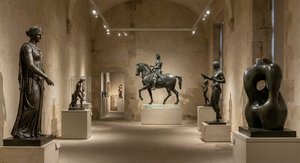
Utforsk 10 legendariske bronseskulpturer som formet kunsthistorien! Fra Rodin til Michelangelo – oppdag historiene, teknikkene og skjønnheten bak tidløse mesterverk. Finn din perfekte veggkunst eller interiørdekor på BuyPopArt.com.

Oppdag Claude Monets 25 mest ikoniske malerier! Fordyp deg i impressionismens verden, fra vannliljer til soleiloppgang. Historien bak kunsten & eksklusive reproduksjoner på BuyPopArt.no – for et kunstfullt hjem.

Explore the rich history of sculpture from ancient masterpieces to contemporary innovations. Discover key techniques, influential artists & investment potential for discerning art collectors.

Oppdag 10 legendariske bronse skulpturer som revolusjonerte kunsthistorien! Fra Michelangelo til Rodin – lær om teknikker, historier og tidløs skjønnhet. Finn museumskvalitets reproduksjoner & interiørinspirasjon på BuyPopArt.com.
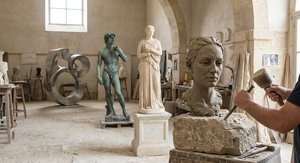
Explore the rich history of sculpture with BuyPopArt. Discover key techniques, influential artists & investment potential for discerning collectors. Expert insights into valuing and collecting timeless masterpieces.


Hold deg oppdatert med de siste kunstnyhetene, eksklusive tilbud og dekorasjonsideer.
Fortell oss om prosjektet ditt, så vil våre kunsteksperter gi deg 3 personlige kunstforslag.
Vi velger ut 3 alternativer kun for deg – helt gratis!


 Forhåndsvisning
 Send
Send Del med andre
 Vis detaljer

 Last ned bildet
 Liknende objekter
 Røntgenundersøkelse
 Lysbildefremvisning
 Vis hele teksten







 Glassalternativet er kun tilgjengelig i størrelser under 110 cm


