Acrylic On CanvasWallArtContemporary Realism
 1933
1933 92.0 x 127.0 cm
Giclée- eller lerretsprint av museumskvalitet med rask produksjon og fleksible valgmuligheter for etterbehandling. ( Kjøp håndlaget maleri Kjøp bilde)





























Velg mellom våre forhåndsdefinerte størrelser som bevarer kunstverkets opprinnelige proporsjoner.

Du kan oppgi egne mål for å tilpasse en spesifikk ramme eller et bestemt område. Dersom den valgte størrelsen ikke samsvarer med det originale bildets proporsjoner, vil vi enten beskjære kunstverket eller utvide bildet med en speilet eller ensfarget kant. En digital mockup vil bli sendt til din godkjenning før produksjonen starter.
Vennligst merk at forhåndsvisningen på skjermen ikke gjenspeiler den faktiske beskjæringen eller utvidelsen. Kun mockuppen vil vise den endelige komposisjonen nøyaktig.
Selv om tilpassede størrelser er tilgjengelige, anbefaler vi å velge et mål fra den forhåndsdefinerte listen for å bevare de originale proporsjonene.
Verdensomspennende levering () på 2 uker i stedet for standard 4/5 uker. (18 August)


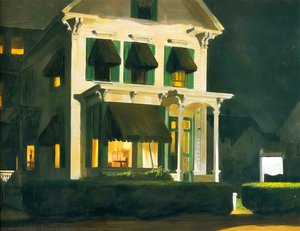
Ryder's House
Størrelse på reproduksjon
Edward Hopper’s “Ryder’s House,” completed in 1933, stands as a quintessential emblem of American Realism during the Depression era. More than just a depiction of a simple farmhouse nestled within a tranquil field, it's a masterful exploration of solitude and unspoken emotion—themes that would become hallmarks of Hopper’s oeuvre and continue to resonate with audiences today.
Painted during the Great Depression, “Ryder’s House” reflects the pervasive anxieties and uncertainties of the time. Hopper's depiction of rural life—characterized by quiet desperation and unspoken longing—captures a mood that mirrored the experiences of many Americans grappling with economic hardship and social displacement. The painting speaks to a broader cultural preoccupation with themes of alienation and detachment.
The dominant use of light in “Ryder’s House” is particularly significant. Hopper illuminates the interior space with a cool, diffused glow that casts long shadows across the walls—creating an atmosphere of profound stillness and hinting at hidden narratives. The absence of human figures contributes to the painting's sense of isolation, prompting viewers to contemplate the unspoken emotions conveyed by the scene.
"Ryder’s House" transcends mere visual representation; it invites contemplation and introspection. Hopper’s masterful composition—coupled with his subtle manipulation of light and shadow—elicits a feeling of melancholy and yearning, capturing the essence of human experience in its most vulnerable form. It remains a powerful reminder that beauty can reside in quietude and that art possesses the capacity to illuminate the complexities of the human condition.

1931 - 1967 , USA

Explore the profound depth of American Realism. From the gritty Ashcan School to poignant social landscapes, discover how masters captured the raw soul of a nation through evocative oil paintings and timeless art history.


Hold deg oppdatert med de siste kunstnyhetene, eksklusive tilbud og dekorasjonsideer.
Fortell oss om prosjektet ditt, så vil våre kunsteksperter gi deg 3 personlige kunstforslag.
Vi velger ut 3 alternativer kun for deg – helt gratis!


 Forhåndsvisning
 Send
Send Del med andre
 Vis detaljer

 Last ned bildet
 Liknende objekter
 Røntgenundersøkelse
 Lysbildefremvisning
 Vis hele teksten







 Glassalternativet er kun tilgjengelig i størrelser under 110 cm