


 Oil On CanvasWallArtNorthern Mannerism
 1613
1613 207.0 x 142.0 cm
 Mauritshuis
Giclée- eller lerretsprint av museumskvalitet med rask produksjon og fleksible valgmuligheter for etterbehandling. ( Bytt til håndmalt maleri Bytt til bilde)





























Velg mellom våre forhåndsdefinerte størrelser som bevarer kunstverkets opprinnelige proporsjoner.

Du kan oppgi egne mål for å tilpasse en spesifikk ramme eller et bestemt område. Dersom den valgte størrelsen ikke samsvarer med det originale bildets proporsjoner, vil vi enten beskjære kunstverket eller utvide bildet med en speilet eller ensfarget kant. En digital mockup vil bli sendt til din godkjenning før produksjonen starter.
Vennligst merk at forhåndsvisningen på skjermen ikke gjenspeiler den faktiske beskjæringen eller utvidelsen. Kun mockuppen vil vise den endelige komposisjonen nøyaktig.
Selv om tilpassede størrelser er tilgjengelige, anbefaler vi å velge et mål fra den forhåndsdefinerte listen for å bevare de originale proporsjonene.
Verdensomspennende levering () på 2 uker i stedet for standard 4/5 uker. (3 August)


Hercules and Cacus
Størrelse på reproduksjon
Hendrick Goltzius's “Hercules and Cacus,” painted in 1613, isn’t merely a depiction of a legendary hero; it’s a visceral embodiment of strength, conflict, and the enduring power of narrative. This monumental work, now residing within the Palazzo Vecchio in Florence, immediately commands attention with its dynamic composition and dramatic chiaroscuro – the masterful use of light and shadow that sculpts both form and emotion. Goltzius, a pivotal figure in the Northern Mannerist movement, elevates a classical tale to an intensely human level, capturing not just the physical prowess of Hercules but also the palpable tension of his struggle against the monstrous Cacus.
Goltzius’s genius lies not just in his subject matter but in the extraordinary technical skill he brings to bear. He was a pioneer of the “swelling line,” a technique that allowed him to manipulate the thickness and texture of lines with remarkable precision, creating an illusion of depth and volume from a distance. Observe how this is particularly evident in Hercules’s club – it appears to swell outwards as if poised for impact, conveying both its weight and the impending force of his blow. Furthermore, he employed the “dot and lozenge” technique, meticulously placing tiny dots within larger lozenge shapes to build up subtle gradations of tone, adding incredible realism to the textures of the figures’ skin, clothing, and the rough-hewn cave walls. This meticulous attention to detail elevates the painting beyond a simple illustration; it becomes a study in light, shadow, and material.
“Hercules and Cacus” is deeply embedded within the turbulent political landscape of 16th-century Florence. Commissioned during a period of shifting power between the Medici family and the republican council, the sculpture became a potent symbol – Hercules representing the strength and resilience of the victorious Medici, while Cacus embodied the vanquished opposition. The story’s narrative was deliberately manipulated to serve this political agenda; initially intended as a celebration of Florentine liberty, it was later repurposed by the Medici to assert their dominance. The work's creation was fraught with artistic rivalries too – Vasari and Cellini, both prominent artists and critics, offered scathing critiques of Bandinelli’s design, highlighting the perceived flaws in his execution and subtly undermining his reputation.
Note: The sculpture’s history is intertwined with Florentine politics and artistic debates.Beyond its political significance, “Hercules and Cacus” resonates profoundly on an emotional level. The scene captures a pivotal moment of intense struggle – the hero poised to deliver the decisive blow against his monstrous adversary. The dynamic composition, with Hercules’s body coiled in anticipation and Cacus unleashing a torrent of fire, generates a palpable sense of drama and urgency. The painting isn't simply about physical strength; it speaks to themes of courage, determination, and the triumph of good over evil. The raw energy of the scene, combined with Goltzius’s masterful technique, creates an image that is both visually arresting and emotionally compelling – a testament to the enduring power of myth and art.

1558 - 1617 , Germany
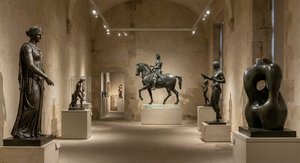
Utforsk 10 legendariske bronseskulpturer som formet kunsthistorien! Fra Rodin til Michelangelo – oppdag historiene, teknikkene og skjønnheten bak tidløse mesterverk. Finn din perfekte veggkunst eller interiørdekor på BuyPopArt.com.
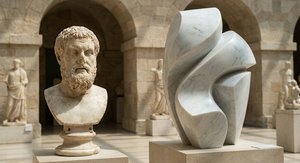
Explore the captivating history of marble sculpture from ancient Greece to modern art. Discover renowned artists like Canova & Michelangelo, carving techniques, and investment insights at BuyPopArt.

Explore the rich history of sculpture from ancient masterpieces to contemporary innovations. Discover key techniques, influential artists & investment potential for discerning art collectors.

Discover the sublime beauty of marble art through an expert exploration of Renaissance and Neoclassical masterpieces. From the delicate textures of Carpeaux to the grandeur of Sansovino, immerse yourself in a guide to timeless elegance and sculptural perfection.

Opplev renessansens 10 største mesterverk! Lær om Leonardo da Vinci, Michelangelo og Rafael – kunsthistorie, teknikk & betydning. Finn museumskvalitets reproduksjoner for ditt hjem på BuyPopArt.no. Utforsk samlingen online!


Hold deg oppdatert med de siste kunstnyhetene, eksklusive tilbud og dekorasjonsideer.
Fortell oss om prosjektet ditt, så vil våre kunsteksperter gi deg 3 personlige kunstforslag.
Vi velger ut 3 alternativer kun for deg – helt gratis!


 Forhåndsvisning
 Send
Send Del med andre
 Vis detaljer

 Last ned bildet
 Liknende objekter
 Røntgenundersøkelse
 Lysbildefremvisning
 Vis hele teksten







 Glassalternativet er kun tilgjengelig i størrelser under 110 cm


