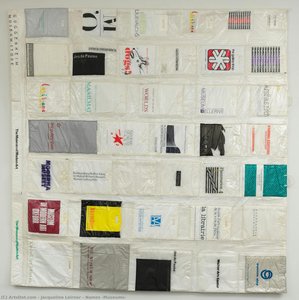
1974
1974 30.0 x 45.0 cm
Kjøp et høyoppløselig, forbedret digitalt bilde som er langt bedre enn forhåndsvisningen på nettet.
Hver fil er omhyggelig klargjort av våre egne spesialister ved hjelp av avanserte verktøy og profesjonell manuell retusjering. Vi sørger for at hvert bilde har eksepsjonell klarhet, presis fargegjengivelse og fine detaljer.
Den endelige filen leveres via e-post innen 72 timer, optimalisert for umiddelbar bruk i profesjonelle, redaksjonelle og trykte miljøer. Dette er den samme kvaliteten som benyttes av ledende designstudioer, utgivere og gallerier.
Last ned en høyoppløselig fil for personlig bruk, utskrift og kreative prosjekter. ( Kjøp trykk Kjøp håndlaget maleri)
Når du velger BuyPopArt.com, får du ikke bare et bilde – du mottar et profesjonelt forbedret digitalt kunstverk, skapt med presisjon og med en garantert tilfredshetsgaranti. Her er alt som automatisk følger med din bestilling:

Din høyoppløselige digitale bildefil sendes til din e-post innen 72 timer etter bestilling – klar til umiddelbar bruk.

Ditt kunstverk blir profesjonelt optimalisert ved hjelp av avanserte AI-verktøy og manuell redigering, noe som sikrer maksimal detaljrikdom, klarhet og fargegjengivelse.

Har du ved et uhell slettet eller mistet filen din? Ingen bekymring – vi sender den på nytt når som helst, helt gratis.

Nyt ditt kunstverk umiddelbart uten toll, avgifter eller leveringskostnader – digitale nedlastinger er alltid avgiftsfrie.

Vi sikrer at ditt digitale bilde gjenspeiler de originale fargene så nøyaktig som mulig ved hjelp av profesjonelle verktøy og fargehåndtering.

Hvis du ikke er fornøyd med ditt digitale bilde, vil vi revidere det eller refundere 100% innen 60 dager – uten spørsmål.

Ikke fornøyd? Få full refusjon innen 60 dager etter at du har mottatt din digitale fil – uten spørsmål.

Kjøp 3 bilder, spar 10% - Kjøp 5, spar 15% - Kjøp 10+, spar 20%. Ideelt for kreative prosjekter, gallerier og byråer.
Born in Springfield, Illinois, in 1943, David Hammons’s artistic journey began not with formal training but with a profound engagement with the world around him. Raised during the Great Depression amidst financial hardship—a fact he rarely discussed—Hammons developed an early skepticism towards traditional art forms and a deep-seated interest in exploring the complexities of human experience through unconventional means. This formative period instilled within him a desire to challenge established norms and create work that spoke directly to the realities of marginalized communities, particularly African Americans navigating the social landscape of mid-20th century America.
His early years in Los Angeles proved pivotal. Studying at Chouinard Art Institute and later Otis Art Institute, Hammons was exposed to a vibrant artistic community—a “LA Rebellion” as it became known—that included figures like Charles White, Bruce Nauman, and John Baldessari. This environment fostered experimentation with collage, assemblage, and performance art, laying the groundwork for his distinctive approach. The influence of artists like Charles White, in particular, is evident in Hammons’s early work, characterized by a raw honesty and social commentary that resonated deeply with the struggles faced by Black Americans.
Hammons's artistic practice quickly evolved beyond mere representation. He began to utilize his own body as a medium—a radical departure from traditional sculptural techniques—creating “body prints” through a process of transferring pigment and graphite onto paper, capturing the textures and contours of his skin with astonishing detail. These haunting images, often imbued with a sense of vulnerability and isolation, became a signature element of his oeuvre. Simultaneously, he began collecting discarded objects – bottle caps, chicken bones, liquor bottles—transforming these everyday detritus into evocative sculptures that commented on themes of urban decay, consumerism, and the complexities of identity.
A significant shift in Hammons’s work occurred with his relocation to New York City in 1974. Here, he honed his skills as a sculptor, developing a distinctive style that combined found-object assemblage with performance art and installation. His early sculptures in the city were often characterized by their deliberate placement within public spaces—parks, sidewalks, and vacant lots—transforming ordinary environments into sites of contemplation and social critique. Works like *Bliz-aard Ball Sale* (1983), where he sold snowballs on a New York City sidewalk, and *Higher Goals* (1983; 1986)—towering basketball hoops adorned with bottle caps—became iconic symbols of his approach, blending humor, social commentary, and a profound engagement with the urban experience.
Hammons’s work is deeply rooted in concepts of representation and symbolism. He frequently employs objects that carry cultural significance – cowrie shells representing wealth and prosperity, for instance – to create layered meanings that invite viewers to engage critically with their own assumptions about race, class, and identity. His use of found objects—discarded materials imbued with histories of consumption and waste—further underscores this thematic concern, prompting reflection on the relationship between art, society, and the environment.
Throughout his career, David Hammons has consistently explored themes of identity, marginalization, and the experience of being an “outsider.” His work often reflects the realities faced by African Americans in America—the struggles with poverty, discrimination, and systemic inequality. However, his approach transcends simple representation, employing a deliberately ambiguous language that resists easy categorization. He frequently adopts the persona of a madman or a stranger, blurring the boundaries between self and other, and challenging viewers to confront their own prejudices and assumptions.
His use of performance art—often involving direct engagement with audiences—further amplifies this sense of disruption and questioning. Performances like *How Ya Like Me Now?* (1988), a series of public appearances in which he dressed in outlandish costumes and distributed small, hand-painted portraits, served as both social commentary and a personal exploration of identity.
David Hammons’s impact on contemporary art is undeniable. His pioneering use of found objects, his willingness to challenge conventional sculptural practices, and his unflinching engagement with social issues have established him as one of the most important artists working today. He has influenced a generation of artists who are exploring themes of identity, representation, and social justice through innovative and often provocative means.
Despite eschewing solo exhibitions, Hammons’s work continues to be exhibited widely in museums and galleries around the world, solidifying his position as a vital voice within the contemporary art landscape. His sculptures, performances, and installations serve as powerful reminders of the complexities of American society and the enduring need for critical reflection and social change.

1943 - , United States of America


Hold deg oppdatert med de siste kunstnyhetene, eksklusive tilbud og dekorasjonsideer.
Fortell oss om prosjektet ditt, så vil våre kunsteksperter gi deg 3 personlige kunstforslag.
Vi velger ut 3 alternativer kun for deg – helt gratis!


 Forhåndsvisning
 Send
Send Del med andre
 Vis detaljer

 Last ned bildet
 Liknende objekter
 Røntgenundersøkelse
 Lysbildefremvisning
 Vis hele teksten