Kjøp et høyoppløselig, forbedret digitalt bilde som er langt bedre enn forhåndsvisningen på nettet.
Hver fil er omhyggelig klargjort av våre egne spesialister ved hjelp av avanserte verktøy og profesjonell manuell retusjering. Vi sørger for at hvert bilde har eksepsjonell klarhet, presis fargegjengivelse og fine detaljer.
Den endelige filen leveres via e-post innen 72 timer, optimalisert for umiddelbar bruk i profesjonelle, redaksjonelle og trykte miljøer. Dette er den samme kvaliteten som benyttes av ledende designstudioer, utgivere og gallerier.
Last ned en høyoppløselig fil for personlig bruk, utskrift og kreative prosjekter. ( Kjøp trykk Kjøp håndlaget maleri)
Når du velger BuyPopArt.com, får du ikke bare et bilde – du mottar et profesjonelt forbedret digitalt kunstverk, skapt med presisjon og med en garantert tilfredshetsgaranti. Her er alt som automatisk følger med din bestilling:

Din høyoppløselige digitale bildefil sendes til din e-post innen 72 timer etter bestilling – klar til umiddelbar bruk.

Ditt kunstverk blir profesjonelt optimalisert ved hjelp av avanserte AI-verktøy og manuell redigering, noe som sikrer maksimal detaljrikdom, klarhet og fargegjengivelse.

Har du ved et uhell slettet eller mistet filen din? Ingen bekymring – vi sender den på nytt når som helst, helt gratis.

Nyt ditt kunstverk umiddelbart uten toll, avgifter eller leveringskostnader – digitale nedlastinger er alltid avgiftsfrie.

Vi sikrer at ditt digitale bilde gjenspeiler de originale fargene så nøyaktig som mulig ved hjelp av profesjonelle verktøy og fargehåndtering.

Hvis du ikke er fornøyd med ditt digitale bilde, vil vi revidere det eller refundere 100% innen 60 dager – uten spørsmål.

Ikke fornøyd? Få full refusjon innen 60 dager etter at du har mottatt din digitale fil – uten spørsmål.

Kjøp 3 bilder, spar 10% - Kjøp 5, spar 15% - Kjøp 10+, spar 20%. Ideelt for kreative prosjekter, gallerier og byråer.
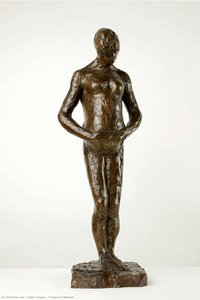
Nancy Graves’s 1983 sculpture, “Cantileve,” isn't merely a three-dimensional form; it’s an invitation to contemplate the delicate balance between stability and suspension. This piece, rendered in meticulous detail through woven materials – likely incorporating wire, fabric strips, and perhaps even yarn – immediately draws the eye upward with its central, cantilevered element. It resembles a stylized plant reaching for the light, or a coral formation emerging from the depths of an ocean, evoking both natural wonder and a subtle sense of unease. The work’s placement within the frame—a generous expanse of space above and around it—further emphasizes this feeling of poised tension, suggesting a structure perpetually on the verge of shifting.
“Cantileve” firmly resides within the realm of Post-Minimalism, a movement that emerged in the late 1960s and early 70s as an evolution from the stark geometric forms of Minimalism. Graves, like her contemporaries, rejected the purely objective approach of earlier minimalist sculpture, instead embracing a more expressive language rooted in organic forms and subtle gestures. The piece’s asymmetrical composition—a deliberate departure from the rigid symmetry often associated with Minimalist works—introduces dynamism and visual interest. The influence of artists like Brice Marden and Richard Serra is palpable, particularly in the way Graves manipulates line and space to create a complex interplay between solidity and fragility.
The color palette of “Cantileve” is remarkably restrained yet profoundly evocative. Dominating earth tones—ochres, browns, purples, and hints of blue—create a sense of groundedness and connection to the natural world. However, these muted hues are punctuated by distinct patches and strands of color within the woven structure, suggesting layers of texture and complexity. The deliberate avoidance of smooth blending creates a tactile quality, inviting viewers to imagine the rough surfaces and intricate details of the materials themselves. The varying textures—the slightly coarse weave alongside the smoother wooden base—add another layer of visual richness.
Linearity is paramount in “Cantileve.” Thin, wiry lines form the very skeleton of the sculpture, creating a sense of both fragility and intricate design. These lines intertwine and overlap, generating complex patterns that draw the eye through the piece’s structure. The prominent use of curved lines—particularly within the central stem—further enhances the organic feel, suggesting growth, movement, and a subtle dance between stability and instability. The sculpture's overall form is defined by these carefully orchestrated lines, creating a visual architecture that is both captivating and subtly unsettling.
Beyond its formal qualities, “Cantileve” carries significant symbolic weight. The cantilevered element—extending outward with seemingly little support—represents a delicate balance between stability and suspension, mirroring the precariousness of life itself. The intricate weaving suggests interconnectedness and interdependence, hinting at the complex relationships within natural systems. Ultimately, the sculpture evokes a sense of quiet contemplation – an invitation to pause, observe, and consider the beauty and fragility of the world around us. It’s a testament to Graves's ability to transform simple materials into profound expressions of artistic vision.


1939 - 1995 , USA


Hold deg oppdatert med de siste kunstnyhetene, eksklusive tilbud og dekorasjonsideer.
Fortell oss om prosjektet ditt, så vil våre kunsteksperter gi deg 3 personlige kunstforslag.
Vi velger ut 3 alternativer kun for deg – helt gratis!


 Send
Send Del med andre
 Vis detaljer

 Last ned bildet
 Liknende objekter
 Lysbildefremvisning


 Vis hele teksten
![Caricia Ígnea [fire Caress] — Julia Francesca Barretto Baldivia](/media/artworks/images/thumbnails/6c/70/6c7045bf52fe4f36bc31a9d9b88b425a.jpg)