

 Olje på lerretVeggkunstPost-Impressionism
 1888tallet
 65.0 x 81.0 cm
Giclée- eller lerretsprint av museumskvalitet med rask produksjon og fleksible valgmuligheter for etterbehandling. ( Kjøp håndlaget maleri Kjøp bilde)





























Velg mellom våre forhåndsdefinerte størrelser som bevarer kunstverkets opprinnelige proporsjoner.

Du kan oppgi egne mål for å tilpasse en spesifikk ramme eller et bestemt område. Dersom den valgte størrelsen ikke samsvarer med det originale bildets proporsjoner, vil vi enten beskjære kunstverket eller utvide bildet med en speilet eller ensfarget kant. En digital mockup vil bli sendt til din godkjenning før produksjonen starter.
Vennligst merk at forhåndsvisningen på skjermen ikke gjenspeiler den faktiske beskjæringen eller utvidelsen. Kun mockuppen vil vise den endelige komposisjonen nøyaktig.
Selv om tilpassede størrelser er tilgjengelige, anbefaler vi å velge et mål fra den forhåndsdefinerte listen for å bevare de originale proporsjonene.
Verdensomspennende levering () på 2 uker i stedet for standard 4/5 uker. (21 August)


Marningenes Bredder
Størrelse på reproduksjon
Paul Cézanne’s “Banks of the Marne,” painted in 1888, isn't merely a landscape; it’s a pivotal moment in art history—a visual declaration that challenged centuries of artistic convention and paved the way for modernism. This oil on canvas, measuring a modest 65 x 81 cm, captures a serene scene along the river Marne, yet within its seemingly simple composition lies a profound exploration of form, color, and perspective. It’s a painting that whispers of Cézanne's relentless pursuit of truth, his desire to distill the essence of nature onto canvas, and ultimately, his groundbreaking influence on generations of artists to come.
Cézanne’s artistic journey leading up to “Banks of the Marne” was one of quiet revolution. He initially studied under traditional academic guidelines, but quickly grew disillusioned with the constraints of realism and the emphasis on capturing fleeting impressions. Inspired by the Impressionists—particularly Monet and Pissarro—he began experimenting with bolder colors and looser brushstrokes. However, he wasn’t content to simply replicate what he saw; instead, he sought a deeper understanding of how things *actually* looked – their underlying structure, their geometric forms, and the way light interacts with them. This shift is dramatically evident in “Banks of the Marne,” where Cézanne moves beyond mere representation to construct an image based on his own perception of reality.
The painting’s composition is deceptively straightforward. A modest house sits nestled amongst a cluster of trees, their branches reaching skyward, while a small boat drifts along the river's surface. Figures are scattered throughout the scene – some in the foreground, others receding into the distance – creating a sense of depth and spatial awareness. Yet, Cézanne doesn’t adhere to conventional perspective. Instead, he employs a technique of flattening space, breaking down forms into geometric shapes and layering them upon one another. The trees aren't rendered as individual leaves; they are blocks of color and planes, suggesting their three-dimensionality through careful arrangement and manipulation of light and shadow. This deliberate simplification is key to understanding Cézanne’s revolutionary approach.
“Banks of the Marne” stands as a quintessential example of Post-Impressionism, an art movement that emerged in the late 19th century as a reaction against the limitations of Impressionism. While Impressionists focused on capturing the ephemeral effects of light and color, Post-Impresionists sought to explore deeper truths about form, structure, and emotion. Artists like Cézanne, Van Gogh, Gauguin, and Seurat used vibrant colors and expressive brushstrokes to convey their subjective experiences and ideas. They weren’t interested in simply depicting what they saw; they were interested in *how* they saw it.
Cézanne's work, in particular, served as a crucial bridge between Impressionism and Cubism. His emphasis on geometric forms, his exploration of multiple viewpoints within a single image, and his willingness to break down traditional artistic conventions laid the groundwork for Picasso and Braque’s revolutionary approach to representation. “Banks of the Marne” can be seen as a visual precursor to Cubism, anticipating the fragmented and multi-faceted perspectives that would characterize this groundbreaking art movement.
Cézanne's masterful use of color is central to the painting’s impact. He employs a palette of earthy tones—ochres, browns, greens, and blues—to evoke the naturalistic setting of the Marne River. However, he doesn’t simply replicate these colors; instead, he manipulates them to create a sense of depth, volume, and atmosphere. Notice how he uses lighter shades to suggest distance and how he employs contrasting colors to draw attention to specific areas of the composition. The interplay of light and shadow is particularly striking, creating a dynamic and engaging visual experience.
Furthermore, Cézanne’s brushstrokes are not blended or smoothed; they remain visible, adding texture and immediacy to the painting. This technique—known as “impasto”—creates a sense of physicality and reinforces the idea that the painting is an embodiment of his own direct observation of nature. It's a deliberate rejection of the smooth, polished surfaces favored by many Impressionists.
Beyond its formal qualities, "Banks of the Marne" also possesses a subtle symbolic resonance. The solitary boat drifting along the river can be interpreted as a metaphor for human existence—a journey through life with no clear destination. The trees, reaching towards the sky, represent aspiration and connection to something larger than oneself. And the quiet stillness of the scene evokes a sense of peace and contemplation.
Cézanne’s “Banks of the Marne” is more than just a beautiful landscape; it's a profound meditation on art, nature, and the human condition. It represents a radical departure from traditional artistic conventions and a bold assertion of Cézanne’s unique vision. A reproduction captures this essence beautifully, offering a window into the mind of one of history’s most influential artists.
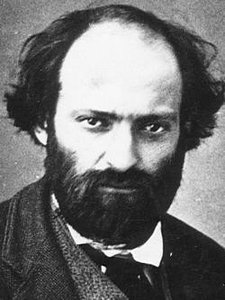
1839 - 1906 , Frankrike

Explore the profound evolution of art from Impressionism to Post-Impressionism. Discover how masters like Van Gogh revolutionized color and emotion, shaping modern art history through structural innovation and expressive technique.


Hold deg oppdatert med de siste kunstnyhetene, eksklusive tilbud og dekorasjonsideer.
Fortell oss om prosjektet ditt, så vil våre kunsteksperter gi deg 3 personlige kunstforslag.
Vi velger ut 3 alternativer kun for deg – helt gratis!


 Forhåndsvisning
 Send
Send Del med andre
 Vis detaljer

 Last ned bildet
 Liknende objekter
 Røntgenundersøkelse
 Lysbildefremvisning
 Vis hele teksten







 Glassalternativet er kun tilgjengelig i størrelser under 110 cm


