

 Acrylic On CanvasWallArtLandscape & Portrait Painting
 1928
1928 51.0 x 60.0 cm
 Courtauld-galleriet
Giclée- eller lerretsprint av museumskvalitet med rask produksjon og fleksible valgmuligheter for etterbehandling. ( Kjøp håndlaget maleri Kjøp bilde)





























Velg mellom våre forhåndsdefinerte størrelser som bevarer kunstverkets opprinnelige proporsjoner.

Du kan oppgi egne mål for å tilpasse en spesifikk ramme eller et bestemt område. Dersom den valgte størrelsen ikke samsvarer med det originale bildets proporsjoner, vil vi enten beskjære kunstverket eller utvide bildet med en speilet eller ensfarget kant. En digital mockup vil bli sendt til din godkjenning før produksjonen starter.
Vennligst merk at forhåndsvisningen på skjermen ikke gjenspeiler den faktiske beskjæringen eller utvidelsen. Kun mockuppen vil vise den endelige komposisjonen nøyaktig.
Selv om tilpassede størrelser er tilgjengelige, anbefaler vi å velge et mål fra den forhåndsdefinerte listen for å bevare de originale proporsjonene.
Verdensomspennende levering () på 2 uker i stedet for standard 4/5 uker. (19 August)


Playing Marbles
Størrelse på reproduksjon
The history of twentieth-century British art is often told through the lens of sudden movements and radical shifts, yet few lives embody the enduring spirit of artistic evolution as profoundly as that of Raymond James Coxon. Born in Hanley, Staffordshire, in 1896, Coxon’s journey was one of remarkable longevity and stylistic breadth, spanning nearly a full century of creative exploration. His life was shaped by the tumultuous tides of history, from the harrowing experiences of the Great War to the quiet, contemplative moments of post-war reconstruction. This vast temporal canvas allowed him to witness—and participate in—the transformation of the British aesthetic landscape, moving from the rigorous classical foundations of his youth toward a more nuanced and experimental modernism.
Coxon’s artistic identity was forged in the prestigious halls of the Leeds School of Art and the Royal College of Art. It was during these formative years that he developed a deep-seated respect for technical mastery, a trait nurtured under the guidance of influential figures such as Sir William Rothenstein. His early academic achievements were nothing short of ambitious; his diploma submission, a monumental mural inspired by Masaccio’s Expulsion from Paradise, revealed a young artist capable of grappling with grand, classical narratives and complex human emotion. This period was also marked by significant social connections, most notably a friendship with the legendary sculptor Henry Moore, which placed Coxon within a vibrant circle of artists who would redefine the boundaries of British sculpture and painting.
The trajectory of Coxon’s career was irrevocately altered by his service in the Machine Gun Corps during World War I. While the conflict brought immense hardship, it also provided a unique, visceral perspective that would forever inform his observational skills. Serving within the cavalry section, Coxon utilized watercolor miniatures to document the fleeting, often brutal realities of the front lines. These small-scale works served as intimate windows into a world in chaos, demanding a precision and an ability to capture atmosphere that would later become hallmarks of his broader repertoire. This period of documentation instilled in him a profound sense of the importance of the "moment"—the ability to freeze time through the tip of a brush.
As the decades progressed, Coxon’s work began to reflect a fascinating departure from purely representational forms. While he remained deeply rooted in the traditions of landscape and portraiture, there was an unmistakable pull toward abstraction. His landscapes, such as the evocative Dewpond, Surrey, demonstrate a masterful command over light and topography, yet they also hint at a deeper, more structural understanding of the natural world. Similarly, his portraits, exemplified by the elegant Model Resting, showcase a sophisticated use of tone and form to convey character and presence, blending the classical discipline of his training with a modern sensibility for texture and space.
The significance of Raymond James Coxon lies not only in the breadth of his subject matter but in his ability to remain relevant across shifting artistic epochs. His oeuvre serves as a bridge between the traditionalist values of the late Victorian era and the experimental spirit of the mid-twentieth century. Whether capturing the rugged beauty of Tremadoc or exploring the complexities of the human figure, Coxon’s work remains anchored by a sincere commitment to the craft of painting.
To reflect on his life is to trace the evolution of British art itself:

1896 - 1997 , United Kingdom
Utforsk de 10 mest ikoniske landskapsmaleriene gjennom tidene! Fra Monet til Friedrich – oppdag historien bak mesterverkene, kunstnernes teknikker og inspirasjonen. Finn reproduksjoner av høy kvalitet for ditt hjem på BuyPopArt.no. Utforsk samlingen online!

Oppdag de 10 mest ikoniske romantiske landskapsmaleriene! Fra Caspar David Friedrich til Turner – utforsk kunsthistorien, stemningen og fargepalettene. Finn museumskvalitets reproduksjoner på BuyPopArt.com.
Opplev John Constables 25 mest ikoniske malerier! Fordyp deg i engelsk romantikk, landskapskunst og atmosfæriske scener. Finn museumskvalitets reproduksjoner & interiørinspirasjon på BuyPopArt.com. Utforsk samlingen online!
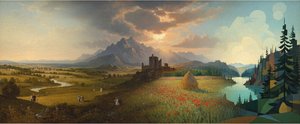
Explore the rich history of landscape art with BuyPopArt. Discover renowned artists, movements like Impressionism & Romanticism, and expert guidance for collecting timeless pieces. Find your perfect serene escape today!

Explore the life & art of James Sant (1820-1916), renowned Victorian portraitist to Queen Victoria. Discover his captivating depictions of childhood, landscapes, and aristocratic society. Learn about his legacy & find fine art reproductions.


Hold deg oppdatert med de siste kunstnyhetene, eksklusive tilbud og dekorasjonsideer.
Fortell oss om prosjektet ditt, så vil våre kunsteksperter gi deg 3 personlige kunstforslag.
Vi velger ut 3 alternativer kun for deg – helt gratis!


 Forhåndsvisning
 Send
Send Del med andre
 Vis detaljer

 Last ned bildet
 Liknende objekter
 Røntgenundersøkelse
 Lysbildefremvisning
 Vis hele teksten







 Glassalternativet er kun tilgjengelig i størrelser under 110 cm


