

Kjøp et høyoppløselig, forbedret digitalt bilde som er langt bedre enn forhåndsvisningen på nettet.
Hver fil er omhyggelig klargjort av våre egne spesialister ved hjelp av avanserte verktøy og profesjonell manuell retusjering. Vi sørger for at hvert bilde har eksepsjonell klarhet, presis fargegjengivelse og fine detaljer.
Den endelige filen leveres via e-post innen 72 timer, optimalisert for umiddelbar bruk i profesjonelle, redaksjonelle og trykte miljøer. Dette er den samme kvaliteten som benyttes av ledende designstudioer, utgivere og gallerier.
Last ned en høyoppløselig fil for personlig bruk, utskrift og kreative prosjekter. ( Kjøp trykk Kjøp håndlaget maleri)
Når du velger BuyPopArt.com, får du ikke bare et bilde – du mottar et profesjonelt forbedret digitalt kunstverk, skapt med presisjon og med en garantert tilfredshetsgaranti. Her er alt som automatisk følger med din bestilling:

Din høyoppløselige digitale bildefil sendes til din e-post innen 72 timer etter bestilling – klar til umiddelbar bruk.

Ditt kunstverk blir profesjonelt optimalisert ved hjelp av avanserte AI-verktøy og manuell redigering, noe som sikrer maksimal detaljrikdom, klarhet og fargegjengivelse.

Har du ved et uhell slettet eller mistet filen din? Ingen bekymring – vi sender den på nytt når som helst, helt gratis.

Nyt ditt kunstverk umiddelbart uten toll, avgifter eller leveringskostnader – digitale nedlastinger er alltid avgiftsfrie.

Vi sikrer at ditt digitale bilde gjenspeiler de originale fargene så nøyaktig som mulig ved hjelp av profesjonelle verktøy og fargehåndtering.

Hvis du ikke er fornøyd med ditt digitale bilde, vil vi revidere det eller refundere 100% innen 60 dager – uten spørsmål.

Ikke fornøyd? Få full refusjon innen 60 dager etter at du har mottatt din digitale fil – uten spørsmål.

Kjøp 3 bilder, spar 10% - Kjøp 5, spar 15% - Kjøp 10+, spar 20%. Ideelt for kreative prosjekter, gallerier og byråer.
Roy Lichtenstein’s “Portrait II,” painted in 1986, is more than just a depiction of a figure with a banana; it’s a meticulously crafted explosion of color and a potent commentary on the burgeoning world of Pop Art. This vibrant work immediately grabs the viewer's attention with its unapologetic use of red and yellow – hues that evoke both energy and a slightly unsettling familiarity, mirroring the anxieties and consumerism prevalent in American society during the late 20th century.
The painting’s subject, rendered in Lichtenstein’s signature Ben-Day dot technique, possesses an almost cartoonish quality. The red scarf adds a touch of theatricality, while the banana itself – a symbol of abundance and perhaps even indulgence – is placed with deliberate incongruity atop the figure's head. This juxtaposition immediately disrupts any expectation of traditional portraiture, aligning it squarely within the Pop Art movement’s fascination with elevating everyday objects and imagery to the level of fine art.
Born in Manhattan in 1923, Roy Fox Lichtenstein's artistic trajectory was shaped by a unique blend of influences. His upbringing within an affluent Jewish family exposed him to the cultural richness of New York City and fostered a deep appreciation for art and music – particularly jazz. This early exposure, combined with formal training at the Art Students League under Reginald Marsh and subsequent studies at Ohio State University, provided the foundation for his revolutionary approach to painting. Lichtenstein’s decision to embrace comic book imagery and techniques was not merely an aesthetic choice; it was a deliberate rejection of the perceived elitism of traditional fine art, aligning himself with a generation seeking to democratize artistic expression.
“Portrait II” exemplifies Lichtenstein’s mastery of the Ben-Day dot technique, a method borrowed from commercial printing. This process involves applying tiny dots of color that, when viewed at a distance, blend together to create an illusion of shading and tone. The resulting effect is characteristic of Pop Art – flat, graphic, and intensely colorful. The meticulous application of these dots creates a sense of depth and texture while simultaneously reinforcing the painting’s artificial, almost manufactured quality. This technique was not simply a stylistic choice; it directly referenced the mass-produced imagery that Lichtenstein sought to critique and elevate.
The banana, a seemingly simple object, carries significant symbolic weight within the context of the artwork. It can be interpreted as a symbol of consumer culture, excess, or even the absurdity of modern life. The figure’s passive acceptance of this incongruous adornment suggests a commentary on conformity and the unquestioning embrace of popular trends. “Portrait II” is not intended to evoke profound emotional responses but rather to provoke thought and challenge viewers' perceptions of art and reality. Its bold colors and graphic style create an immediate visual impact, inviting contemplation about the relationship between art, commerce, and society.

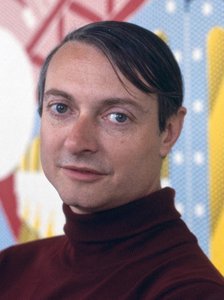
1923 - 1997 , USA


Hold deg oppdatert med de siste kunstnyhetene, eksklusive tilbud og dekorasjonsideer.
Fortell oss om prosjektet ditt, så vil våre kunsteksperter gi deg 3 personlige kunstforslag.
Vi velger ut 3 alternativer kun for deg – helt gratis!


 Forhåndsvisning
 Send
Send Del med andre
 Vis detaljer

 Last ned bildet
 Liknende objekter
 Røntgenundersøkelse
 Lysbildefremvisning

 Vis hele teksten


