

Giclée- eller lerretsprint av museumskvalitet med rask produksjon og fleksible valgmuligheter for etterbehandling. ( Kjøp håndlaget maleri Kjøp bilde)
Velg mellom våre forhåndsdefinerte størrelser som bevarer kunstverkets opprinnelige proporsjoner.

Du kan oppgi egne mål for å tilpasse en spesifikk ramme eller et bestemt område. Dersom den valgte størrelsen ikke samsvarer med det originale bildets proporsjoner, vil vi enten beskjære kunstverket eller utvide bildet med en speilet eller ensfarget kant. En digital mockup vil bli sendt til din godkjenning før produksjonen starter.
Vennligst merk at forhåndsvisningen på skjermen ikke gjenspeiler den faktiske beskjæringen eller utvidelsen. Kun mockuppen vil vise den endelige komposisjonen nøyaktig.
Selv om tilpassede størrelser er tilgjengelige, anbefaler vi å velge et mål fra den forhåndsdefinerte listen for å bevare de originale proporsjonene.
Verdensomspennende levering () på 2 uker i stedet for standard 4/5 uker. (21 August)


Ramat, Jerusalem
Størrelse på reproduksjon

Born in Santiago, Chile, in 1954, Soledad Salamé’s artistic journey is deeply rooted in a profound connection to both her homeland's dramatic landscapes and a burgeoning awareness of global environmental challenges. From an early age, she was immersed in the vibrant textures and colors of South America, experiences that would profoundly shape her distinctive approach to multimedia installations. Her formative years were marked by studies at Santiago College, culminating in a Bachelor of Fine Arts degree, followed by further artistic exploration in Caracas, Venezuela, where she honed her skills in graphic design and printmaking – disciplines that would later become integral components of her expansive practice.
Salamé’s career trajectory is characterized by a relentless pursuit of interdisciplinary dialogue. Initially influenced by the lush biodiversity of the Amazon rainforest, she began to synthesize scientific observation with artistic expression. This synthesis wasn't merely decorative; it was driven by a deep concern for ecological fragility and social justice. Her work quickly moved beyond traditional painting and sculpture, embracing innovative materials and techniques – glass casting, paper making, textiles, and even incorporating found objects – to create immersive environments that demanded active engagement from the viewer.
Salamé’s early installations, particularly those created in Venezuela during the 1980s and 90s, served as crucial laboratories for her evolving artistic language. The influence of the rainforest was palpable; she sought to capture its complex rhythms, textures, and inherent vulnerability through meticulously crafted pieces like “Garden of the Sacred Light” (1994). This work, constructed from wood, glass, and living plants, wasn’t simply a representation of nature but an attempt to embody its spirit—a testament to the ongoing process of growth, decay, and interconnectedness. Similarly, her exploration of the Tapojos River in 2001, leading to the creation of “Labyrinth of Solitude,” demonstrated a commitment to investigating environmental contamination and its impact on local communities.
These early projects established key themes that would continue to resonate throughout Salamé’s career: the interplay between art and science, the fragility of ecosystems, and the urgent need for ecological awareness. The use of natural materials—glass, paper, soil—was not arbitrary; it was a deliberate choice to ground her work in tangible realities and invite viewers to contemplate their own relationship with the environment.
Moving to Baltimore, Maryland, in 1983 marked a significant shift for Salamé. She established Sol Print Studios, a space dedicated to experimentation and collaboration—a hub where artists could explore new techniques and push the boundaries of their creative practice. This period witnessed an expansion into mixed media installations that increasingly incorporated technological elements. Her work began to address broader social issues alongside environmental concerns, including migration patterns driven by climate change and the impact of globalization on marginalized communities.
Notable examples from this era include “We The Migrants: Fleeing/Flooding” (2019), a powerful installation that confronted the human cost of ecological displacement. Her series "Amber" utilized resin to capture and preserve delicate details of decaying flora and fauna, creating hauntingly beautiful meditations on time, mortality, and the interconnectedness of life. The “City of Secrets” paintings, with their fragmented forms and evocative color palettes, explored themes of urban alienation and the hidden complexities of human experience.
Soledad Salamé’s work continues to be exhibited internationally, reflecting a sustained commitment to addressing pressing environmental and social issues. Her recent projects, such as “Camouflage” (2025), demonstrate an ongoing dialogue between art, science, and the human condition. This latest series builds upon her previous explorations of ecological vulnerability, utilizing textile techniques to transform images of the Atacama Desert—a region scarred by vast deposits of discarded textiles—into intricate camouflage patterns. These works serve as both a critique of consumer culture and a poignant reminder of the urgent need for sustainable practices.
Salamé’s legacy lies not only in her distinctive artistic style but also in her unwavering dedication to fostering interdisciplinary collaboration and raising awareness about critical global challenges. Her work invites viewers to engage with complex issues through a lens of beauty, empathy, and profound ecological responsibility.

1954 - , Chile

Explore the world of giclée prints with BuyPopArt. Learn about archival quality, aesthetic nuances & investment potential. Expert guidance for discerning art collectors seeking museum-quality reproductions and lasting value.

Explore the rich history & techniques of fine art prints. Discover investment potential, assess authenticity, and learn how to preserve your collection with expert guidance. Trusted insights for discerning collectors.

Explore 10 defining masterpieces of Romantic Realism! Discover Courbet, Millet & Daumier's powerful paintings—capturing emotion and social realities. Find museum-quality reproductions for your home at BuyPopArt.com.

Explore the profound history and technical mastery of woodcut relief printing. From ancient origins to German Expressionism, discover how artists use the subtractive process to create iconic works. A definitive guide for art students, collectors, and historians.
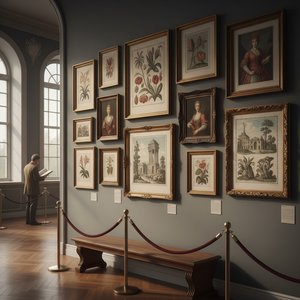
Explore the captivating world of vintage art prints! Discover their history, collecting tips & enduring appeal. Expert insights on chromolithography and building a legacy collection with BuyPopArt.


Hold deg oppdatert med de siste kunstnyhetene, eksklusive tilbud og dekorasjonsideer.
Fortell oss om prosjektet ditt, så vil våre kunsteksperter gi deg 3 personlige kunstforslag.
Vi velger ut 3 alternativer kun for deg – helt gratis!


 Forhåndsvisning
 Send
Send Del med andre
 Vis detaljer

 Last ned bildet
 Liknende objekter
 Røntgenundersøkelse
 Lysbildefremvisning


 Vis hele teksten




































 Glassalternativet er kun tilgjengelig i størrelser under 110 cm


