Zamów reprodukcję Zamów reprodukcjęKup cyfrowy obraz Kup cyfrowy obraz UdostępnijUdostępnij
Szczegóły dziełaSzczegóły dzieła Dodaj do ulubionych Dodaj do ulubionych PobierzPobierz Podobne obiektyPodobne obiekty RTGRTG Pokaz slajdówPokaz slajdów

Upside Down Ada

Explore Alex Katz’s ‘Upside Down Ada,’ a Pop Art portrait showcasing bold forms & intimate detail. Discover this MoMA masterpiece's unique style and captivating composition.

Alex Katz (ur. 1927) – pionier sztuki popowej, znany z prostoty i jaskrawych barw w portretach i krajobrazach. Jego innowacyjne techniki, takie jak 'cutout', wpłynęły na współczesną sztukę. Odkryj jego unikalny styl!

Giclée / Wydruk artystyczny

Druk giclée lub płótno o jakości muzealnej z szybką realizacją i szerokim wyborem opcji wykończenia.

Standard
custom
CM
INCH

Wybierz spośród naszych predefiniowanych rozmiarów, które zachowują oryginalne proporcje dzieła sztuki.

szerokość
wysokość

Możesz wprowadzić własne wymiary, aby dopasować dzieło do konkretnej ramy lub przestrzeni. Jeśli wybrany rozmiar nie będzie odpowiadał proporcjom oryginalnego obrazu, przytniecie dzieło lub rozszerzymy obraz za pomocą odbicia lustrzanego lub jednolitego wypełnienia krawędzi. Przed rozpoczęciem produkcji prześlemy cyfrową wizualizację do Twojej akceptacji.
Prosimy pamiętać, że podgląd na ekranie nie odzwierciedla faktycznego przycinania ani rozszerzania. Tylko wizualizacja dokładnie pokaże końcową kompozycję.
Mimo dostępności niestandardowych rozmiarów, zalecamy wybór wymiaru z listy zdefiniowanej, aby zachować oryginalne proporcje.

Dostawa na cały świat () w ciągu 2 tygodni zamiast standardowych 4/5 tygodni. (22 Lipiec)

why_choose_icon
Bezpłatna ekspresowa wysyłka na cały świat
why_choose_icon
Wysokiej jakości płótno lniane
why_choose_icon
Pełne ubezpieczenie przesyłki
why_choose_icon
Gwarancja zwrotu należności celnych
why_choose_icon
Gwarancja pełnego zgodności kolorystycznej
why_choose_icon
Polityka 60-dniowego zwrotu (tylko w przypadku wad)
why_choose_icon
Gwarancja 100% zwrotu pieniędzy
why_choose_icon
Zniżka przy większych zamówieniach

Suma całkowita

-

reproduction

Upside Down Ada

Giclée / Wydruk artystyczny

Wymiary reprodukcji

-

Cena całkowita

-

Opis obiektu kolekcjonerskiego

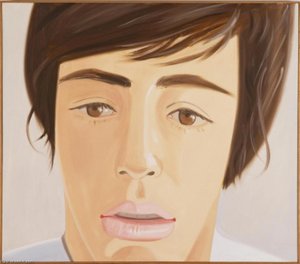
The Alex Katz painting, Upside Down Ada, is a quintessential example of Pop Art, showcasing the artist's unique style and characteristics. Created in 1965, this portrait of his wife, Ada Katz, is a testament to the Pop Art movement's exploration of familiar subjects through innovative visual approaches.

Pop Art Style and Characteristics

The Upside Down Ada painting features bold, simplified forms and a restrained palette, which are hallmarks of Alex Katz's distinctive style. The composition focuses closely on the subject's face, emphasizing her large, round eyes and dark hair, which cascades downward due to the inverted perspective. This unconventional depiction of a female subject is a characteristic of Pop Art, which often challenges traditional representations of beauty and identity. Key elements of the painting include:
  • The use of bold, vibrant colors to create a sense of depth and dimensionality
  • The simplification of forms, which gives the painting a sense of flatness and two-dimensionality
  • The emphasis on the subject's face and hair, which creates a sense of intimacy and vulnerability
The Upside Down Ada painting is part of the collection at the Museum of Modern Art (MoMA) in New York, and can also be found on BuyPopArt.com, where you can discover more about the artist and his works. Pop Art movement is characterized by its use of popular culture and consumer products as subject matter, often with a sense of irony or humor. Alex Katz's work, including Upside Down Ada, is a prime example of this movement, which challenged traditional notions of art and beauty.
For more information on Alex Katz and his works, visit BuyPopArt.com or Wikipedia.

Biografia artysty

Alex Katz

Born July 24, 1927, Sheepshead Bay, Brooklyn, New York, USA Early Life and Education Alex Katz’s artistic journey began in a modest Brooklyn upbringing where his family relocated shortly after he was born. From an early age, he demonstrated a fervent passion for art—a fascination that would shape the trajectory of his entire career. He pursued formal training at the Cooper Union (1946-1949), immersing himself in Modern art theories and techniques under the guidance of Morris Kantor. This foundational knowledge proved invaluable as he honed his skills further at the Skowhegan School of Painting and Sculpture in Maine, prioritizing painting directly from life—a practice that instilled a profound appreciation for observation and capturing fleeting moments. Artistic Style and Influences Katz’s distinctive artistic style is instantly recognizable: characterized by remarkable simplicity, bold color palettes, and an understated emotional detachment. His oeuvre spans portraiture and landscape genres, often presented with meticulous precision and striking visual impact. He cites Kitagawa Utamaro—a Japanese woodblock printmaker renowned for his serene depictions of human figures—as a significant influence, mirroring stylistic similarities with Andy Warhol and Keith Haring. Katz’s innovative approach extended beyond mere representation; he experimented extensively with “cutouts”—painting on panels of wood or aluminum—creating layered compositions that challenged conventional artistic conventions. Furthermore, he embraced the technique of applying paint directly onto shaped aluminum sheets, establishing a signature visual element that cemented his place within the Pop Art movement. Perhaps most notably, Katz consistently employed monochrome backgrounds—a deliberate departure from gestural figure painters—anticipating and embodying the aesthetic principles of Pop Art while simultaneously elevating the importance of color as a compositional tool. His artistic vision was further enriched by incorporating photographic and cinematic strategies: cropping images strategically, utilizing decoupage techniques, and replicating visual motifs to generate rhythmic patterns within his paintings. Notable Works and Development Katz’s early explorations centered around small collages featuring figures nestled amidst landscapes—a stylistic hallmark that foreshadowed his later preoccupation with portraying human subjects against tranquil natural settings. Portraiture became a central focus of his artistic endeavors, capturing the essence of individuals—particularly his wife, Ada—with remarkable sensitivity and nuance. Iconic paintings such as “Alex Katz: Thursday Night” and “Alex Katz: Ada in Black Sweater” exemplify this commitment to conveying emotion through carefully considered visual elements. During the 1960s, Katz pushed boundaries with large-scale canvases featuring dramatic cropping of faces—a technique inspired by film aesthetics and advertising—demonstrating his ability to distill complex narratives into impactful images. His landscape series from the late 1980s and 1990s showcased a shift towards painterly brushstrokes and looser edges, reflecting an evolving engagement with Impressionistic influences. He ventured into uncharted territory with “Night Pictures,” exploring new light sources and rejecting traditional sunlit landscapes—a bold stylistic decision that underscored his willingness to challenge artistic conventions. Finally, Katz’s fascination with floral imagery culminated in prolific canvases adorned with blossoms—a visual celebration of beauty and organic form that solidified his reputation as a master of botanical representation. Recent works continue to explore the power of visual simplification, utilizing iPhone photography as a springboard for compositional explorations and emphasizing precise cropping techniques—a testament to Katz's enduring commitment to artistic innovation. Achievements and Historical Significance Alex Katz’s contribution to contemporary art extends beyond stylistic experimentation; he achieved considerable acclaim throughout his prolific career. He collaborated with choreographer Paul Taylor, designing sets and costumes that complemented the dancer’s performances. His work has been recognized by numerous awards and accolades—a testament to his artistic merit and enduring influence. Katz's paintings reside in prominent collections worldwide, including the Centre Georges Pompidou, Tate Gallery, and Guggenheim Museum Bilbao—affirming his status as a pivotal figure within the global art landscape. More than just an artist, Katz embodies a philosophy of understated elegance and profound observation—a legacy that continues to inspire artists today. His unwavering dedication to capturing beauty in simplicity has cemented his place as one of the most influential painters of the 20th century.
Alex Katz

Alex Katz

1927 - , Stany Zjednoczone

Kluczowe informacje

  • Artistic Movement Or Style: Pop Art, Figurat.
  • Artists Or Movements Influenced By This Artist:
    • Andy Warhol
    • Keith Haring
  • Artists Who Influenced This Artist: ['Kitagawa Utamaro']
  • Date Of Birth: 24 lipca 1927
  • Full Name: Alex Katz
  • Nationality: Amerykański
  • Notable Artworks:
    • Alex: Czwartek
    • Ada w cz.
    • Penobscot
  • Place Of Birth (City And Country): Brooklyn, USA