Acrylic On CanvasWallArtGerman Expressionism
 1913
1913 810.0 x 1050.0 cm
 Kunstpalast
Druk giclée lub płótno o jakości muzealnej, szybka realizacja i szeroki wybór opcji wykończenia. ( Zamów ręcznie malowaną reprodukcję Kup obraz wysokiej rozdzielczości)





























Wybierz spośród naszych standardowych rozmiarów, które zachowują oryginalne proporcje dzieła sztuki.

Możesz wprowadzić własne wymiary, aby dopasować dzieło do konkretnej ramy lub przestrzeni. Jeśli wybrany rozmiar nie będzie odpowiadał proporcjom oryginalnego obrazu, przytniecie dzieło lub rozszerzymy obraz za pomocą odbicia lustrzanego lub jednolitego wypełnienia krawędzi. Przed rozpoczęciem produkcji prześlemy cyfrową wizualizację do Twojej akceptacji.
Prosimy pamiętać, że podgląd na ekranie nie odzwierciedla faktycznego przycinania ani rozszerzania. Tylko wizualizacja dokładnie pokaże końcową kompozycję.
Mimo dostępności niestandardowych rozmiarów, zalecamy wybór wymiaru z listy zdefiniowanej, aby zachować oryginalne proporcje.
Dostawa na cały świat () w ciągu 2 tygodni zamiast standardowych 4/5 tygodni. (15 Sierpień)


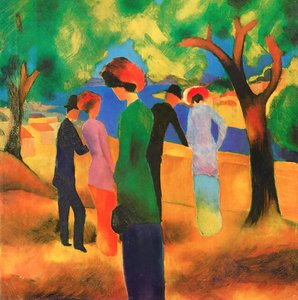
Four Girls
Wymiary reprodukcji
August Macke's "Four Girls," painted in 1913, stands as a pivotal work within the artist’s trajectory and a compelling example of the burgeoning movement towards abstraction that was reshaping European art at the time. Created during a remarkably productive period in Bonn, this painting embodies Macke’s shift away from purely representational forms toward a more emotionally charged and visually dynamic style – a hallmark of his engagement with both German Expressionism and the innovative approaches emerging from Paris.
Painted in 1913, “Four Girls” reflects a crucial moment in art history – the collision of Impressionism’s influence with the rising tide of German Expressionism. Macke, like many artists of his generation, was grappling with the rapid changes occurring in Paris and seeking to synthesize these diverse influences into a uniquely German aesthetic. The painting's rhythmic colour harmonies and simplified forms align with the Blaue Reiter group’s exploration of abstraction and emotional expression, while simultaneously retaining a distinctly Impressionistic sensibility in its focus on light and atmosphere.
Macke’s artistic journey was profoundly shaped by his travels and intellectual explorations. His time in Tunis in 1914 further intensified his experimentation with transparency, flatness, and abstract forms, anticipating the developments of Cubism and Abstraction that would dominate the art world in the years to come.
Macke’s technique is characterized by a confident brushstroke and a deliberate layering of colour. He employed a palette knife alongside traditional brushes to build up thick impasto surfaces, creating a tactile quality that adds to the painting's visual richness. The use of pure pigments, combined with Macke’s innovative approach to colour mixing, results in vibrant, luminous tones that seem to shimmer and vibrate on the canvas. The scale of this artwork – 810 x 1050 cm – further amplifies its impact, allowing for an immersive experience of colour and form.
"Four Girls" transcends a simple portrait; it’s a meditation on youth, leisure, and the beauty of nature. The presence of the dog and handbag adds subtle details that enhance the sense of everyday life and human connection. Macke's ability to capture not just the outward appearance of his subjects but also their inner emotions is what elevates this work beyond mere representation. It speaks to a yearning for simplicity, harmony, and the joy of shared experience – themes that resonate deeply with viewers even today.

1887 - 1914 , Niemcy

Explore the visceral world of German Expressionism. Discover how masters like Ernst Ludwig Kirchner used bold colors and distortion to convey raw emotion, through our expert-led deep dive into this transformative era of art history.


Bądź na bieżąco z najnowszymi wiadomościami ze świata sztuki, ekskluzywnymi ofertami i inspiracjami dekoratorskimi.
Opowiedz nam o swoim projekcie, a nasi eksperci przygotują dla Ciebie 3 spersonalizowane propozycje dzieł sztuki.
Przygotujemy dla Ciebie 3 propozycje zupełnie za darmo!


 Podgląd w skali
 Wyślij jako kartkę
 Udostępnij
 Szczegóły dzieła

 Pobierz
 Podobne obiekty
 RTG
RTG Pokaz slajdów
 Rozwiń treść







 Opcja ze szkłem jest dostępna wyłącznie w rozmiarach poniżej 110 cm