Druk giclée lub płótno o jakości muzealnej, szybka realizacja i szeroki wybór opcji wykończenia. ( Zamów ręcznie malowaną reprodukcję Kup obraz wysokiej rozdzielczości)





























Wybierz spośród naszych standardowych rozmiarów, które zachowują oryginalne proporcje dzieła sztuki.

Możesz wprowadzić własne wymiary, aby dopasować dzieło do konkretnej ramy lub przestrzeni. Jeśli wybrany rozmiar nie będzie odpowiadał proporcjom oryginalnego obrazu, przytniecie dzieło lub rozszerzymy obraz za pomocą odbicia lustrzanego lub jednolitego wypełnienia krawędzi. Przed rozpoczęciem produkcji prześlemy cyfrową wizualizację do Twojej akceptacji.
Prosimy pamiętać, że podgląd na ekranie nie odzwierciedla faktycznego przycinania ani rozszerzania. Tylko wizualizacja dokładnie pokaże końcową kompozycję.
Mimo dostępności niestandardowych rozmiarów, zalecamy wybór wymiaru z listy zdefiniowanej, aby zachować oryginalne proporcje.
Dostawa na cały świat () w ciągu 2 tygodni zamiast standardowych 4/5 tygodni. (17 Sierpień)


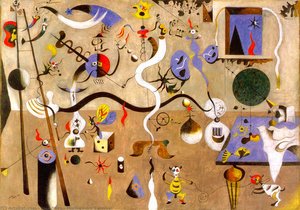
Desnudo
Wymiary reprodukcji
Joan Miró's "Desnudo" (Naked), painted in 1926, isn’t merely a depiction of the human form; it’s an immersion into a surrealist dreamscape—a vibrant testament to the Catalan artist’s unique vision and his profound engagement with the subconscious. This captivating work, rendered primarily in bold blocks of red, yellow, green, and beige against a stark black backdrop, immediately draws the viewer into a world where familiar forms are playfully distorted and imbued with symbolic weight. It's a piece that whispers of fertility, memory, and the boundless potential of imagination, echoing the spirit of early Surrealism while retaining Miró’s distinctly personal style.
The composition itself is deliberately asymmetrical, guiding the eye through a carefully orchestrated arrangement of abstract shapes. A stylized female figure dominates the left side, her form suggestive yet ambiguous—a potent symbol that could represent femininity, creativity, or perhaps simply the raw energy of life itself. Scattered around this central element are a series of intriguing motifs: a vibrant green shape reminiscent of a fruit or leaf, a striking red circle punctuated by yellow tendrils, and a pear-like form adding to the organic chaos. A subtle, dashed horizontal line bisects the canvas, providing a structural anchor within the otherwise fluid arrangement, preventing the piece from dissolving entirely into pure abstraction. This deliberate balance between order and disorder is characteristic of Miró’s approach – he sought to capture the essence of both logic and intuition.
Miró's masterful use of color is central to the painting’s impact. The limited palette—primarily reds, yellows, greens, and beiges—is applied with a remarkable directness; there’s little blending or softening of edges. Instead, each shape exists as a distinct entity, radiating its own internal glow against the enveloping darkness. This technique creates a powerful visual texture, emphasizing the materiality of the paint itself and lending the work a graphic, almost childlike quality. The sparing use of lines—primarily in the form of the dashed horizontal line and the outlines of the shapes—further contributes to the painting’s abstract feel, reinforcing its sense of immediacy and spontaneity.
“Desnudo” firmly places itself within the context of early 20th-century Surrealism, drawing inspiration from artists like Joan Miró himself. However, it’s crucial to recognize that Miró developed a highly individual style, deeply rooted in his Catalan heritage. The organic forms—resembling natural elements but rendered with an element of dreamlike distortion—evoke the rugged landscapes and folklore of Catalonia, a region he consistently revisited throughout his career. The influence of Gaudí's architectural innovations is also subtly present, particularly in the flowing curves and biomorphic shapes that populate the composition. The painting feels both intensely personal and deeply connected to its cultural origins.
Beyond its formal qualities, “Desnudo” resonates with a profound sense of dreamlike wonder and playful abstraction. The scattered shapes can be interpreted as fragments of memory, echoes of the subconscious, or perhaps even representations of primal instincts. The central figure’s ambiguous nature invites multiple readings—a symbol of fertility, creativity, or simply the mystery of human existence. Ultimately, Miró's work resists easy interpretation, encouraging viewers to engage with the painting on a deeply personal level and to construct their own meaning within its evocative space. “Desnudo” is not just a painting; it’s an invitation to step into a world where logic dissolves and imagination reigns supreme.
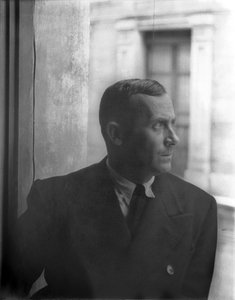
1893 - 1983 , Hiszpania

Master the high-impact world of contemporary abstraction. Discover how bold colors, textures, and modern movements like Abstract Expressionism can transform your space with premium, high-energy art curated for the design-conscious professional.

Dive into the high-energy world of Lyrical Abstraction. Explore how bold colors, fluid motion, and emotional depth define this modern masterpiece movement. Discover iconic artists and learn to bring this vibrant, soulful energy into your contemporary space.

Discover the power of Neo-Abstract art. Explore how bold geometric forms and high-impact visual energy are redefining modern design. Learn to curate sophisticated, high-energy spaces with the latest trends in contemporary abstraction and structural color.


Bądź na bieżąco z najnowszymi wiadomościami ze świata sztuki, ekskluzywnymi ofertami i inspiracjami dekoratorskimi.
Opowiedz nam o swoim projekcie, a nasi eksperci przygotują dla Ciebie 3 spersonalizowane propozycje dzieł sztuki.
Przygotujemy dla Ciebie 3 propozycje zupełnie za darmo!


 Podgląd w skali
 Wyślij jako kartkę
 Udostępnij
 Szczegóły dzieła

 Pobierz
 Podobne obiekty
 RTG
RTG Pokaz slajdów

 Rozwiń treść







 Opcja ze szkłem jest dostępna wyłącznie w rozmiarach poniżej 110 cm