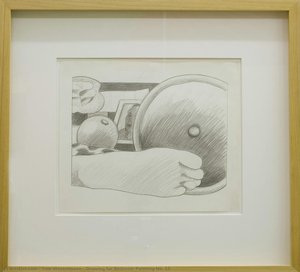
Acrylic On PaperNeo-Dada
 1958
1958 21.0 x 29.0 cm
 Tate Modern
Kup wysokiej rozdzielczości, ulepszony obraz cyfrowy o znacznie wyższej jakości niż podgląd online.
Każdy plik jest starannie przygotowywany przez naszych specjalistów przy użyciu zaawansowanych narzędzi oraz profesjonalnej, ręcznej retuszy. Dbamy o to, aby każdy obraz cechował się wyjątkową ostrością, precyzyjnym odwzorowaniem kolorów i subtelnymi detalami.
Ostateczny plik dostarczany jest drogą mailową w ciągu 72 godzin, zoptymalizowany do natychmiastowego wykorzystania w profesjonalnych zastosowaniach redakcyjnych i poligraficznych. To ta sama jakość, której ufają czołowe studia projektowe, wydawnictwa oraz galerie sztuki.
Pobierz plik o wysokiej rozdzielczości do osobistego wyświetlania, druku oraz projektów kreatywnych. ( Kup wydruk Kup ręcznie malowany obraz)
Wybierając BuyPopArt.com, nie otrzymujesz jedynie obrazu – otrzymujesz profesjonalnie udoskonalone cyfrowe dzieło sztuki, stworzone z najwyższą precyzją i objęte gwarancją satysfakcji. Oto wszystko, co automatycznie dołączane jest do Twojego zamówienia:

Plik z obrazem cyfrowym w wysokiej rozdzielczości zostanie przesłany na Twój adres e-mail w ciągu 72 godzin od złożenia zamówienia – gotowy do natychmiastowego użycia.

Twoja grafika została profesjonalnie zoptymalizowana przy użyciu zaawansowanych narzędzi AI oraz ręcznej edycji, co zapewnia maksymalną szczegółowość, klarowność i wierność kolorów.

Przypadkowo usunąłeś lub zgubiłeś swój plik? Bez obaw – prześlemy go Tobie ponownie w dowolnym momencie, bez żadnych opłat.

Ciesz się swoją sztuką natychmiast, bez żadnych opłat celnych, należności ani kosztów dostawy – pliki cyfrowe są zawsze wolne od podatku.

Dzięki zastosowaniu profesjonalnych narzędzi i procesów zarządzania barwą zapewniamy, że Twoje cyfrowe zdjęcie odzwierciedla oryginalne kolory tak wiernie, jak to tylko możliwe.

Jeśli nie będziesz zadowolony ze swojego cyfrowego obrazu, dokonamy jego poprawki lub zwrócimy 100% kosztów w ciągu 60 dni – bez żadnych pytań.

Nie jesteś zadowolony? Otrzymaj pełny zwrot kosztów w ciągu 60 dni od otrzymania pliku cyfrowego – bez zbędnych pytań.

Kup 3 obrazy, oszczędź 10% - Kup 5, oszczędź 15% - Kup 10+, oszczędź 20%. Idealne do projektów kreatywnych, galerii i agencji.
Joseph Beuys's "Actresses," rendered in 1958 on a deceptively simple pale beige background, isn’t merely a sketch; it’s a distilled essence of performance, vulnerability, and the potent symbolism inherent within the human form. This preparatory drawing, a glimpse into the mind of one of the 20th century's most radical artists, immediately draws the viewer in with its loose, gestural lines – a deliberate rejection of rigid representation in favor of capturing a fleeting moment of embodied expression. The two figures, presented in profile and seemingly caught mid-movement, possess an immediate theatricality, hinting at dancers, performers, or perhaps even the silent drama of everyday life. Beuys wasn’t interested in replicating reality; he sought to translate feeling onto paper, imbuing his subjects with a palpable sense of energy and contained emotion.
The composition is strikingly asymmetrical, defying traditional notions of balance. The figures aren’t centered within the frame, instead occupying distinct points that create a dynamic imbalance—a visual representation of movement itself. Vertical lines, subtly introduced from the top edge, provide an anchor and structure to this otherwise fluid arrangement, preventing the drawing from dissolving into pure abstraction. Beuys's technique is characterized by a masterful use of hatching and cross-hatching, skillfully employed to build volume and shadow without resorting to precise shading. The loose, sketchy lines, rendered with charcoal or graphite, contribute significantly to the overall sense of spontaneity and immediacy—as if the artist were capturing a fleeting impression rather than meticulously crafting a finished image. Notice how he uses varying line weights to emphasize certain areas, drawing attention to the contours of the figures’ limbs and torsos.
The muted color palette—dominated by earthy browns, ochres, and subtle touches of purple—reinforces the drawing's emotional depth. The beige background acts as a neutral canvas, allowing the figures to command attention without distraction. The small area of mauve on one figure introduces an element of mystery or perhaps even melancholy, hinting at hidden emotions beneath the surface. Beyond mere color choices, Beuys’s use of earth tones speaks to a deep connection with nature and the primal roots of human experience. Considering his later work focused heavily on social sculpture and the integration of art into everyday life, this grounding in natural materials and forms is profoundly significant. The elongated figures themselves can be interpreted as symbols of theatricality—a deliberate exaggeration that highlights the performative aspect of existence.
“Actresses” was created during a period of immense social and political upheaval in post-war Germany, a time when artists were grappling with questions of identity, purpose, and the role of art in society. Beuys’s work reflects this broader context, aligning with the burgeoning Expressionist movement and foreshadowing the rise of Fluxus and other avant-garde artistic practices. The drawing's emphasis on gesture and emotion anticipates the performance art that would become increasingly prominent in the latter half of the 20th century. Furthermore, it shares affinities with Surrealism, particularly in its exploration of the subconscious and its use of symbolic imagery. It’s worth noting that Beuys himself was deeply influenced by Carl Linnaeus's *Systema Naturae*, a book he rescued from a Nazi book burning—an event that profoundly shaped his artistic philosophy and his belief in art as a tool for social transformation. The drawing, therefore, can be seen as a meditation on the fragility of existence and the enduring power of human connection.
This preparatory sketch offers a rare glimpse into the creative process of one of the 20th century’s most visionary artists. “Actresses” is more than just a drawing; it's a testament to Beuys’s profound understanding of the human condition and his unwavering commitment to exploring the transformative potential of art.

1921 - 1986 , Niemcy


Bądź na bieżąco z najnowszymi wiadomościami ze świata sztuki, ekskluzywnymi ofertami i inspiracjami dekoratorskimi.
Opowiedz nam o swoim projekcie, a nasi eksperci przygotują dla Ciebie 3 spersonalizowane propozycje dzieł sztuki.
Przygotujemy dla Ciebie 3 propozycje zupełnie za darmo!


 Podgląd w skali
 Wyślij jako kartkę
 Udostępnij
 Szczegóły dzieła

 Pobierz
 Podobne obiekty
 RTG
RTG Pokaz slajdów
 Rozwiń treść