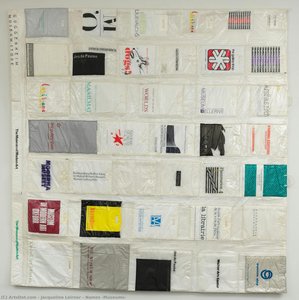
2011
2011 162.0 x 130.0 cm
Kup wysokiej rozdzielczości, ulepszony obraz cyfrowy o znacznie wyższej jakości niż podgląd online.
Każdy plik jest starannie przygotowywany przez naszych specjalistów przy użyciu zaawansowanych narzędzi oraz profesjonalnej, ręcznej retuszy. Dbamy o to, aby każdy obraz cechował się wyjątkową ostrością, precyzyjnym odwzorowaniem kolorów i subtelnymi detalami.
Ostateczny plik dostarczany jest drogą mailową w ciągu 72 godzin, zoptymalizowany do natychmiastowego wykorzystania w profesjonalnych zastosowaniach redakcyjnych i poligraficznych. To ta sama jakość, której ufają czołowe studia projektowe, wydawnictwa oraz galerie sztuki.
Pobierz plik o wysokiej rozdzielczości do osobistego wyświetlania, druku oraz projektów kreatywnych. ( Zamów wydruk Zamów ręcznie malowaną reprodukcję)
Wybierając BuyPopArt.com, nie otrzymujesz jedynie obrazu – otrzymujesz profesjonalnie udoskonalone cyfrowe dzieło sztuki, stworzone z najwyższą precyzją i objęte gwarancją satysfakcji. Oto wszystko, co automatycznie dołączane jest do Twojego zamówienia:

Plik z obrazem cyfrowym w wysokiej rozdzielczości zostanie przesłany na Twój adres e-mail w ciągu 72 godzin od złożenia zamówienia – gotowy do natychmiastowego użycia.

Twoja grafika została profesjonalnie zoptymalizowana przy użyciu zaawansowanych narzędzi AI oraz ręcznej edycji, co zapewnia maksymalną szczegółowość, klarowność i wierność kolorów.

Przypadkowo usunąłeś lub zgubiłeś swój plik? Bez obaw – prześlemy go Tobie ponownie w dowolnym momencie, bez żadnych opłat.

Ciesz się swoją sztuką natychmiast, bez żadnych opłat celnych, należności ani kosztów dostawy – pliki cyfrowe są zawsze wolne od podatku.

Dzięki zastosowaniu profesjonalnych narzędzi i procesów zarządzania barwą zapewniamy, że Twoje cyfrowe zdjęcie odzwierciedla oryginalne kolory tak wiernie, jak to tylko możliwe.

Jeśli nie będziesz zadowolony ze swojego cyfrowego obrazu, dokonamy jego poprawki lub zwrócimy 100% kosztów w ciągu 60 dni – bez żadnych pytań.

Nie jesteś zadowolony? Otrzymaj pełny zwrot kosztów w ciągu 60 dni od otrzymania pliku cyfrowego – bez zbędnych pytań.

Kup 3 obrazy, oszczędź 10% - Kup 5, oszczędź 15% - Kup 10+, oszczędź 20%. Idealne do projektów kreatywnych, galerii i agencji.
In the quiet intersection where Eastern contemplative traditions meet the rigorous inquiries of Western phenomenology, the work of Lee Ufan resides. Born in 1936 in Haman-gun, Gyeongsangnam-do, Lee’s early life was steeped in the disciplined rhythms of a traditional Confucian household. His childhood was not merely an era of growth but one of profound cultural immersion, where the delicate strokes of calligraphy and the rhythmic beauty of inkbrush painting served as his first languages. This foundational training in the classical arts provided him with a deep-seated reverence for the materiality of ink and paper, a sensitivity that would later become the heartbeat of his minimalist masterpieces.
Lee’s journey took a transformative turn in 1956 when he moved to Yokohama, Japan, seeking new intellectual horizons. While his initial studies at Seoul National University focused on painting, it was his immersion in the study of philosophy at Nihon University that would ultimately redefine his artistic trajectory. By engaging with the profound works of thinkers like Martin Heidegger and Maurice Merleau-Ponty, Lee began to develop a theoretical framework that sought to bridge the gap between being and nothingness. He did not merely wish to paint objects; he sought to explore the very essence of existence through the interaction of space, matter, and perception.
As the late 1960s approached, Lee Ufan emerged as the preeminent theorist and driving force behind the Mono-ha, or "School of Things" movement. This was not a movement defined by the creation of new forms, but rather by a radical reconsideration of what already exists. Through his seminal essays, Lee advocated for an art that emphasized the relationship between natural and man-made materials—stones, steel, glass, and wood—allowing them to exist in their raw, unadulterated state. His philosophy was a deliberate antidote to the Eurocentric dominance of the era, proposing a methodology of de-westernization that favored the experiential engagement of the viewer with the site.
Parallel to his influence in Japan, Lee’s artistic spirit breathed life into the Dansaekjo movement in South Korea. This "monotone art" emphasized the meditative process of painting, where the repetitive application of pigment became a ritualistic act of connection between the artist's hand and the canvas. His work during this period moved away from expressive abstraction toward a more restrained, rhythmic aesthetic that celebrated the subtle nuances of texture and tone. In doing so, he helped establish a uniquely Korean modernism that resonated far beyond the borders of the peninsula.
The mature works of Lee Ufan, such as his celebrated From Point and From Line series, serve as breathtaking meditations on time and decay. In these pieces, a single brushstroke begins with intense saturation and gradually fades into nothingness, tracing the inevitable passage of time and the ephemeral nature of existence. Each mark is an event; each void is a presence. The viewer is invited to witness the dialogue between the painted trace and the untouched canvas, a relationship that mirrors the profound interconnectedness of all things in the natural world.
Throughout his storied career, Lee has navigated the complexities of history—from the political turbulence of post-war Korea to his life as a cultural wanderer between Kamakura and Paris. His achievements have been recognized with the highest honors, including the Legion of Honour and the Praemium Imperiale. Today, his legacy is physically anchored in the Lee Ufan Museum on Naoshima island, a collaborative marvel designed with architect Tadao Ando. This space, where light and shadow dance across concrete walls, stands as a testament to Lee’s lifelong pursuit: an art that does not demand attention through noise, but commands reverence through its profound, resonant silence.

1936 -


Bądź na bieżąco z najnowszymi wiadomościami ze świata sztuki, ekskluzywnymi ofertami i inspiracjami dekoratorskimi.
Opowiedz nam o swoim projekcie, a nasi eksperci przygotują dla Ciebie 3 spersonalizowane propozycje dzieł sztuki.
Przygotujemy dla Ciebie 3 propozycje zupełnie za darmo!


 Podgląd w skali
 Wyślij jako kartkę
 Udostępnij
 Szczegóły dzieła

 Pobierz
 Podobne obiekty
 RTG
RTG Pokaz slajdów
 Rozwiń treść