

 Acrylic On CanvasWallArtSpatialism
 1955Late Medieval
 80.0 x 65.0 cm
 Boschi Di Stefano House Museum
Kup wysokiej rozdzielczości, ulepszony obraz cyfrowy o znacznie wyższej jakości niż podgląd online.
Każdy plik jest starannie przygotowywany przez naszych specjalistów przy użyciu zaawansowanych narzędzi oraz profesjonalnej, ręcznej retuszy. Dbamy o to, aby każdy obraz cechował się wyjątkową ostrością, precyzyjnym odwzorowaniem kolorów i subtelnymi detalami.
Ostateczny plik dostarczany jest drogą mailową w ciągu 72 godzin, zoptymalizowany do natychmiastowego wykorzystania w profesjonalnych zastosowaniach redakcyjnych i poligraficznych. To ta sama jakość, której ufają czołowe studia projektowe, wydawnictwa oraz galerie sztuki.
Pobierz plik o wysokiej rozdzielczości do osobistego wyświetlania, druku oraz projektów kreatywnych. ( Zamów wydruk Zamów ręcznie malowaną reprodukcję)
Wybierając BuyPopArt.com, nie otrzymujesz jedynie obrazu – otrzymujesz profesjonalnie udoskonalone cyfrowe dzieło sztuki, stworzone z najwyższą precyzją i objęte gwarancją satysfakcji. Oto wszystko, co automatycznie dołączane jest do Twojego zamówienia:

Plik z obrazem cyfrowym w wysokiej rozdzielczości zostanie przesłany na Twój adres e-mail w ciągu 72 godzin od złożenia zamówienia – gotowy do natychmiastowego użycia.

Twoja grafika została profesjonalnie zoptymalizowana przy użyciu zaawansowanych narzędzi AI oraz ręcznej edycji, co zapewnia maksymalną szczegółowość, klarowność i wierność kolorów.

Przypadkowo usunąłeś lub zgubiłeś swój plik? Bez obaw – prześlemy go Tobie ponownie w dowolnym momencie, bez żadnych opłat.

Ciesz się swoją sztuką natychmiast, bez żadnych opłat celnych, należności ani kosztów dostawy – pliki cyfrowe są zawsze wolne od podatku.

Dzięki zastosowaniu profesjonalnych narzędzi i procesów zarządzania barwą zapewniamy, że Twoje cyfrowe zdjęcie odzwierciedla oryginalne kolory tak wiernie, jak to tylko możliwe.

Jeśli nie będziesz zadowolony ze swojego cyfrowego obrazu, dokonamy jego poprawki lub zwrócimy 100% kosztów w ciągu 60 dni – bez żadnych pytań.

Nie jesteś zadowolony? Otrzymaj pełny zwrot kosztów w ciągu 60 dni od otrzymania pliku cyfrowego – bez zbędnych pytań.

Kup 3 obrazy, oszczędź 10% - Kup 5, oszczędź 15% - Kup 10+, oszczędź 20%. Idealne do projektów kreatywnych, galerii i agencji.
Lucio Fontana's "Spatial Concept," painted in 1955, isn’t merely a painting; it’s a declaration. Born from the fertile ground of post-war Italy and fueled by a desire to transcend traditional artistic boundaries, this work embodies the very genesis of Spatialism – a revolutionary movement that redefined the relationship between art and space itself. Fontana, having spent formative years in Argentina before returning to Italy, carried with him a restless spirit and a profound questioning of established norms. He sought to dismantle the conventional limitations of painting, moving beyond the static surface to engage with the dynamic reality of the surrounding environment. “Spatial Concept” achieves this through a deceptively simple yet profoundly impactful gesture: the deliberate incision into a monochrome canvas.
The painting’s foundation is a stark, almost austere black field – a deliberate choice that amplifies the drama of the intervention. Against this backdrop, Fontana introduces a series of precisely executed perforations, creating a network of holes that disrupt the surface and invite contemplation. These aren't random marks; they are carefully considered punctures, strategically placed to suggest a dialogue between the two-dimensional plane and an unseen, boundless space beyond. The composition is subtly asymmetrical, with a denser concentration of these apertures towards the upper left quadrant, punctuated by a vertical line of smaller elements – tiny dots or beads interspersed with fragments of blue glass. This central axis creates a sense of directed movement, drawing the eye through the work and hinting at an underlying order within apparent chaos.
Fontana’s technique is both meticulous and intuitively expressive. The canvas itself – typically primed with a thin white wash – serves as the stage for his radical intervention. He employed an awl, meticulously creating each hole with precision and control. The choice of black paint was equally deliberate; it provided a stark contrast to the perforations, intensifying their visual impact and emphasizing their spatial qualities. Crucially, Fontana didn’t simply cut into the canvas; he often lined the reverse with black gauze, allowing the darkness behind the openings to shimmer and create an illusion of depth – effectively turning the painting into a window onto another dimension. The incorporation of small blue fragments—likely meticulously chosen pieces of glass or ceramic—adds a subtle chromatic counterpoint, suggesting a connection to the natural world and further enriching the work’s layered complexity.
Beyond the canvas itself, Fontana's approach was deeply interdisciplinary. He drew inspiration from architecture, industrial design, and even scientific concepts like space exploration. This fusion of influences is evident in his use of materials – a deliberate departure from traditional painting mediums – and his conceptual framework, which sought to dissolve the boundaries between art and reality.
“Spatial Concept” transcends mere representation; it’s an exploration of fundamental concepts—space, time, and perception. The act of cutting into the canvas can be interpreted as a symbolic gesture of liberation – a breaking free from the constraints of traditional artistic conventions. The holes themselves evoke feelings of fragmentation and incompleteness, mirroring the anxieties and uncertainties of the post-war era. Yet, alongside this sense of disruption, there’s also an underlying feeling of order and connection, suggested by the central vertical line and the carefully arranged blue fragments.
Fontana himself described his work as “an art for the Space Age,” reflecting a belief that art should engage with the world around us—not simply depict it. “Spatial Concept” invites viewers to step beyond the confines of the canvas, to contemplate the space surrounding them, and to consider their own relationship to the vastness of existence. It’s a powerfully evocative work that continues to resonate today, reminding us of the enduring power of art to challenge our perceptions and expand our horizons.
Created in 1955, “Spatial Concept” sits firmly within Fontana's broader body of work exploring Spatialism. It’s a pivotal piece in understanding his radical approach to painting, which he developed over decades and that profoundly influenced subsequent generations of artists. To delve deeper into this fascinating artist and movement, consider exploring the resources linked below:

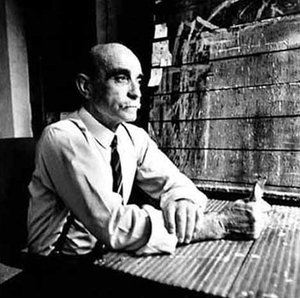
1899 - 1968 , Argentyna


Bądź na bieżąco z najnowszymi wiadomościami ze świata sztuki, ekskluzywnymi ofertami i inspiracjami dekoratorskimi.
Opowiedz nam o swoim projekcie, a nasi eksperci przygotują dla Ciebie 3 spersonalizowane propozycje dzieł sztuki.
Przygotujemy dla Ciebie 3 propozycje zupełnie za darmo!


 Podgląd w skali
 Wyślij jako kartkę
 Udostępnij
 Szczegóły dzieła

 Pobierz
 Podobne obiekty
 RTG
RTG Pokaz slajdów
 Rozwiń treść


