Druk giclée lub płótno o jakości muzealnej, szybka realizacja i szeroki wybór opcji wykończenia. ( Zamów ręcznie malowaną reprodukcję Kup obraz wysokiej rozdzielczości)





























Wybierz spośród naszych standardowych rozmiarów, które zachowują oryginalne proporcje dzieła sztuki.

Możesz wprowadzić własne wymiary, aby dopasować dzieło do konkretnej ramy lub przestrzeni. Jeśli wybrany rozmiar nie będzie odpowiadał proporcjom oryginalnego obrazu, przytniecie dzieło lub rozszerzymy obraz za pomocą odbicia lustrzanego lub jednolitego wypełnienia krawędzi. Przed rozpoczęciem produkcji prześlemy cyfrową wizualizację do Twojej akceptacji.
Prosimy pamiętać, że podgląd na ekranie nie odzwierciedla faktycznego przycinania ani rozszerzania. Tylko wizualizacja dokładnie pokaże końcową kompozycję.
Mimo dostępności niestandardowych rozmiarów, zalecamy wybór wymiaru z listy zdefiniowanej, aby zachować oryginalne proporcje.
Dostawa na cały świat () w ciągu 2 tygodni zamiast standardowych 4/5 tygodni. (16 Sierpień)


Dom i Drzewa
Wymiary reprodukcji
Paul Cézanne’s “House and Trees” (Maison et arbres), painted in 1890 and currently residing within the esteemed collection of The Barnes Foundation in Philadelphia, isn't merely a depiction of a rustic dwelling nestled amongst trees; it’s a profound statement about perception, form, and the very nature of seeing. This pivotal work marks a decisive shift away from the fleeting impressions of Impressionism towards a more enduring exploration of structure and spatial relationships – a cornerstone of what we now recognize as Post-Impressionism. It invites us to contemplate not just what is represented, but *how* it’s represented, laying the groundwork for movements like Cubism that would radically reshape modern art.
The painting immediately captivates with its deceptively simple composition: a modest stone house, seemingly rooted in a landscape of mature olive trees. However, Cézanne's genius lies not in photographic accuracy but in his masterful manipulation of perspective and color to evoke an atmosphere of stillness and contemplative observation. He deliberately abandons the traditional, linear perspective that dictated Renaissance art, opting instead for a flattened plane where objects exist simultaneously across multiple dimensions. This isn’t illusion; it’s a deliberate construction designed to capture the essence of the scene – its solidity, its weight, and its relationship to light and shadow. The repetitive, exploratory brushstrokes, applied with a confident yet almost hesitant hand, build up complex fields of color that shimmer with an inner vitality.
Cézanne's artistic vision was profoundly influenced by a diverse range of sources. He deeply admired the Romantic movement’s emphasis on the sublime beauty of nature, but he rejected its idealized representations. He also studied the meticulous realism of Realist painters like Jean-François Millet, who focused on portraying everyday life with unflinching honesty. Yet, it was his fervent engagement with Impressionism – particularly Monet and Renoir's exploration of capturing fleeting moments of light – that propelled him toward a revolutionary reformulation of artistic expression. He meticulously analyzed their techniques for rendering color and tonal modulation—the subtle blending of hues to create depth and luminosity—but he refused to adopt the Impressionists’ preoccupation with purely optical sensations. Instead, Cézanne sought to distill the underlying geometric structure of objects into simplified forms – a precursor to Cubism that demonstrated his conviction that art should strive for intellectual rigor alongside aesthetic beauty.
The house itself holds a particular significance within Cézanne’s oeuvre. Often interpreted as a symbol of stability, permanence, and domesticity, it represents a grounding force amidst the dynamic energy of the surrounding landscape. The olive trees, with their gnarled branches reaching skyward, evoke notions of age, resilience, and connection to the earth. The hazy backdrop suggests distance and an infinite expanse, while the careful arrangement of elements creates a sense of harmony and balance. Cézanne wasn’t simply painting a scene; he was exploring the fundamental relationships between objects and their environment – a quest for universal truths expressed through visual language.
Cézanne's innovative approach fundamentally reshaped the trajectory of modern art. He is often hailed as “the father of us all” by artists like Henri Matisse and Pablo Picasso, who acknowledged his profound influence on their stylistic development. Cézanne’s unwavering dedication to exploring form and color – coupled with his rejection of academic conventions – established a new paradigm for artistic creation. His work continues to inspire generations of painters and sculptors alike, serving as a testament to the enduring power of artistic experimentation and intellectual curiosity. The Barnes Foundation's acquisition of “House and Trees” underscores its commitment to preserving and disseminating Cézanne’s groundbreaking vision—a contribution that resonates powerfully across the centuries, inviting us to see the world anew through his perceptive eye.
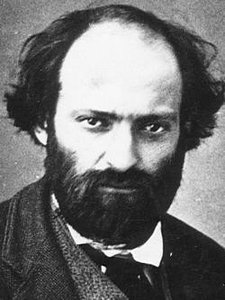
1839 - 1906 , Francja
Odkryj 25 arcydzieł Paula Cézanne'a – od impresjonizmu po postimpresjonizm. Poznaj historie, techniki i inspiracje malarza, który zrewolucjonizował sztukę. Reprodukcje obrazów najwyższej jakości na BuyPopArt.com!
Odkryj 10 arcydzieł impresjonizmu krajobrazowego! Poznaj historie Moneta, Renoir'a i Van Gogha. Inspiracje wnętrzarskie, techniki malarskie i piękne reprodukcje obrazów na BuyPopArt.com. Eksploruj kolekcję online!

Odkryj 10 arcydzieł impresjonizmu krajobrazowego! Poznaj historie Monet, Renoir i innych mistrzów. Inspiracje wnętrzarskie, techniki malarskie i reprodukcje obrazów najwyższej jakości na BuyPopArt.com. Eksploruj pełną kolekcję online!
Odkryj 10 arcydzieł krajobrazu w sztuce! Poznaj historie Moneta, van Gogha i Turnera. Inspiracje pejzażami, techniki malarskie i reprodukcje najwyższej jakości na BuyPopArt.com. Znajdź idealny obraz do Twojego wnętrza!

Explore the profound legacy of Paul Cézanne. Discover how his mastery of geometric forms and vibrant color bridged Impressionism and Cubism, offering timeless inspiration for fine art collectors and enthusiasts seeking to understand the foundations of modern art.


Bądź na bieżąco z najnowszymi wiadomościami ze świata sztuki, ekskluzywnymi ofertami i inspiracjami dekoratorskimi.
Opowiedz nam o swoim projekcie, a nasi eksperci przygotują dla Ciebie 3 spersonalizowane propozycje dzieł sztuki.
Przygotujemy dla Ciebie 3 propozycje zupełnie za darmo!


 Podgląd w skali
 Wyślij jako kartkę
 Udostępnij
 Szczegóły dzieła

 Pobierz
 Podobne obiekty
 RTG
RTG Pokaz slajdów

 Rozwiń treść







 Opcja ze szkłem jest dostępna wyłącznie w rozmiarach poniżej 110 cm