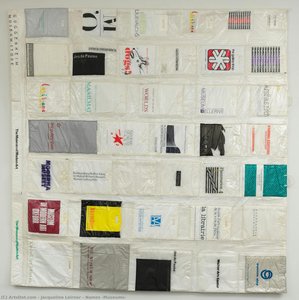
1968
1968 35.0 x 27.0 cm
 USC Fisher Museum of Art
Druk giclée lub płótno o jakości muzealnej, szybka realizacja i szeroki wybór opcji wykończenia. ( Zamów ręcznie malowaną reprodukcję Kup obraz wysokiej rozdzielczości)
Wybierz spośród naszych standardowych rozmiarów, które zachowują oryginalne proporcje dzieła sztuki.

Możesz wprowadzić własne wymiary, aby dopasować dzieło do konkretnej ramy lub przestrzeni. Jeśli wybrany rozmiar nie będzie odpowiadał proporcjom oryginalnego obrazu, przytniecie dzieło lub rozszerzymy obraz za pomocą odbicia lustrzanego lub jednolitego wypełnienia krawędzi. Przed rozpoczęciem produkcji prześlemy cyfrową wizualizację do Twojej akceptacji.
Prosimy pamiętać, że podgląd na ekranie nie odzwierciedla faktycznego przycinania ani rozszerzania. Tylko wizualizacja dokładnie pokaże końcową kompozycję.
Mimo dostępności niestandardowych rozmiarów, zalecamy wybór wymiaru z listy zdefiniowanej, aby zachować oryginalne proporcje.
Dostawa na cały świat () w ciągu 2 tygodni zamiast standardowych 4/5 tygodni. (15 Sierpień)


Untitled (hand)
Wymiary reprodukcji
Ralph Gibson, born in Los Angeles in 1939, stands as a singular figure in the pantheon of contemporary photography, celebrated for his masterful manipulation of black and white imagery to evoke profound psychological landscapes. His work exists in a realm where eroticism dances with mystery and geometric abstraction reigns supreme. Gibson’s artistic journey began amidst the burgeoning postwar art scene in California, shaping him into an artist deeply attuned to both formal experimentation and emotional resonance. Before establishing himself as a master of the lens, his formative years were marked by service as a photographer's mate in the U.S. Navy from 1956 to 1960. This period provided him with invaluable experience in visual observation and technical precision—skills that would later become the bedrock of his meticulous photographic compositions.
Seeking to deepen his understanding of visual language, Gibson pursued formal training at the San Francisco Art Institute. There, he immersed himself in the study of painting and photography alongside a cohort of artists who championed innovative approaches to expression. This academic environment fostered a lifelong fascination with exploring the subconscious mind and translating complex, often intangible emotions into striking visual forms. His development was characterized by a deliberate rejection of color, opting instead for monochrome prints that amplify texture, shadow, and form, creating images imbued with an unsettling yet captivating beauty.
The aesthetic language of Ralph Gibson is deeply rooted in the traditions of Surrealism, drawing subtle yet powerful influences from masters such as René Magritte and Giorgio Morandi. He does not merely document reality; he reconstructs it. By meticulously constructing compositions using geometric shapes—often found within everyday objects or fragmented human anatomy—he generates a profound visual tension that provokes contemplation about the nature of perception itself. His work often utilizes high-contrast lighting to create deep, impenetrable shadows, turning the frame into a stage for the unknown.
Recurring motifs throughout his vast body of work include:
This technique allows Gibson to bridge the gap between the tangible world and the psychological interior. In his celebrated series "The Somnambulist," he captures figures caught in states of trance or disorientation against stark, minimalist backgrounds. These images capture fleeting moments of psychological drama with remarkable subtlety, inviting the viewer to inhabit a space between waking life and the dream state.
Throughout his career, Gibson has maintained a reputation for pushing the boundaries of what photography can achieve as a fine art medium. His ability to evoke intense emotion through the absence of light and color has left an indelible mark on the history of black-and-white photography. Beyond his individual prints, his extensive book collections serve as vital explorations of visual storytelling, documenting the intersection of human desire and abstract form.
His historical significance lies in his ability to transform the photographic medium from a tool of documentation into a tool of poetic abstraction. By focusing on the "unseen"—the shadows, the edges, and the silences—Gibson has created a visual vocabulary that continues to influence contemporary photographers exploring themes of mystery, eroticism, and the human psyche. His work remains a testament to the power of the monochrome image to reveal truths that color often obscures.

1939 - , United States of America


Bądź na bieżąco z najnowszymi wiadomościami ze świata sztuki, ekskluzywnymi ofertami i inspiracjami dekoratorskimi.
Opowiedz nam o swoim projekcie, a nasi eksperci przygotują dla Ciebie 3 spersonalizowane propozycje dzieł sztuki.
Przygotujemy dla Ciebie 3 propozycje zupełnie za darmo!


 Podgląd w skali
 Wyślij jako kartkę
 Udostępnij
 Szczegóły dzieła

 Pobierz
 Podobne obiekty
 RTG
RTG Pokaz slajdów
 Rozwiń treść




































 Opcja ze szkłem jest dostępna wyłącznie w rozmiarach poniżej 110 cm