PreviewPreview Zamów wydruk Zamów wydrukKup cyfrowy obraz Kup cyfrowy obraz UdostępnijUdostępnij
Szczegóły dziełaSzczegóły dzieła Dodaj do ulubionych Dodaj do ulubionych PobierzPobierz Podobne obiektyPodobne obiekty RTGRTG Pokaz slajdówPokaz slajdów

Untitled

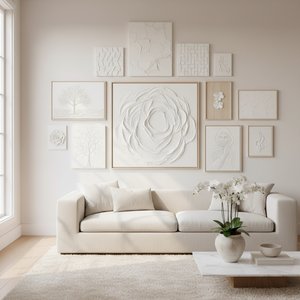
Explore Robert Irwin’s minimalist Untitled (1965) – a seminal work of West Coast Light & Space art. Discover its subtle textures, symmetrical composition & pioneering abstraction.

Robert Irwin

Ręcznie malowana reprodukcja olejowa

Ręcznie malowany olej na płótnie w Twoim wymiarze i ramie, tworzony na zamówienie przez naszych artystów.

Standard
custom
CM
INCH

Wybierz spośród naszych predefiniowanych rozmiarów, które zachowują oryginalne proporcje dzieła sztuki.

szerokość
wysokość

Możesz wprowadzić własne wymiary, aby dopasować obraz do konkretnej ramy lub przestrzeni. Jeśli wybrany rozmiar nie będzie odpowiadał proporcjom oryginału, przytniecie dzieło sztuki lub rozszerzymy je o dodatkowe elementy, ręcznie domalowane przez artystę. Przed rozpoczęciem produkcji wyślemy projekt cyfrowy do Twojej akceptacji.
Należy pamiętać, że podgląd na ekranie nie odzwierciedla rzeczywistego przycinania ani rozszerzania obrazu. Tylko projekt dokładnie pokaże ostateczną kompozycję.
Choć oferujemy możliwość zamówienia niestandardowych rozmiarów, zalecamy wybór wymiaru z gotowej listy, aby zachować oryginalne proporcje dzieła.

Przykłady możliwych zmian: Zamień twarz na zdjęcie klienta; Dodaj zwierzę domowe (np. zamień kota na psa); Ukryj wiadomość w tle; Zmień krajobraz lub elementy tła.
Po złożeniu zamówienia zespół BuyPopArt.com skontaktuje się z klientem drogą mailową w celu uzyskania instrukcji i prześle wizualizację projektu

Dostawa na całym świecie () w ciągu 3/4 tygodni zamiast standardowych 5 tygodni. (24 Lipiec). Bez kompromisów w kwestii jakości.

why_choose_icon
Bezpłatna ekspresowa wysyłka na cały świat
why_choose_icon
Wysokiej jakości płótno lniane
why_choose_icon
Pełne ubezpieczenie przesyłki
why_choose_icon
Gwarancja zwrotu należności celnych
why_choose_icon
Gwarancja pełnego zgodności kolorystycznej
why_choose_icon
Polityka 60-dniowego zwrotu (tylko w przypadku wad)
why_choose_icon
Gwarancja 100% zwrotu pieniędzy
why_choose_icon
Zniżka przy większych zamówieniach

Suma całkowita

-

reproduction

Untitled

Technika reprodukcji

Wymiary reprodukcji

-

Cena całkowita

-


Biografia artysty

A Life Dedicated to Perception

Robert Walter Irwin, who passed away in October 2023 at the age of 95, was more than just an artist; he was a philosophical explorer disguised as a creator of immersive environments. Born in Long Beach, California, in 1928, his journey began not with grand artistic pronouncements but with a quiet observation of how we perceive the world around us. His early life, shaped by the landscapes of Southern California and a father who navigated fluctuating fortunes as a contractor, instilled in him a sense of adaptability and an understanding of impermanence – themes that would resonate throughout his prolific career. After serving in the US Army and studying at institutions like Otis Art Institute and the Chouinard Art Institute (later CalArts), Irwin initially embraced Abstract Expressionism, experimenting with color and form on canvas. However, this traditional path proved too limiting for an artist increasingly fascinated by the very act of seeing itself.

From Canvas to Environment

The 1960s marked a pivotal shift in Irwin’s artistic practice. He began to dismantle the conventional boundaries of art, moving away from the object-based world of painting and venturing into the realm of installation. This transition wasn't merely a change in medium; it was a fundamental redefinition of what art *could be*. He became a central figure in the burgeoning Light and Space movement, alongside artists like James Turrell and Larry Bell, who shared his interest in exploring perception through manipulation of light, space, and materials. Early experiments involved minimalist structures – translucent columns that interacted with ambient light, subtly altering the viewer’s experience of the surrounding space. These weren't sculptures to be *looked at*, but environments to be *experienced*. Irwin wasn’t interested in presenting a fixed image or conveying a specific message; he aimed to create conditions for perception itself, allowing viewers to become active participants in the artwork’s unfolding reality. He sought to eliminate the artist’s hand, creating spaces that felt less authored and more discovered. This pursuit led him to increasingly large-scale installations, often utilizing scrims – layers of translucent fabric – and fluorescent lights to dissolve boundaries and create a sense of ethereal ambiguity.

Influences and Philosophical Underpinnings

Irwin’s artistic evolution wasn't born in a vacuum. While forging his unique path, he drew inspiration from diverse sources. The expressive freedom of Abstract Expressionism provided an initial foundation for his exploration of color and form. However, it was the realm of philosophy that truly ignited his conceptual approach. Phenomenology, with its emphasis on subjective experience and the study of consciousness, became a guiding principle. He delved into the writings of philosophers like Maurice Merleau-Ponty, exploring how our perception shapes our understanding of reality. Furthermore, principles from Gestalt psychology – the idea that we perceive things as unified wholes rather than isolated parts – informed his understanding of visual organization and how viewers construct meaning from sensory information. These intellectual currents converged with a practical experimentation in materials and space, resulting in artworks that were both intellectually rigorous and profoundly sensual.

Landscapes of Perception and Lasting Legacy

Irwin’s artistic scope expanded beyond the confines of galleries and museums to encompass landscape design. This wasn't simply an application of his aesthetic principles to a new medium; it was a natural extension of his lifelong exploration of perception within environmental contexts. The Central Garden at the Getty Center in Los Angeles, completed in 1992, stands as perhaps his most iconic achievement. It’s not merely a beautiful garden; it's a carefully orchestrated landscape that challenges conventional notions of space and time. Winding paths, cascading water features, and strategically placed plantings create a contemplative environment where the boundaries between art and nature blur. Later works, such as *Prismatic Demension* at the Museum of Contemporary Art San Diego (2008), continued to demonstrate his mastery of light and color, creating immersive experiences that invited viewers to question their own perceptual processes. Robert Irwin’s contributions to contemporary art are immeasurable. He challenged traditional notions of artistic representation, prioritizing experiential engagement over object-making. His work helped establish Light and Space as a significant movement, influencing generations of artists working with installation, site-specificity, and perceptual phenomena. He leaves behind a legacy that continues to inspire exploration into the boundaries between art, architecture, and human perception – a testament to his unwavering dedication to understanding how we see, and ultimately, how we *are* in the world.

Recognition and Achievements

  • Central Garden, Getty Center (1992): A landmark landscape design celebrated for its immersive and contemplative qualities.
  • Prismatic Demension (2008): A monumental installation at the Museum of Contemporary Art San Diego showcasing his expertise in light and color manipulation.
  • Guggenheim Fellowship: Awarded in 1976, recognizing his significant contributions to the arts.
  • MacArthur Fellowship (“genius grant”): Received in 1984, acknowledging his exceptional creativity and originality.
  • National Endowment for the Arts fellowship: Further validating his artistic merit and impact.
  • Election to the American Academy of Arts and Letters (2007): A prestigious honor recognizing his lifetime achievements in the field of art.
Robert Walter Irwin

Robert Walter Irwin

1928 - 2023 , United States of America

Kluczowe informacje

  • Artistic Movement Or Style: Light & Space, Minimalism
  • Artists Or Movements Influenced By This Artist:
    • Light and Space
    • Installation Art
  • Artists Who Influenced This Artist:
    • Abstract Expressionism
    • Phenomenology
    • Gestalt Psychology
  • Date Of Birth: September 12, 1928
  • Date Of Death: October 25, 2023
  • Full Name: Robert Walter Irwin
  • Nationality: American
  • Notable Artworks:
    • Central Garden
    • Prismatic Dimension
    • Untitled
  • Place Of Birth (City And Country): Long Beach, USA