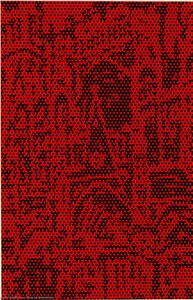
220.0 x 116.0 cm
 Viafarini
Kup wysokiej rozdzielczości, ulepszony obraz cyfrowy o znacznie wyższej jakości niż podgląd online.
Każdy plik jest starannie przygotowywany przez naszych specjalistów przy użyciu zaawansowanych narzędzi oraz profesjonalnej, ręcznej retuszy. Dbamy o to, aby każdy obraz cechował się wyjątkową ostrością, precyzyjnym odwzorowaniem kolorów i subtelnymi detalami.
Ostateczny plik dostarczany jest drogą mailową w ciągu 72 godzin, zoptymalizowany do natychmiastowego wykorzystania w profesjonalnych zastosowaniach redakcyjnych i poligraficznych. To ta sama jakość, której ufają czołowe studia projektowe, wydawnictwa oraz galerie sztuki.
Pobierz plik o wysokiej rozdzielczości do osobistego wyświetlania, druku oraz projektów kreatywnych. ( Kup wydruk Kup ręcznie malowany obraz)
Wybierając BuyPopArt.com, nie otrzymujesz jedynie obrazu – otrzymujesz profesjonalnie udoskonalone cyfrowe dzieło sztuki, stworzone z najwyższą precyzją i objęte gwarancją satysfakcji. Oto wszystko, co automatycznie dołączane jest do Twojego zamówienia:

Plik z obrazem cyfrowym w wysokiej rozdzielczości zostanie przesłany na Twój adres e-mail w ciągu 72 godzin od złożenia zamówienia – gotowy do natychmiastowego użycia.

Twoja grafika została profesjonalnie zoptymalizowana przy użyciu zaawansowanych narzędzi AI oraz ręcznej edycji, co zapewnia maksymalną szczegółowość, klarowność i wierność kolorów.

Przypadkowo usunąłeś lub zgubiłeś swój plik? Bez obaw – prześlemy go Tobie ponownie w dowolnym momencie, bez żadnych opłat.

Ciesz się swoją sztuką natychmiast, bez żadnych opłat celnych, należności ani kosztów dostawy – pliki cyfrowe są zawsze wolne od podatku.

Dzięki zastosowaniu profesjonalnych narzędzi i procesów zarządzania barwą zapewniamy, że Twoje cyfrowe zdjęcie odzwierciedla oryginalne kolory tak wiernie, jak to tylko możliwe.

Jeśli nie będziesz zadowolony ze swojego cyfrowego obrazu, dokonamy jego poprawki lub zwrócimy 100% kosztów w ciągu 60 dni – bez żadnych pytań.

Nie jesteś zadowolony? Otrzymaj pełny zwrot kosztów w ciągu 60 dni od otrzymania pliku cyfrowego – bez zbędnych pytań.

Kup 3 obrazy, oszczędź 10% - Kup 5, oszczędź 15% - Kup 10+, oszczędź 20%. Idealne do projektów kreatywnych, galerii i agencji.
In the quiet intersection where light meets shadow, and where the visible dissolves into the invisible, lies the profound creative universe of Silvio Wolf Busch. Born in Milan in 1952, an artist whose work serves as a bridge between the tangible world and the ephemeral realms of memory and perception, Wolf Busch has spent a lifetime investigating the very essence of the image. His journey is not merely one of technical mastery but a philosophical quest to understand how we witness time. By blending the rigorous discipline of photography with the expansive possibilities of installation art, he invites his audience to step beyond the frame and inhabit a space where presence and absence coexist in a delicate, haunting dance.
The foundations of his intellectual approach were laid in the classrooms of Italy, where he immersed himself in the study of Philosophy and Psychology. This academic grounding provided him with the conceptual tools to treat the photographic medium not as a tool for documentation, but as a vessel for metaphor. Seeking to refine his technical language, he moved to London, studying at the London College of Printing. It was here that he earned his Higher Diploma in Advanced Photography, a period that allowed him to marry his deep-seated interest in human consciousness with the structural complexities of lens-based art. This dual identity—as both thinker and maker—is what allows his work to transcend simple representation, turning every photograph into a site of psychological inquiry.
To understand the soul of Wolf Busch’s work, one must look toward the legacy of Spatialism. Growing up in the shadow of Milanese masters like Lucio Fontana, the artist was profoundly moved by the movement's ambition to break the two-dimensional constraints of the canvas. Just as Fontana used perforations and cuts to introduce a new dimension of space, Wolf Busch utilizes the photographic medium to explore voids, openings, and the "elsewhere." His early explorations focused on the limits of the photographic plane, often creating large-format works and polyptychs that challenged the traditional, narrative expectations of photography. He moved away from the idea of the photograph as a testimonial record, instead seeking a subjective reality where light could obscure as much as it revealed.
This fascination with the threshold—the boundary between what is seen and what is felt—became the hallmark of his evolving style. In his celebrated "Icons of Light" series, for instance, he utilized reflected light to wipe out imagery, leaving behind an evocative emptiness that provoked a deep desire in the viewer to see beyond the instant of blindness. Through this technique, he transformed the act of looking into an act of meditation, forcing the spectator to confront the absence of the subject as a powerful form of presence in itself.
As his career progressed from the mid-1980s onward, Wolf Busch’s artistic vocabulary expanded far beyond the borders of the printed photograph. He began to integrate moving images, projections, light, and sound into complex, site-specific installations. These multi-media projects are designed to engage with the architectural and social history of their locations, turning galleries and public spaces into living, breathing ecosystems of sensory experience. His work does not merely sit upon a wall; it inhabits a room, responding to the cultural personality of the space and establishing a symbolic relationship with its history.
The significance of his contribution to contemporary art is reflected in his global footprint and academic influence:
Today, living and working between the vibrant art scenes of Milan and New York, Silvio Wolf Busch continues to push the boundaries of what it means to perceive. His work remains a testament to the power of the image to act as a threshold—a place where we can encounter the simultaneous existence of the past and the present, the here and the elsewhere, and the beautiful mystery of the unseen.

1952 - , Italy


Bądź na bieżąco z najnowszymi wiadomościami ze świata sztuki, ekskluzywnymi ofertami i inspiracjami dekoratorskimi.
Opowiedz nam o swoim projekcie, a nasi eksperci przygotują dla Ciebie 3 spersonalizowane propozycje dzieł sztuki.
Przygotujemy dla Ciebie 3 propozycje zupełnie za darmo!


 Podgląd w skali
 Wyślij jako kartkę
 Udostępnij
 Szczegóły dzieła

 Pobierz
 Podobne obiekty
 RTG
RTG Pokaz slajdów
 Rozwiń treść