


Óleo sobre tela pintado à mão no seu tamanho e moldura, feito sob encomenda pelos nossos artistas. ( Alternar para Impressão Alternar para Imagem)





























Escolha entre os nossos tamanhos pré-definidos que respeitam as proporções originais da obra de arte.

Pode inserir as suas próprias dimensões para se adequar a uma moldura ou espaço específico. Se o tamanho selecionado não corresponder às proporções da imagem original, iremos cortar a obra de arte ou estender a pintura com elementos adicionais pintados à mão. Um esboço digital será enviado para sua aprovação antes do início da produção.
Tenha em atenção que a pré-visualização no ecrã não reflete o corte ou extensão real. Apenas o esboço mostrará com precisão a composição final.
Embora tamanhos personalizados estejam disponíveis, recomendamos selecionar uma dimensão da lista predefinida para preservar as proporções originais.
Entrega mundial () em 3 a 4 semanas, em vez das 5 semanas padrão. (4 Agosto). Sem comprometer a qualidade.


Conteúdo de chá
Tamanho da Reprodução
John Henning (1771–1851) wasn’t a name etched in the annals of grand historical sculpture, yet his legacy resides in an astonishing feat of artistic dedication and meticulous detail. Born in Paisley, Scotland, into a family rooted in carpentry, Henning’s journey from craftsman to miniature master is a testament to his singular vision and unwavering commitment. He didn't seek fame through monumental works; instead, he dedicated twelve years to painstakingly recreating the iconic Parthenon and Bassae friezes – colossal marble panels depicting scenes of ancient Greek life – on a scale that defied belief: tiny replicas just two inches high yet stretching over twenty-four feet in length. This remarkable achievement offers a unique window into the artistic sensibilities of early 19th-century Britain, revealing a fascination with classical antiquity and a burgeoning interest in accurate reproduction.
Henning’s early life provided a solid foundation for his future endeavors. Trained by his father, he initially honed his skills as a carpenter, developing an appreciation for the properties of wood and its potential for intricate detail. It was through portraiture that he truly discovered his artistic voice, creating cameos of friends and family that showcased his burgeoning talent for capturing likenesses with remarkable precision. This early success paved the way for him to pursue more ambitious projects, ultimately leading him to the monumental task of replicating the ancient friezes.
The catalyst for Henning's extraordinary undertaking was his encounter with the newly arrived Parthenon marbles in Burlington House. Witnessing these fragments of classical history, he became captivated by their beauty and complexity. Crucially, he secured permission from Lord Elgin to study and draw them, an opportunity that proved invaluable. It was during this period that Henning conceived the idea of using his drawings as a basis for creating slate molds – miniature versions capable of producing remarkably detailed replicas. This innovative approach, combined with the patronage of Princess Charlotte, provided him with the resources and encouragement he needed to embark on his ambitious project.
The Princess’s interest in Henning's work stemmed from her own fascination with classical art and literature. She commissioned a medallion portrait of the sculptor himself, an event that not only boosted his confidence but also exposed him to a wider circle of influential figures. This royal connection undoubtedly played a significant role in securing funding and recognition for his extraordinary endeavor.
Henning’s process was nothing short of obsessive. He meticulously studied the original friezes, painstakingly recreating every detail – from the folds of drapery to the expressions on the faces of the figures. He utilized a complex system of slate molds, each requiring countless iterations and adjustments to achieve the desired level of accuracy. The sheer scale of the project demanded immense patience and unwavering dedication; it was a labor of love that consumed his life for twelve years. His work wasn’t simply copying; he aimed to recreate the essence of the originals, capturing their spirit and grandeur in miniature.
Interestingly, Henning didn't attempt to copyright his creations, recognizing the impossibility of protecting the work of long-dead artists. This reflects a broader attitude towards artistic ownership during that era, where inspiration and imitation were often seen as integral parts of the creative process. The Bassae frieze, added later to the project, further extended this period of intense dedication.
John Henning’s miniature replicas of the Parthenon and Bassae friezes represent a remarkable achievement in the history of art reproduction. They demonstrate not only his exceptional technical skill but also his deep appreciation for classical antiquity. His work influenced subsequent generations of artists and craftsmen, contributing to the development of techniques for accurate reproduction and inspiring a renewed interest in ancient Greek culture. While he may not be as widely celebrated as some of his contemporaries, Henning’s legacy endures through these exquisite miniature masterpieces – tangible testaments to his dedication, ingenuity, and profound respect for the past.
Today, fragments of these remarkable creations can be viewed at the Musée du Louvre in Paris. They stand as a poignant reminder of a solitary artist who dedicated his life to capturing the beauty and grandeur of ancient Greece on a scale that defied imagination.

1771 - 1846 , Austria
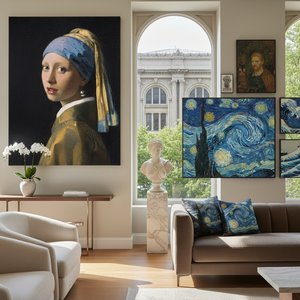
Descubra as 25 obras-primas do Metropolitan Museum of Art em Nova York! Explore a história de Van Gogh, Monet e outros artistas renomados. Encontre reproduções de arte exclusivas para decorar sua casa com elegância. BuyPopArt.com – Sua fonte de inspiração artística.
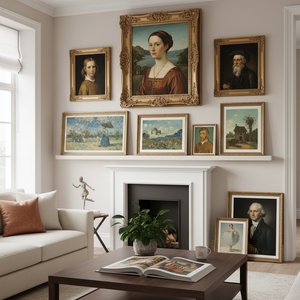
Descubra os 25 tesouros da National Gallery of Art, Washington! Explore a história de Cézanne, Matisse, Picasso e outros mestres. Encontre reproduções de arte exclusivas para decorar sua casa com elegância. Inspire-se e explore a coleção completa em BuyPopArt.com.

Descubra as 25 obras-primas de Alfred Munnings, o mestre da pintura equina e da alma inglesa. Explore a história, técnica e beleza atemporal de cada quadro. Reproduções de arte exclusivas em BuyPopArt.com! Explore a coleção online.
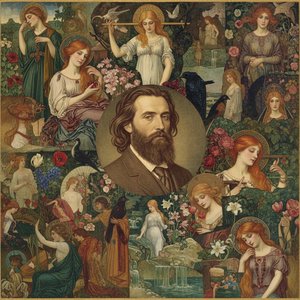
Descubra as 25 obras-primas de Dante Gabriel Rossetti, o mestre pré-rafaelita! Explore a beleza, simbolismo e paixão em pinturas icônicas como 'Proserpina' e 'Beata Beatrix'. Encontre reproduções de arte exclusivas para transformar sua casa com BuyPopArt.com.
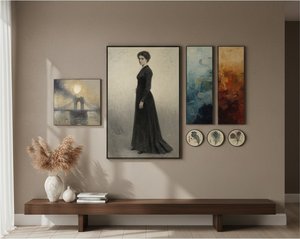
Descubra as 25 obras-primas de James Abbott McNeill Whistler, o mestre do Impressionismo e dos 'Nocturnes'. Explore a história por trás de cada pintura, cores e técnicas. Encontre reproduções de arte exclusivas para decorar sua casa com elegância em BuyPopArt.com!


Fique por dentro das últimas notícias de arte, ofertas exclusivas e ideias de decoração.
Conte-nos sobre o seu projeto e os nossos especialistas em arte fornecerão 3 sugestões de arte personalizadas.
Deixe que selecionamos 3 opções especialmente para você – Grátis!


 Visualizar na parede
 Compartilhar
 Compartilhar
 Detalhes

 Baixar imagem
 Semelhantes
 Raio X
 Apresentação de slides


 Ler mais







 A opção de vidro está disponível apenas para tamanhos inferiores a 110 cm


