Óleo sobre tela pintado à mão no seu tamanho e moldura, feito sob encomenda pelos nossos artistas. ( Alternar para Impressão Alternar para Imagem)





























Escolha entre os nossos tamanhos pré-definidos que respeitam as proporções originais da obra de arte.

Pode inserir as suas próprias dimensões para se adequar a uma moldura ou espaço específico. Se o tamanho selecionado não corresponder às proporções da imagem original, iremos cortar a obra de arte ou estender a pintura com elementos adicionais pintados à mão. Um esboço digital será enviado para sua aprovação antes do início da produção.
Tenha em atenção que a pré-visualização no ecrã não reflete o corte ou extensão real. Apenas o esboço mostrará com precisão a composição final.
Embora tamanhos personalizados estejam disponíveis, recomendamos selecionar uma dimensão da lista predefinida para preservar as proporções originais.
Entrega mundial () em 3 a 4 semanas, em vez das 5 semanas padrão. (4 Agosto). Sem comprometer a qualidade.


Parisiense
Tamanho da Reprodução
Édouard Manet’s *Parisienne*, painted circa 1879-1880, stands as a pivotal work in the artist's oeuvre and embodies the spirit of Impressionism’s fascination with capturing fleeting moments of contemporary life. More than just a likeness of Madame Jules Guillemet—a celebrated Parisian socialite and Manet’s muse—the painting delves into broader themes of femininity, fashion, and societal perception during Belle Époque Paris.
The portrait depicts Jeanne Julie Charlotte Besnier de la Pontonerie, a woman known for her beauty and sophistication. Guillemet is seated on a sofa in a richly decorated interior—likely Manet’s studio—dressed in a striking emerald green gown adorned with elaborate embellishments. Her gaze meets the viewer's directly, conveying an air of composure yet hinting at underlying emotion. Alongside Guillemet are two additional figures: Jules Guillemet, her husband, and a young man who appears to be observing them from across the room. This carefully constructed arrangement emphasizes the centrality of Madame Guillemet’s presence while simultaneously reflecting the social dynamics of the era.
Manet employed pastel on canvas mounted on Masonite—a relatively new material at the time—to achieve a luminous and textured surface. Unlike oil paint, pastel allows for rapid layering and blending, capturing subtle nuances of color and light with remarkable precision. Manet meticulously rendered the folds of Guillemet’s gown and bonnet, utilizing delicate strokes to convey the sheen of silk and the brilliance of gold embellishments. The artist's masterful handling of chiaroscuro—the interplay between light and shadow—creates depth and dimensionality, drawing the viewer into the scene.
*Parisienne* emerged during a period of significant social change in France. The Impressionists were challenging academic conventions and exploring new artistic approaches, reflecting the dynamism of urban life and the evolving role of women in society. Guillemet’s attire—the voluminous gown, the elaborate bonnet—represents the fashionable elegance of the Belle Époque, signaling status and refinement. Manet's depiction subtly critiques societal expectations surrounding femininity, presenting Guillemet as both beautiful and intellectually engaged.
Beyond its formal qualities, *Parisienne* possesses a palpable emotional resonance. The woman’s gaze—direct yet slightly melancholic—suggests introspection and vulnerability beneath the veneer of sophistication. Manet's masterful technique captures not only visual details but also an intangible sense of atmosphere, transporting the viewer back to 1880 Paris. It remains a testament to Manet’s ability to transform ordinary subjects into symbols of artistic innovation and enduring beauty.
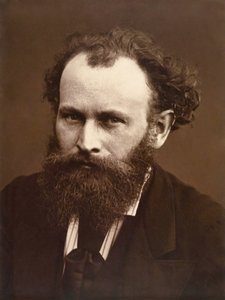
1832 - 1883 , França
Descubra as 25 obras-primas de Édouard Manet, o mestre do Impressionismo! Explore a história por trás de 'Le Déjeuner sur l'herbe', 'Olympia' e mais. Reproduções de arte exclusivas para decorar sua casa com elegância. BuyPopArt.
Descubra os 10 quadros impressionistas que revolucionaram a arte! Explore Monet, Renoir, Degas e outros mestres. História, técnica e cores vibrantes para inspirar sua decoração. Encontre reproduções de alta qualidade em

Explore the art & culture of the Belle Époque! Discover Impressionism, Realism, and iconic Parisian paintings from Degas, Béraud & more. High-quality reproductions at BuyPopArt.

Explore the life & art of Édouard Manet, a pivotal figure bridging Realism and Impressionism. Discover his revolutionary techniques, controversial masterpieces like 'Olympia,' and lasting impact on modern art history.

Explore the art & culture of 1875 Paris – a pivotal year for Impressionism & the Belle Époque. Discover Degas, Béraud, Stewart & more with BuyPopArt's expert insights.


Fique por dentro das últimas notícias de arte, ofertas exclusivas e ideias de decoração.
Conte-nos sobre o seu projeto e os nossos especialistas em arte fornecerão 3 sugestões de arte personalizadas.
Deixe que selecionamos 3 opções especialmente para você – Grátis!


 Visualizar na parede
 Compartilhar
 Compartilhar
 Detalhes

 Baixar imagem
 Semelhantes
 Raio X
 Apresentação de slides
 Ler mais







 A opção de vidro está disponível apenas para tamanhos inferiores a 110 cm