

 Acrylic On CanvasWallArtExpressionism
 1910
1910 29.0 x 19.0 cm
Adquira uma imagem digital de alta resolução e aprimorada, muito superior à prévia online.
Cada arquivo é meticulosamente preparado por nossos especialistas internos, utilizando ferramentas avançadas e retoques manuais de alta precisão. Garantimos que cada imagem apresente clareza excepcional, fidelidade de cores e detalhes minuciosos.
O arquivo final é entregue por e-mail em até 72 horas, otimizado para uso imediato em ambientes profissionais, editoriais e de impressão. Esta é a mesma qualidade utilizada por estúdios de design de alto nível, editoras e galerias.
Baixe um arquivo de alta resolução para exibição pessoal, impressão e projetos criativos. ( Alternar para Impressão Encomendar reprodução pintada à mão)
Ao escolher o BuyPopArt.com, você não está apenas recebendo uma imagem — você está recebendo uma obra de arte digital profissionalmente aprimorada, elaborada com precisão e com garantia de satisfação. Aqui está tudo o que acompanha seu pedido, automaticamente:

O seu arquivo de imagem digital em alta resolução será enviado por e-mail em até 72 horas após o pedido — pronto para uso imediato.

Sua obra de arte é otimizada profissionalmente por meio de ferramentas avançadas de IA e edição manual, garantindo o máximo de detalhes, clareza e precisão de cores.

Apagou ou perdeu o seu ficheiro acidentalmente? Não se preocupe – nós reenviamos para si a qualquer momento, gratuitamente.

Desfrute da sua obra de arte instantaneamente, sem taxas alfandegárias, impostos ou custos de entrega — downloads digitais são sempre isentos de taxas.

Garantimos que sua imagem digital reflita as cores originais com a maior fidelidade possível, utilizando ferramentas profissionais e gerenciamento de cores.

Se você não estiver satisfeito com sua imagem digital, nós a revisaremos ou reembolsaremos 100% dentro de 60 dias — sem perguntas.

Não está satisfeito? Receba o reembolso total em até 60 dias após o recebimento do seu arquivo digital — sem perguntas.

Compre 3 imagens, economize 10% - Compre 5, economize 15% - Compre 10+, economize 20%. Ideal para projetos criativos, galerias e agências.
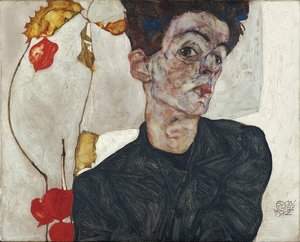
Egon Schiele’s “Poem,” completed in 1910, stands as a deceptively simple yet profoundly resonant testament to the artist's signature style and his preoccupation with themes of vulnerability and unspoken emotion. This unassuming watercolor—measuring 29 x 19 cm—captures a moment frozen in time: a sheet of paper bearing handwritten words, rendered in muted tones that amplify rather than diminish their impact.
The photograph itself presents a deliberate ambiguity. The blurry texture of the paper suggests age and preservation, hinting at a history unseen but felt nonetheless. It’s not merely an image of text; it's an emblem of communication—or perhaps its absence—a subtle invitation to contemplate what lies beneath the surface.
Schiele's work emerged during Vienna’s vibrant artistic milieu—a period marked by experimentation and a fervent embrace of Expressionism. Influenced heavily by Gustav Klimt, Schiele wrestled with anxieties surrounding sexuality, mortality, and the human condition. The painting reflects this broader cultural preoccupation with confronting uncomfortable truths about existence.
Vienna at the turn of the century was undergoing rapid social change—industrialization, urbanization, and burgeoning intellectual currents challenged traditional values. Artists like Schiele responded to these shifts by rejecting academic conventions in favor of emotionally charged imagery that prioritized subjective experience over objective representation. “Poem” embodies this spirit of rebellion against established norms.
The handwritten words on the paper are deliberately obscured, adding another layer of complexity to the artwork’s symbolic significance. They represent unspoken thoughts—perhaps desires, fears, or confessions—that remain hidden from view. This deliberate concealment underscores Schiele's fascination with psychological depth and his ability to convey emotion through visual suggestion.
The paper itself serves as a metaphor for fragility—a vulnerable surface bearing the marks of time and experience. Like Schiele’s own life, “Poem” confronts us with the inevitability of decay and loss, prompting contemplation on the ephemeral nature of beauty and consciousness. It's a piece that lingers in the mind long after viewing, inviting repeated observation and rewarding careful consideration.
1890 - 1918 , Áustria


Fique por dentro das últimas notícias de arte, ofertas exclusivas e ideias de decoração.
Conte-nos sobre o seu projeto e os nossos especialistas em arte fornecerão 3 sugestões de arte personalizadas.
Deixe que selecionamos 3 opções especialmente para você – Grátis!


 Visualizar na parede
 Compartilhar
 Compartilhar
 Detalhes

 Baixar imagem
 Semelhantes
 Raio X
 Apresentação de slides
 Ler mais