

 Impressionism
 71.0 x 91.0 cm
Óleo sobre tela pintado à mão no seu tamanho e moldura, feito sob encomenda pelos nossos artistas. ( Encomendar impressão Comprar imagem em alta resolução)
Escolha entre os nossos tamanhos pré-definidos que respeitam as proporções originais da obra de arte.

Pode inserir as suas próprias dimensões para se adequar a uma moldura ou espaço específico. Se o tamanho selecionado não corresponder às proporções da imagem original, iremos cortar a obra de arte ou estender a pintura com elementos adicionais pintados à mão. Um esboço digital será enviado para sua aprovação antes do início da produção.
Tenha em atenção que a pré-visualização no ecrã não reflete o corte ou extensão real. Apenas o esboço mostrará com precisão a composição final.
Embora tamanhos personalizados estejam disponíveis, recomendamos selecionar uma dimensão da lista predefinida para preservar as proporções originais.
Entrega mundial () em 3 a 4 semanas, em vez das 5 semanas padrão. (16 Agosto). Sem comprometer a qualidade.


The Mill
Dimensões da Reprodução
Born in Sydney, Australia, in 1856, George Grosvenor Thomas’s artistic journey took a dramatic turn when he emigrated to the United Kingdom in 1885. Driven by a desire for greater opportunities within the art world, he settled in Glasgow, a city already burgeoning with artistic innovation and profoundly influenced by the Barbizon School of painting. This pivotal move marked the beginning of a career dedicated to capturing the beauty of the British countryside – particularly its landscapes and still lifes – through a distinctly Impressionistic lens.
Thomas’s early years in Glasgow were shaped by his association with the Glasgow Boys, a group of young artists who challenged the established artistic conventions of the time. While not formally part of their core circle, he was deeply influenced by their spirit of experimentation and their embrace of contemporary techniques. This exposure to new ideas, combined with his own innate talent, propelled him towards a unique style characterized by loose brushwork, vibrant colors, and an emphasis on capturing fleeting moments of light and atmosphere. He quickly mastered both oil painting and watercolor, demonstrating versatility in his chosen mediums.
Thomas’s artistic development was profoundly shaped by a diverse range of influences. The Barbizon School, with its focus on plein air painting and the depiction of rural life, provided a foundational understanding of landscape representation. He also drew inspiration from the works of Jean-Baptiste-Camille Corot and Charles-François Daubigny, both masters of capturing atmospheric effects and employing broken color techniques to create a sense of luminosity. His brushwork was often characterized by short, expressive strokes applied with rapid succession, allowing him to quickly convey the essence of a scene – the dappled sunlight filtering through trees, the shimmering surface of water, or the subtle shifts in color caused by changing light conditions.
He meticulously observed nature, studying how light interacted with different surfaces and materials. This dedication to realism is evident in his detailed renderings of foliage, rocks, and water, but always tempered by an Impressionistic sensibility. His use of complementary colors – blues and oranges, greens and reds – created a vibrant and dynamic effect, while his skillful handling of atmospheric perspective conveyed the depth and scale of the landscapes he depicted.
While primarily known for his landscape paintings, Thomas’s oeuvre encompassed a surprisingly diverse range of subjects. He frequently painted rural scenes – farms, fields, and woodlands – but also explored urban settings, capturing the bustle of city life and the quiet intimacy of domestic interiors. He was equally adept at creating still lifes, arranging flowers and fruit in carefully considered compositions that celebrated their beauty and transience. His work appeared regularly in prestigious exhibitions across Britain and on the continent, including those held by the Royal Academy, Royal Scottish Academy, and Royal Scottish Society of Painters in Watercolour.
His travels to Munich and Dresden resulted in gold medals recognizing his artistic merit, solidifying his reputation as a skilled and accomplished painter. He maintained connections with the Glasgow Boys throughout his career, continuing to exchange ideas and influence each other’s work.
George Grosvenor Thomas died in London in 1923, leaving behind a substantial body of work that continues to be admired for its beauty, sensitivity, and technical skill. His paintings offer a captivating glimpse into the landscapes and lives of Victorian Britain, capturing both the grandeur of nature and the quiet dignity of everyday life. Today, his works are held in prominent collections around the world, including the Glasgow, Budapest, and Weimar Art Galleries, ensuring that his artistic legacy endures.

1856 - 1923
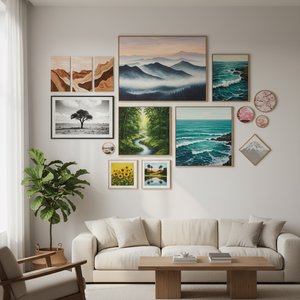
Descubra os 10 quadros de paisagem mais icônicos da história da arte! Explore Monet, Van Gogh e outros mestres, suas técnicas e inspirações. Encontre reproduções de alta qualidade para decorar sua casa com beleza e elegância em BuyPopArt.com.

Descubra as 10 obras impressionistas que revolucionaram a arte! Explore Monet, Renoir e outros mestres da paisagem. Encontre reproduções de alta qualidade para decorar sua casa com a beleza do Impressionismo em BuyPopArt.com.
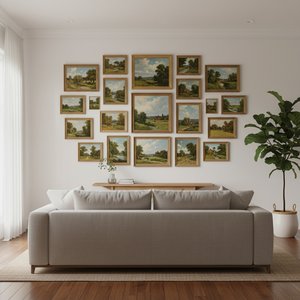
Descubra as 25 obras-primas de John Constable, o mestre da paisagem inglesa! Explore a arte romântica, cores vibrantes e histórias fascinantes por trás de 'Hay Wain' e outras pinturas icônicas. Encontre reproduções de alta qualidade para decorar sua casa com BuyPopArt.com.

Immerse yourself in the luminous world of Impressionist landscapes. Discover how masters like Monet and Gauguin captured ephemeral light through plein air painting, and learn to bring the soul of sun-drenched meadows into your home with exquisite, hand-painted oil reproductions.

Explore the profound legacy of the Hudson River School. Discover how masters like Thomas Cole captured the American sublime through Romanticism and Luminism. A definitive guide for art historians and collectors seeking to understand America's wild beauty.


Fique por dentro das últimas notícias de arte, ofertas exclusivas e ideias de decoração.
Conte-nos sobre o seu projeto e os nossos especialistas em arte fornecerão 3 sugestões de arte personalizadas.
Deixe que selecionamos 3 opções especialmente para você – Grátis!


 Visualizar em escala
 Enviar
 Compartilhar
 Ver detalhes

 Baixar
 Semelhantes
 Raio X
 Apresentação de slides
 Ver mais




































 A opção de vidro está disponível apenas para tamanhos inferiores a 110 cm


