

Óleo sobre tela pintado à mão no seu tamanho e moldura, feito sob encomenda pelos nossos artistas. ( Comprar impressão Comprar imagem)





























Escolha entre os nossos tamanhos pré-definidos que respeitam as proporções originais da obra de arte.

Pode inserir as suas próprias dimensões para se adequar a uma moldura ou espaço específico. Se o tamanho selecionado não corresponder às proporções da imagem original, iremos cortar a obra de arte ou estender a pintura com elementos adicionais pintados à mão. Um esboço digital será enviado para sua aprovação antes do início da produção.
Tenha em atenção que a pré-visualização no ecrã não reflete o corte ou extensão real. Apenas o esboço mostrará com precisão a composição final.
Embora tamanhos personalizados estejam disponíveis, recomendamos selecionar uma dimensão da lista predefinida para preservar as proporções originais.
Entrega mundial () em 3 a 4 semanas, em vez das 5 semanas padrão. (12 Agosto). Sem comprometer a qualidade.


Prometheus
Dimensões da Reprodução
Gustave Moreau’s “Prometheus” isn’t merely a painting; it’s an immersion into the very heart of Romantic rebellion and Symbolist introspection. Completed in 1868, this monumental canvas captures a pivotal moment – the chained Titan enduring his eternal punishment, yet extending a fragile flame towards a world shrouded in darkness. Moreau doesn't present us with a triumphant hero, but rather a figure burdened by sacrifice, a solitary beacon against a desolate landscape, embodying both defiance and profound melancholy. The work stands as a cornerstone of Symbolist art, deliberately rejecting the literalism of Realism to delve into the realm of subjective emotion, philosophical inquiry, and the potent language of myth.
The immediate impact of “Prometheus” lies in its dramatic composition and evocative color palette. Moreau masterfully employs a muted range – deep browns, somber blues, and grays – to create an atmosphere of immense scale and timelessness. These colors aren’t used to depict reality; instead, they amplify the painting's melancholic core, conveying a sense of isolation and the weight of ages. Visible brushstrokes define Prometheus’ muscular form and the jagged edges of the rock prison, while softer lines suggest swirling clouds and distant mountains, contributing to an overwhelming feeling of vastness. The artist strategically utilizes light – a single, intense source illuminating Prometheus' face and torso – casting dramatic shadows that heighten the sense of suffering and struggle. This deliberate manipulation of light isn’t about precise realism; it’s about capturing an *atmosphere*—a profound emotional resonance achieved through a flattened perspective.
The symbolism woven into “Prometheus” is incredibly rich and layered, inviting endless interpretation. Prometheus himself embodies resilience, sacrifice, and the enduring human spirit in the face of oppression. The chains are not simply restraints; they represent the constraints imposed by authority – both divine and societal – that seek to stifle knowledge and progress. The flame he offers isn’t merely fire; it symbolizes knowledge, enlightenment, and the potential for civilization, yet it also carries within it the inherent risk of destruction. Crucially, Moreau doesn't depict Prometheus as a conqueror or a savior; instead, he is shown in a moment of quiet endurance, offering his gift with a solemn expression. Below him, a shadowy figure represents humanity, receiving this potentially dangerous knowledge – and bearing the responsibility that comes with it. The recurring motif of the bird—often seen in Moreau’s work—suggests freedom, spirituality, or a connection to the divine realm, providing a poignant counterpoint to Prometheus' earthly imprisonment.
Gustave Moreau (1826-1898) was a pivotal figure in the Symbolist movement, forging his own path away from prevailing artistic trends. He wasn’t interested in capturing fleeting moments or objective reality; instead, he sought to unlock the hidden realms of myth, religion, and the human psyche through a deeply personal and symbolic visual language. Heavily influenced by literary giants like Shakespeare and Byron, Moreau transformed familiar myths into intensely personal statements. “Prometheus” exemplifies this approach, demonstrating his fascination with classical narratives and his ability to imbue them with a uniquely emotional charge. His work profoundly impacted later artists such as Henri Matisse and Georges Rouault, paving the way for modern art’s exploration of inner worlds and symbolic language. Moreau's legacy extends beyond individual paintings; he established the Musée Gustave Moreau in Paris, preserving his studio and an extensive collection of his works—a testament to his dedication to his artistic vision. “Prometheus” is more than just a historical artwork; it’s a timeless meditation on the human condition, capable of resonating with audiences for generations to come.
“Prometheus” evokes a powerful sense of awe, melancholy, and profound contemplation. Its dramatic composition and muted color palette make it a striking focal point for a study, library, or living room—a space where intellectual curiosity and artistic appreciation can thrive. The artwork pairs beautifully with dark wood furnishings, antique accents, and textured fabrics to enhance its Romantic atmosphere. A high-quality reproduction would add a touch of intellectual sophistication and artistic depth to any interior space – a constant reminder of the power of knowledge, the burden of freedom, and the enduring spirit of rebellion. Consider framing it in a rich, dark wood frame to further emphasize its dramatic presence.
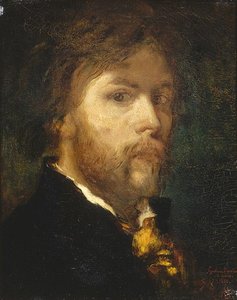
1826 - 1898 , França

Explore the captivating history of mythological narratives in Western art! From ancient Greece to modern masterpieces, discover iconic artworks & symbolism. Expert analysis and high-quality reproductions at BuyPopArt.

Discover the enchanting world of Edward Burne-Jones and the Pre-Raphaelite Brotherhood. Explore his mythical paintings, distinctive style, and lasting influence on Victorian art & the Aesthetic Movement. Expert analysis & high-quality reproductions at BuyPopArt.

Explore the rich symbolism of water in art history – from ancient myths to Impressionism's fleeting beauty. Discover masterpieces & find your perfect serene artwork with BuyPopArt.com.

Explore the captivating world of Gustave Moreau, the leading Symbolist painter. Discover his iconic masterpieces, influences, and lasting legacy. Expert analysis for collectors & art enthusiasts.

Explore the captivating world of Akseli Gallen-Kallela, Finland's iconic National Romantic painter. Discover his symbolic landscapes, Kalevala illustrations & lasting impact on Finnish identity. Expert analysis & high-quality reproductions at BuyPopArt.


Fique por dentro das últimas notícias de arte, ofertas exclusivas e ideias de decoração.
Conte-nos sobre o seu projeto e os nossos especialistas em arte fornecerão 3 sugestões de arte personalizadas.
Deixe que selecionamos 3 opções especialmente para você – Grátis!


 Visualizar em escala
 Enviar
 Compartilhar
 Ver detalhes

 Baixar
 Semelhantes
 Raio X
 Apresentação de slides

 Ver mais







 A opção de vidro está disponível apenas para tamanhos inferiores a 110 cm


