Impressão giclée ou em tela de qualidade de museu, com produção rápida e opções flexíveis de acabamento. ( Alternar para pintura feita à mão Baixar imagem em alta resolução)
Escolha entre os nossos tamanhos pré-definidos que respeitam as proporções originais da obra de arte.

Você pode inserir suas próprias dimensões para se ajustar a uma moldura ou espaço específico. Se o tamanho selecionado não corresponder às proporções da imagem original, iremos recortar a obra de arte ou estender a imagem com uma borda espelhada ou preenchimento sólido. Um mockup digital será enviado para sua aprovação antes do início da produção.
Por favor, observe que a visualização na tela não reflete o recorte ou a extensão real. Apenas o mockup mostrará com precisão a composição final.
Embora tamanhos personalizados estejam disponíveis, recomendamos selecionar uma dimensão da lista predefinida para preservar as proporções originais.
Entrega mundial () em 2 semanas, em vez das 4/5 semanas padrão. (11 Agosto)


Bella
Dimensões da Reprodução
Marc Chagall's "Bella," painted in 1925, isn’t merely a portrait; it’s an immersion into the artist’s deeply personal and profoundly evocative world. Born Moishe Shagal in Vitebsk, Belarus, Chagall carried within him the vibrant folklore of his Jewish upbringing – a tapestry woven with religious symbolism, rural landscapes, and a persistent yearning for home. “Bella,” rendered in ink on paper, captures this essence perfectly, offering a glimpse into a realm where reality subtly blends with dream and memory. The painting isn’t simply about depicting a woman; it's about conveying an emotional state – a quiet contemplation, a hint of melancholy, and the enduring power of love and connection.

Chagall’s technique in “Bella” is a masterful blend of Expressionism, Cubism, and Fauvism. Loose, gestural lines dominate the composition, creating a sense of movement and dynamism that contrasts sharply with the flattened perspective. These aren't precise delineations; instead, they are conduits for emotion, suggesting form through their density and direction. The use of hatching and cross-hatching builds up tonal values, lending depth and texture to the image. Notice how the dark inks create a sense of mystery around Bella’s figure, while strategically placed highlights draw attention to her face and dress. The color palette is deliberately restrained – primarily grayscale – which amplifies the emotional impact of the composition, forcing the viewer to focus on line, shape, and gesture rather than purely visual color.
“Bella” is rich in symbolic elements, deeply rooted in Chagall’s personal life and Jewish heritage. The figure of Bella Rosenfeld, Chagall's wife, is presented with a contemplative gaze, her head turned downwards as if lost in thought. Her posture – hand resting on her hip – suggests both strength and vulnerability. The abstracted background, filled with swirling shapes and stylized figures, evokes the landscapes of Vitebsk, his childhood home. The presence of smaller figures within the composition hints at familial connections and a longing for the past. The painting can be interpreted as a meditation on memory, love, and the enduring power of personal history – themes that consistently resonated throughout Chagall’s oeuvre.
Completed in 1925 during a period of significant artistic exploration for Chagall, “Bella” stands as a testament to his unique vision. It's more than just a portrait; it’s an invitation into the artist’s inner world—a realm where dreams and reality intertwine, and where the past is perpetually present. The painting’s enduring appeal lies in its ability to evoke a profound emotional response, prompting viewers to contemplate their own memories, relationships, and the complexities of human experience. Reproductions of “Bella” capture much of this evocative power, offering a window into Chagall's extraordinary artistic legacy.
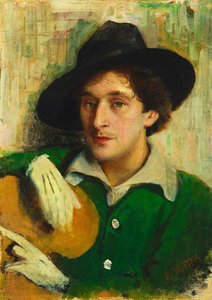
1887 - 1985 , Belarus
Explore the groundbreaking abstract expressionism of Morris Louis, a pioneer of Color Field painting. Discover his innovative techniques, influential series & lasting legacy in post-war American art. Learn more at BuyPopArt.
Descubra as 10 obras-primas em acrílico que revolucionaram a arte! Explore a história, técnica e emoção por trás de ícones do expressionismo abstrato, pop art e mais. Encontre reproduções de museu na BuyPopArt.com e inspire sua decoração.

Explore the world of acrylic painting! Discover its rich history, essential techniques, contemporary applications & renowned artists. Expert guide for beginners to professionals.
Descubra as 25 obras-primas de Egon Schiele, o mestre expressionista austríaco. Explore a vida, técnica e simbolismo por trás de seus retratos icônicos e nus impactantes. Encontre reproduções de arte exclusivas para decorar sua casa com emoção e estilo em BuyPopArt.com
Descubra as 25 obras-primas de Mark Rothko, ícone do expressionismo abstrato. Explore a história, cores e emoção por trás de cada tela. Reproduções de arte exclusivas para sua casa em BuyPopArt.com.


Fique por dentro das últimas notícias de arte, ofertas exclusivas e ideias de decoração.
Conte-nos sobre o seu projeto e os nossos especialistas em arte fornecerão 3 sugestões de arte personalizadas.
Deixe que selecionamos 3 opções especialmente para você – Grátis!


 Visualizar em escala
 Enviar
 Compartilhar
 Ver detalhes

 Baixar
 Semelhantes
 Raio X
 Apresentação de slides

 Ver mais




































 A opção de vidro está disponível apenas para tamanhos inferiores a 110 cm