Adquira uma imagem digital de alta resolução e aprimorada, muito superior à prévia online.
Cada arquivo é meticulosamente preparado por nossos especialistas internos, utilizando ferramentas avançadas e retoques manuais de alta precisão. Garantimos que cada imagem apresente clareza excepcional, fidelidade de cores e detalhes minuciosos.
O arquivo final é entregue por e-mail em até 72 horas, otimizado para uso imediato em ambientes profissionais, editoriais e de impressão. Esta é a mesma qualidade utilizada por estúdios de design de alto nível, editoras e galerias.
Baixe um arquivo de alta resolução para exibição pessoal, impressão e projetos criativos. ( Encomendar impressão Encomendar reprodução pintada à mão)
Ao escolher o BuyPopArt.com, você não está apenas adquirindo uma imagem — você está recebendo uma obra de arte digital profissionalmente aprimorada, elaborada com precisão e com garantia de satisfação. Aqui está tudo o que acompanha seu pedido, automaticamente:

O seu arquivo de imagem digital em alta resolução será enviado por e-mail em até 72 horas após o pedido — pronto para uso imediato.

Sua obra de arte é otimizada profissionalmente por meio de ferramentas avançadas de IA e edição manual, garantindo o máximo de detalhes, clareza e precisão de cores.

Apagou ou perdeu o seu ficheiro acidentalmente? Não se preocupe – nós reenviamos para si a qualquer momento, gratuitamente.

Desfrute da sua obra de arte instantaneamente, sem taxas alfandegárias, impostos ou custos de entrega — downloads digitais são sempre isentos de taxas.

Garantimos que sua imagem digital reflita as cores originais com a maior fidelidade possível, utilizando ferramentas profissionais e gerenciamento de cores.

Se você não estiver satisfeito com sua imagem digital, nós a revisaremos ou reembolsaremos 100% dentro de 60 dias — sem perguntas.

Não está satisfeito? Receba o reembolso total em até 60 dias após o recebimento do seu arquivo digital — sem perguntas.

Compre 3 imagens, economize 10% - Compre 5, economize 15% - Compre 10+, economize 20%. Ideal para projetos criativos, galerias e agências.

Born in 554, amidst the political currents of the Yamato period, Princess Nukatabe would ascend to become Suiko, Japan’s first officially recognized empress regnant. Her life unfolded during a time of profound transition, as Buddhism began its complex integration into Japanese society and cultural exchange with China reshaped the archipelago's artistic and philosophical landscape. While historical records offer glimpses into her reign, the figure of Princess Nukatabe remains somewhat enigmatic—a powerful ruler whose influence extended beyond the imperial court to touch the very fabric of early Japanese art and governance.
Suiko was the daughter of Emperor Kinmei and Soga no Kitashihime, placing her within one of Japan’s most influential clans. Her marriage to Emperor Bidatsu further solidified her position, yet it was the tumultuous events following the death of Emperor Sushun that propelled her onto the throne in 593. The preceding years were marked by conflict between pro-Buddhist and traditionalist factions, a struggle embodied by the rivalry between the Soga and Mononobe clans. The Soga clan, recognizing Suiko’s diplomatic skill and potential for stability, urged her to accept the imperial role—a decision she initially hesitated at before ultimately embracing it. This ascent wasn't merely a change in leadership; it was a symbolic shift towards a new era, one where a woman would guide Japan through religious and political complexities.
Suiko’s reign is characterized by her commitment to fostering harmony between the established Shinto beliefs and the burgeoning influence of Buddhism. She actively supported the construction of temples—most notably Hōkō-ji, Japan's first Buddhist temple built by a reigning monarch—and encouraged the translation of Buddhist scriptures. This wasn’t simply about religious conversion; it was a strategic effort to integrate foreign ideas while preserving Japanese traditions. Simultaneously, Suiko embraced aspects of Chinese culture, recognizing its sophistication and potential benefits for governance and artistic development. This period saw an influx of Chinese administrative practices, architectural styles, and artistic motifs that subtly began to permeate Japanese society.
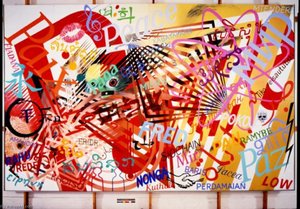
While no artworks are definitively attributed solely to Suiko’s hand, her patronage undoubtedly influenced the aesthetic direction of the Asuka period. Recent discoveries have linked her name to intriguing pieces like “Kedi Kuyruğu” (Cat), a vibrant street art mural showcasing swirling circles and dynamic urban energy—a surprising find that suggests an openness to unconventional artistic expression during her time. Another work, simply titled "Scorpion," hints at the symbolic power of nature imagery prevalent in early Japanese art. These pieces, though their direct connection remains debated, reflect the period’s burgeoning creativity and a willingness to explore new forms and themes. The emphasis on balance and harmony—central tenets of Suiko's rule—are subtly echoed in these works, suggesting a broader artistic sensibility fostered under her guidance.
Suiko reigned for thirty-five years, a remarkably long period that brought stability and prosperity to Japan. Her reign witnessed the rise of Prince Shōtoku, a brilliant statesman who further advanced Buddhist learning and centralized governance. She died in 628, leaving behind a legacy as a pioneering ruler who skillfully navigated religious conflict, embraced cultural exchange, and laid the foundation for a more unified and sophisticated Japan. As the first empress regnant, Suiko broke barriers and paved the way for future female leaders, forever altering the course of Japanese history. Her story serves as a powerful reminder that true leadership lies not only in political power but also in fostering harmony, embracing innovation, and leaving a lasting artistic and cultural imprint on the world.

Japan


Fique por dentro das últimas notícias de arte, ofertas exclusivas e ideias de decoração.
Conte-nos sobre o seu projeto e os nossos especialistas em arte fornecerão 3 sugestões de arte personalizadas.
Deixe que selecionamos 3 opções especialmente para você – Grátis!


 Visualizar em escala
 Enviar
 Compartilhar
 Ver detalhes

 Baixar
 Semelhantes
 Raio X
 Apresentação de slides
 Ver mais