Visualizar em escalaVisualizar em escala Visualizar em RAVisualizar em RA Encomendar impressão Encomendar impressãoEncomendar reprodução pintada à mão Encomendar reprodução pintada à mão EnviarEnviar
Ver detalhesVer detalhes Adicionar aos favoritos Adicionar aos favoritos BaixarBaixar SemelhantesSemelhantes Raio XRaio X Apresentação de slidesApresentação de slides

Interior with mobile

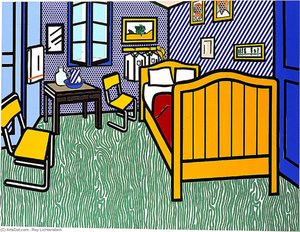
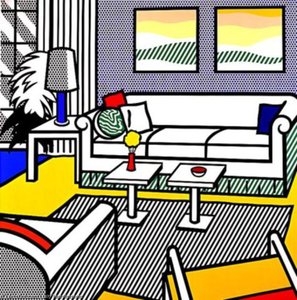
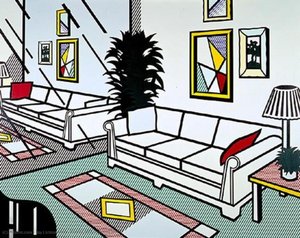
Roy Lichtenstein’s iconic Interior with mobile captures a serene bedroom scene in bold Ben-Day dots—a hallmark of Pop Art—creating an unforgettable visual experience. This masterful depiction exemplifies Lichtenstein's innovative style and invites you to explore the beauty of modern art.

Roy Lichtenstein (1923-1997): Pioneiro da Pop Art, famoso por pontos Ben-Day, inspiração em quadrinhos e crítica à cultura de consumo. Explore 'Whaam!' & mais.

Adquira uma imagem digital de alta resolução e aprimorada, muito superior à prévia online.

Cada arquivo é meticulosamente preparado por nossos especialistas internos, utilizando ferramentas avançadas e retoques manuais de alta precisão. Garantimos que cada imagem apresente clareza excepcional, fidelidade de cores e detalhes minuciosos.

O arquivo final é entregue por e-mail em até 72 horas, otimizado para uso imediato em ambientes profissionais, editoriais e de impressão. Esta é a mesma qualidade utilizada por estúdios de design de alto nível, editoras e galerias.

Imagem Digital

Baixe um arquivo de alta resolução para exibição pessoal, impressão e projetos criativos. (Encomendar impressão Encomendar impressãoEncomendar reprodução pintada à mão Encomendar reprodução pintada à mão)

Preço Total

$ 26,90

Incluído em cada pedido de imagem digital

Entrega Digital Especializada e Garantida

Ao escolher o BuyPopArt.com, você não está apenas adquirindo uma imagem — você está recebendo uma obra de arte digital profissionalmente aprimorada, elaborada com precisão e com garantia de satisfação. Aqui está tudo o que acompanha seu pedido, automaticamente:

shipping_icon
Entrega rápida por e-mail

O seu arquivo de imagem digital em alta resolução será enviado por e-mail em até 72 horas após o pedido — pronto para uso imediato.

canvas_icon
Arquivo Digital com IA Otimizado

Sua obra de arte é otimizada profissionalmente por meio de ferramentas avançadas de IA e edição manual, garantindo o máximo de detalhes, clareza e precisão de cores.

insurance_icon
Reenvio gratuito vitalício

Apagou ou perdeu o seu ficheiro acidentalmente? Não se preocupe – nós reenviamos para si a qualquer momento, gratuitamente.

tax_icon
Sem Taxas de Importação - Sempre

Desfrute da sua obra de arte instantaneamente, sem taxas alfandegárias, impostos ou custos de entrega — downloads digitais são sempre isentos de taxas.

color_icon
Garantia de Precisão de Cores

Garantimos que sua imagem digital reflita as cores originais com a maior fidelidade possível, utilizando ferramentas profissionais e gerenciamento de cores.

return_icon
Garantia de Satisfação de 60 Dias

Se você não estiver satisfeito com sua imagem digital, nós a revisaremos ou reembolsaremos 100% dentro de 60 dias — sem perguntas.

guarantee_icon
Garantia de Reembolso 100%

Não está satisfeito? Receba o reembolso total em até 60 dias após o recebimento do seu arquivo digital — sem perguntas.

discount_icon
Descontos para pedidos em lote

Compre 3 imagens, economize 10% - Compre 5, economize 15% - Compre 10+, economize 20%. Ideal para projetos criativos, galerias e agências.


Detalhes Rápidos

  • Subject or theme: Domestic scene
  • Title: Interior with mobile
  • Movement: Pop Art
  • Artistic style: Graphic abstraction
  • Artist: Roy Lichtenstein

Teste de Conhecimentos Artísticos

Cada pergunta possui apenas uma resposta correta.

Questão 1:
Which art movement is Roy Lichtenstein's 'Interior with mobile' a part of?
Questão 2:
What specific technique did Lichtenstein use to create the illusion of shading and texture?
Questão 3:
What does the mobile in the painting symbolize?
Questão 4:
Which color palette is primarily used in this artwork to enhance the feeling of tranquility?
Questão 5:
Lichtenstein's style was a deliberate reaction against which artistic movement?

Descrição do Colecionável

A Sanctuary of Graphic Serenity

In the quiet corners of Roy Lichtenstein’s Interior with Mobile, one finds a profound meditation on domestic peace. The painting invites the viewer into a meticulously composed bedroom, where the focal point—a bed draped in crisp, white linens and plush pillows—servs as an altar to rest and contemplation. There is an undeniable sense of purity and comfort radiating from the composition, enhanced by a palette of muted creams, pale yellows, and soft whites. A subtle touch of green from a nearby potted plant breathes organic life into the scene, while the presence of lamps and a reflective mirror suggests a space prepared for the gentle transitions of day into night. For the interior designer, this piece offers a masterclass in creating an atmosphere of tranquility through controlled color and balanced form.

The Precision of Pop Art Technique

Beyond its surface-level calm, the work is a brilliant manifestation of the Pop Art movement’s revolutionary approach to visual language. Lichtenstein eschews the heavy, emotional brushwork of Abstract Expressionism in favor of a cool detachment and graphic clarity. He employs his signature Ben-Day dots—a halftone printing technique borrowed from the world of comic strips and mass advertising—to construct texture and shadow. These tiny, rhythmic dots create an illusion of depth and shading without ever resorting to traditional blending or gradation. This deliberate flatness and use of repetition transform a mundane domestic scene into a striking piece of modern iconography, making it an ideal centerpiece for collectors who appreciate the intersection of high art and popular culture.

Symbolism and Historical Resonance

Created during the mid-1960s, this work captures the optimistic spirit of a post-war era defined by consumerism and a new visual literacy. The mobile suspended within the frame acts as a powerful symbol; it is a delicate assemblage that represents movement existing within stillness, much like the pulse of life within a quiet home. This tension between the static environment and the kinetic potential of the mobile provides a layer of intellectual engagement that elevates the painting from mere decoration to a profound statement on balance. To possess a reproduction of this masterpiece is to bring a piece of art history into one's own space—a way to anchor a modern interior with the intellectual rigor and aesthetic elegance of a true visionary.

Key Visual Elements for Interior Curation

  • A soothing palette of whites, creams, and pale yellows.
  • The iconic use of Ben-Day dots for graphic texture.
  • A composition featuring a bed, mirror, and organic accents like potted plants.

Biografia do Artista

The Genesis of a Pop Visionary

Roy Fox Lichtenstein, born in the vibrant metropolis of New York City on October 27, 1923, indelibly altered the landscape of twentieth-century art. Emerging as a pivotal figure within the Pop Art movement, Lichtenstein didn’t simply reflect his era; he actively interrogated it, transforming commonplace imagery into compelling artistic statements. His upbringing in an upper-middle-class Jewish family fostered both a cultural awareness and an early artistic inclination. Childhood exposure to museums and concerts, coupled with a deep appreciation for jazz music, laid the groundwork for a creative spirit that would challenge conventional notions of fine art. Though initially drawn to realistic drawing and painting during his formative years, Lichtenstein’s formal training commenced at the Art Students League in 1939 under Reginald Marsh, followed by studies at Ohio State University – interrupted briefly by wartime service in the Army. These experiences provided a robust technical foundation that would later be brilliantly re-contextualized through the lens of mass culture and commercial aesthetics. The seeds of his signature style weren’t sown within the hallowed halls of artistic tradition but rather in the often-overlooked world of everyday imagery, particularly comic books and advertising.

From Abstraction to Appropriation: A Pivotal Shift

Lichtenstein's early work demonstrated a clear engagement with Abstract Expressionism, mirroring the dominant aesthetic trends of the post-war period. However, this phase proved transitional, a stepping stone towards his revolutionary style. A crucial moment arrived during his tenure at Rutgers University where he encountered Allan Kaprow, whose influence reignited Lichtenstein’s interest in proto-pop imagery. This encounter sparked a critical shift in his artistic trajectory, leading him to question the established boundaries between “high” and “low” art. He began looking beyond the subjective expression of Abstract Expressionism towards the objective language of popular culture – specifically, comic books and advertising. The year 1961 marked a turning point with *Look Mickey*, a work that boldly appropriated characters from Disney comics, signaling the beginning of his signature style. This wasn’t mere imitation; it was an act of artistic re-evaluation, elevating commonplace imagery to the status of fine art. He didn't simply copy comic strips; he meticulously recreated them using techniques mimicking commercial printing processes, a deliberate blurring of the lines between original artwork and mass production. This appropriation wasn’t about celebrating consumerism uncritically but rather examining its pervasive influence on American society and challenging traditional artistic hierarchies.

The Language of Ben-Day Dots and Bold Lines

Lichtenstein's artistic vocabulary is instantly recognizable: bold, primary colors, thick black outlines, and most famously, Ben-Day dots – a technique borrowed directly from the mechanical reproduction of comic books. These dots weren’t merely decorative; they were integral to his conceptual framework, representing the very process of mass production and challenging the traditional emphasis on the artist's hand. His paintings often enlarged details from comic strips to monumental scale, forcing viewers to confront the aesthetic qualities of an art form typically dismissed as trivial. Works like *Whaam!* (1963), *Drowning Girl* (1963), and *Oh, Jeff…I Love You, Too…But…* (1964) became iconic representations of Pop Art, capturing the anxieties and desires of a rapidly changing consumer culture. These weren’t simply depictions of comic book scenes; they were commentaries on themes of war, romance, and societal expectations, filtered through the visual language of mass media. He aimed to strip away any pretense of artistic subjectivity, presenting his work as objective reflections of American society – a mirror held up to its own manufactured reality. The deliberate flatness and lack of painterly gesture further emphasized this detachment, mimicking the impersonal nature of commercial printing.

Major Achievements and Lasting Impact

Roy Lichtenstein’s influence extends far beyond the realm of painting. His innovative use of commercial techniques and appropriation paved the way for new generations of artists exploring themes of consumerism, media saturation, and cultural identity. The sale of *Masterpiece* in 2017 for $165 million solidified his position as one of the most commercially successful American artists of all time, but his legacy is not solely defined by monetary value. He challenged traditional notions of artistic authorship and originality, forcing a re-evaluation of what constitutes “art” itself. His work continues to inspire graphic designers, illustrators, and visual artists across various disciplines.
  • Major Achievements: Pioneered Pop Art style; achieved international recognition with groundbreaking exhibitions.
  • Notable Works: *Whaam!*, *Drowning Girl*, *Oh, Jeff…I Love You, Too…But…*, *Masterpiece*.
  • Teaching Career: Influenced aspiring artists at SUNY Oswego and Rutgers University.
Lichtenstein passed away on September 29, 1997, leaving behind a body of work that remains as relevant and provocative today as it was during the height of the Pop Art movement. His art serves as a powerful reminder of the pervasive influence of mass media and its ability to shape our perceptions of reality. He didn’t just reflect his time; he actively interrogated it, leaving an indelible mark on the history of 20th-century art and continuing to inspire critical dialogue about the relationship between art, culture, and commerce.
Roy Lichtenstein

Roy Lichtenstein

1923 - 1997 , Estados Unidos da América

Informações Rápidas

  • Artistic Movement Or Style: Pop Art
  • Artists Or Movements Influenced By This Artist:
    • Designers
    • Ilustradores
  • Artists Who Influenced This Artist:
    • Reginald Marsh
    • Allan Kaprow
  • Date Of Birth: 27 de outubro de 1923
  • Date Of Death: 29 de setembro de 1997
  • Full Name: Roy Fox Lichtenstein
  • Nationality: Americano
  • Notable Artworks:
    • Whaam!
    • Drowning Girl
    • Masterpiece
  • Place Of Birth: Nova Iorque, EUA