Printuri giclée sau pe canvas de calitate muzeală, cu proces de producție rapid și opțiuni flexibile de finisare. ( Comandă pictură lucrată manual Cumpără imaginea)





























Alegeți dintre dimensiunile noastre prestabilite, care respectă proporțiile originale ale operei de artă.

Puteți introduce propriile dimensiuni pentru a se potrivi unui anumit cadru sau spațiu. Dacă dimensiunea selectată nu corespunde proporțiilor imaginii originale, vom decupa lucrarea de artă sau vom extinde imaginea cu margini oglindite sau cu o culoare uniformă. Un mockup digital va fi trimis pentru aprobarea dumneavoastră înainte de începerea producției.
Vă rugăm să rețineți că previzualizarea de pe ecran nu reflectă decuparea sau extinderea reală. Doar mockup-ul va arăta cu exactitate compoziția finală.
Deși dimensiunile personalizate sunt disponibile, vă recomandăm să selectați o dimensiune din lista predefinită pentru a păstra proporțiile originale.
Livrare în întreaga lume () în 2 săptămâni, în loc de cele 4/5 săptămâni standard. (14 August)


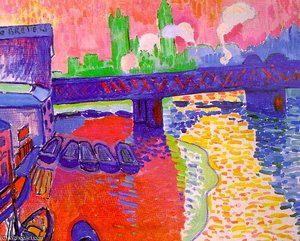
Charing Cross Bridge
Dimensiune reproducere
André Derain's Charing Cross Bridge (1906) isn't merely a depiction of a London thoroughfare; it’s a visceral explosion of color and emotion, a cornerstone of the revolutionary Fauvist movement. Painted during a pivotal moment in art history – a time when Impressionism was yielding to bolder, more subjective expression – this work captures the dynamism of urban life with an intensity rarely seen before. The painting, currently residing within the esteemed collection at the Musée d'Orsay in Paris, offers a captivating glimpse into the artistic fervor that defined early 20th-century modernism.
Born in 1880 in Chatou, France, André Derain’s journey began independently before his fateful encounter with Henri Matisse. This meeting ignited a collaborative spirit that would profoundly shape the development of Fauvism. The movement emerged as a direct response to Impressionism's focus on capturing fleeting moments of light and atmosphere. While Impressionists sought to represent optical reality, the Fauves – meaning “wild beasts” – deliberately distorted color to convey emotion and subjective experience. Derain’s Charing Cross Bridge exemplifies this approach; the colors aren’t intended to accurately depict the scene but rather to evoke a feeling of energy, movement, and perhaps even a sense of unease.
Derain's compositional choices amplify the painting's emotional impact. The bridge itself acts as a strong diagonal element, guiding the viewer’s eye through the scene. The placement of figures – strategically positioned to create depth and perspective – further enhances this dynamic flow. The artist’s brushwork is particularly noteworthy; it’s loose, gestural, and deliberately unrefined, contributing to the painting's raw energy. Notice how he uses thick impasto—layers of paint applied with considerable texture—to build up form and intensify color. This technique adds a tactile quality to the work, inviting viewers to engage with the surface on a deeper level.
Beyond its technical brilliance, Charing Cross Bridge carries symbolic weight. The bustling scene represents the rapid pace of industrialization and urbanization that was transforming Europe at the turn of the century. Derain’s influence extended far beyond his own time; he played a crucial role in shaping the course of modern art, inspiring subsequent generations of artists like Pablo Picasso and Georges Braque. His work remains a testament to the power of color and emotion in artistic expression, solidifying its place as a landmark achievement within the history of modern art.

1880 - 1954 , Franța

Discover the secret to depth with BuyPopArt.com's premium textured giclée prints. Elevate your collection with archival-quality reproductions that mimic the impasto texture of original oil paintings for a stunning 3D effect.

Master the art of decorating with impact. Our expert guide decodes Giclée prints, exploring archival quality, pigment-based inks, and how to choose between high-fidelity reproductions and hand-painted oils for a bold, museum-grade aesthetic in your space.


Rămâneți la curent cu cele mai recente știri din lumea artei, ofertele noastre exclusive și ideile de decor.
Spuneți-ne despre proiectul dumneavoastră, iar experții noștri în artă vă vor oferi 3 sugestii personalizate.
Vom selecta 3 opțiuni special pentru tine – Gratuit!


 Previzualizare
 Trimite
 Distribuie
 Detalii despre lucrare

 Descarcă
 Produse similare
 Radiografie
 Diapozitive automate


 Vezi mai mult







 Opțiunea cu sticlă este disponibilă doar pentru dimensiuni de sub 110 cm