Printuri giclée sau pe canvas de calitate muzeală, cu proces de producție rapid și opțiuni flexibile de finisare. ( Comandă pictură lucrată manual Cumpără imaginea)





























Alegeți dintre dimensiunile noastre prestabilite, care respectă proporțiile originale ale operei de artă.

Puteți introduce propriile dimensiuni pentru a se potrivi unui anumit cadru sau spațiu. Dacă dimensiunea selectată nu corespunde proporțiilor imaginii originale, vom decupa lucrarea de artă sau vom extinde imaginea cu margini oglindite sau cu o culoare uniformă. Un mockup digital va fi trimis pentru aprobarea dumneavoastră înainte de începerea producției.
Vă rugăm să rețineți că previzualizarea de pe ecran nu reflectă decuparea sau extinderea reală. Doar mockup-ul va arăta cu exactitate compoziția finală.
Deși dimensiunile personalizate sunt disponibile, vă recomandăm să selectați o dimensiune din lista predefinită pentru a păstra proporțiile originale.
Livrare în întreaga lume () în 2 săptămâni, în loc de cele 4/5 săptămâni standard. (15 August)


Înmormântarea
Dimensiune reproducere
Édouard Manet’s “The Funeral,” completed in 1867, isn't merely a depiction of a somber Parisian event—the passing of writer Charles Baudelaire—but rather a daring assertion of artistic freedom and a pivotal moment in the birth of modern art. More than just a scene of mourning, it’s an ambitious exploration of space, light, and the very nature of human emotion, a deliberate rejection of the rigid conventions imposed by the French Academy and a bold step towards capturing fleeting moments with unprecedented honesty. The painting immediately draws the viewer into a bustling streetscape, dominated by the imposing presence of a hearse carrying Baudelaire’s coffin – an object rendered almost secondary to the surrounding drama.
The scene unfolds on Mouffetard Street in Paris, a vibrant thoroughfare brought to life with Manet's characteristic loose brushstrokes and muted palette. Unlike the meticulously detailed works of Realist painters like Gustave Courbet, who sought to objectively represent reality, Manet abandons precise topographical accuracy in favor of capturing the atmosphere – specifically, a stormy September afternoon. The diffused illumination, devoid of dramatic chiaroscuro (the stark contrast between light and shadow), softens the contours of figures and buildings, creating an impressionistic haze that emphasizes movement and emotion over strict realism. This deliberate choice to prioritize feeling over form is central to Manet’s revolutionary approach.
Beyond its immediate subject matter, “The Funeral” is rich with symbolic layers, inviting contemplation and interpretation. The elevated cityscape—a recognizable panorama of Paris featuring landmarks such as Notre Dame Cathedral, the Panthéon, and the Observatoire de Paris – represents intellectual and spiritual grandeur. However, Manet subtly subverts this traditional symbolism by bringing these monumental structures closer together, a compositional decision that elevates the visual importance of faith and contemplation. This isn’t a straightforward celebration of Parisian heritage; rather, it's a nuanced commentary on the relationship between earthly concerns and higher ideals.
The deliberate omission of many mourners – primarily men – is particularly significant. Manet wasn’t interested in portraying an idealized or representative gathering of grief. Instead, he focused on capturing the psychological state of those present, suggesting a sense of detachment and perhaps even indifference amidst sorrow. This focus on individual experience, rather than collective mourning, was a radical departure from academic conventions and foreshadowed the modern artist's exploration of subjective emotion.
The diagonal thrust of the hearse dominates the canvas, acting as a powerful visual guide that directs the viewer’s gaze across the scene. This dynamic line creates a sense of movement and urgency, mirroring the flow of the funeral procession itself. The positioning of figures within this diagonal – the grieving men, the onlookers, the horse-drawn carriages – contributes to the overall feeling of controlled chaos and emotional intensity. Manet masterfully uses composition not just to depict a scene but to shape the viewer’s experience, drawing them into the heart of the moment.
The painting's enduring power lies in its ability to evoke a profound sense of melancholy and contemplation. “The Funeral” is more than just a historical record; it’s a deeply personal exploration of grief, loss, and the complexities of human existence – a testament to Manet’s genius as one of art history’s most influential figures.
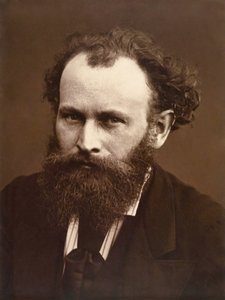
1832 - 1883 , Franța
Descoperă cele mai emblematice 25 de picturi ale lui Édouard Manet! Explorează impresionismul, realismul și capodopere precum Olympia și Le Déjeuner sur l'herbe. Găsește artă modernă perfectă pentru decorul tău pe BuyPopArt.com.
Descoperă top 10 capodopere impresioniste de la Monet, Manet, Renoir și alți artiști geniali. Explorează istoria, tehnicile și emoțiile din spatele picturilor celebre. Reproduceri tablouri de lux pe .ro! Explorează colecția online.

Explore the life & art of Édouard Manet, a pivotal figure bridging Realism and Impressionism. Discover his revolutionary techniques, controversial masterpieces like 'Olympia,' and lasting impact on modern art history.

Descoperă cele mai frumoase 10 opere impresioniste de la Monet, Renoir și Degas! Explorează istoria, tehnicile și culorile vibrante ale acestui stil revoluționar. Găsește inspirație pentru decorul casei tale cu reproduceri de artă de calitate muzeală pe BuyPopArt.com.

Explore the captivating world of Impressionism! Discover its history, key artists like Monet & Renoir, defining techniques, and lasting impact on modern art. Expert insights for collectors.


Rămâneți la curent cu cele mai recente știri din lumea artei, ofertele noastre exclusive și ideile de decor.
Spuneți-ne despre proiectul dumneavoastră, iar experții noștri în artă vă vor oferi 3 sugestii personalizate.
Vom selecta 3 opțiuni special pentru tine – Gratuit!


 Previzualizare
 Trimite
 Distribuie
 Detalii despre lucrare

 Descarcă
 Produse similare
 Radiografie
 Diapozitive automate


 Vezi mai mult







 Opțiunea cu sticlă este disponibilă doar pentru dimensiuni de sub 110 cm