

Achiziționați o imagine digitală de înaltă rezoluție, îmbunătățită, mult superioară previzualizării online.
Fiecare fișier este pregătit cu meticulozitate de specialiștii noștri interni, utilizând instrumente avansate și retușare manuală expertă. Ne asigurăm că fiecare imagine beneficiază de o claritate excepțională, o acuratețe precisă a culorilor și detalii fine.
Fișierul final este livrat prin e-mail în termen de 72 de ore, optimizat pentru utilizare imediată în medii profesionale, editoriale și de imprimare. Aceasta este aceeași calitate în care au încredere studiouri de design, edituri și galerii de top.
Descărcați un fișier la rezoluție înaltă pentru afișare personală, imprimare și proiecte creative. ( Comandă versiunea tipărită Comandă pictură realizată manual)
Când alegeți BuyPopArt.com, nu primiți doar o simplă imagine – primiți o operă de artă digitală îmbunătățită profesional, creată cu precizie și susținută de o garanție de satisfacție. Iată tot ceea ce primești odată cu comanda ta, în mod automat:

Fișierul imaginii digitale la rezoluție înaltă vă va fi trimis prin e-mail în termen de 72 de ore de la finalizarea comenzii – gata pentru utilizare imediată.

Opera ta de artă este optimizată profesional prin intermediul unor instrumente AI avansate și al editării manuale, asigurând un nivel maxim de detalii, claritate și acuratețe a culorilor.

Ai șters sau ai pierdut din greșeală fișierul? Nu îți face griji – ți-l vom retrimite oricând, gratuit.

Bucură-te instant de noua ta operă de artă, fără taxe vamale, taxe de import sau costuri de livrare – descărcările digitale sunt întotdeauna fără taxe.

Asigurăm o reflectare cât mai fidelă a culorilor originale în imaginea ta digitală, prin utilizarea unor instrumente profesionale și a proceselor de gestionare a culorii.

Dacă nu sunteți mulțumit de imaginea digitală achiziționată, o vom revizui sau vă vom returna 100% în termen de 60 de zile – fără nicio explicație necesară.

Nu ești mulțumit? Obține o rambursare completă în termen de 60 de zile de la primirea fișierului tău digital – fără întrebări.

Cumpără 3 imagini, economisește 10% - Cumpără 5, economisește 15% - Cumpără 10+, economisește 20%. Ideal pentru proiecte creative, galerii și agenții.
Fernand Léger’s “Self,” painted in 1930, isn't merely a portrait; it’s a distilled essence of the early 20th century – a visual embodiment of the machine age grappling with human identity. This striking pencil drawing, now housed within the Fernand Léger National Museum in Biot, France, offers a profound glimpse into the artist’s evolving style and his fascination with the intersection of form, technology, and the individual. Léger, born Joseph Fernand Henri Léger in 1881 in Argentan, Normandy, began his artistic journey as an architect before embracing painting, profoundly influenced by the radical innovations of Cézanne and the burgeoning currents of Cubism.
The composition immediately commands attention. The subject, a self-portrait, is rendered with a deliberate austerity – a simplification of features that borders on abstraction. Léger strips away extraneous detail, reducing the face to its fundamental geometric components: sharp triangles for the nose and eyes, rectangular planes for the mouth and chin, and a simplified outline of the head itself. This fragmentation isn’t chaotic; rather, it creates a sense of dynamic energy, as if the subject is simultaneously present and dissolving into pure form. The cropped composition, focusing tightly on the upper torso, intensifies this effect, drawing the viewer directly into the artist's gaze – an intense, direct stare that speaks to both confidence and introspection.
“Self” is a quintessential example of Léger’s “Tubism,” a style he developed in the early 1910s. Inspired by the cylindrical forms of industrial machinery, Tubism sought to represent objects – and indeed, human figures – as composed of interlocking cylinders, cones, and cubes. This approach wasn't simply an aesthetic choice; Léger saw it as a way to capture the essence of modern life, dominated by factories, trains, and the relentless march of technology. The angular lines and stark contrasts in tone reflect this mechanical sensibility, creating a visual rhythm that echoes the precision and efficiency of machines.
The use of pencil is crucial here. Léger’s meticulous application of line – often with varying pressure and thickness – imbues the drawing with a remarkable sense of texture and depth. The grainy quality of the graphite suggests a hand-drawn immediacy, contrasting sharply with the stylized forms. This combination of raw material and deliberate construction speaks to Léger's desire to bridge the gap between traditional artistic techniques and the new visual language of modernity.
Beyond its formal qualities, “Self” carries a potent symbolic weight. The direct gaze of the subject is particularly arresting – it’s not a passive portrait but an active engagement with the viewer. This confrontational quality suggests a questioning of identity in a rapidly changing world. Léger himself described his work as reflecting "the crude beauty" of everyday life, and “Self” embodies this sentiment perfectly. The simplification of features can be interpreted as a rejection of idealized representations, suggesting instead a focus on the essential, stripped-down reality of human existence.
Furthermore, the drawing’s monochromatic palette – primarily shades of gray – reinforces its sense of austerity and detachment. It evokes the starkness of industrial landscapes and the impersonal nature of modern life. The lack of color directs attention to the formal elements of the composition, highlighting Léger's mastery of line and form.
Fernand Léger’s “Self” stands as a pivotal work in his oeuvre and a significant contribution to the development of modern art. His exploration of Cubism, combined with his fascination with technology and his unique approach to portraiture, paved the way for subsequent generations of artists – including Pop Art pioneers like Andy Warhol – who sought to integrate the visual language of mass culture into their work. “Self” remains a powerful testament to Léger’s artistic vision and his enduring legacy as one of the most influential figures of the 20th century.
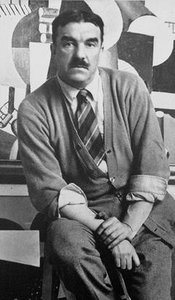
1881 - 1955 , Franța


Rămâneți la curent cu cele mai recente știri din lumea artei, ofertele noastre exclusive și ideile de decor.
Spuneți-ne despre proiectul dumneavoastră, iar experții noștri în artă vă vor oferi 3 sugestii personalizate.
Vom selecta 3 opțiuni special pentru tine – Gratuit!


 Previzualizare
 Trimite
 Distribuie
 Detalii despre lucrare

 Descarcă
 Produse similare
 Radiografie
 Diapozitive automate

 Vezi mai mult