Printuri giclée sau pe canvas de calitate muzeală, cu proces de producție rapid și opțiuni flexibile de finisare. ( Comandă pictură lucrată manual Cumpără imaginea)





























Alegeți dintre dimensiunile noastre prestabilite, care respectă proporțiile originale ale operei de artă.

Puteți introduce propriile dimensiuni pentru a se potrivi unui anumit cadru sau spațiu. Dacă dimensiunea selectată nu corespunde proporțiilor imaginii originale, vom decupa lucrarea de artă sau vom extinde imaginea cu margini oglindite sau cu o culoare uniformă. Un mockup digital va fi trimis pentru aprobarea dumneavoastră înainte de începerea producției.
Vă rugăm să rețineți că previzualizarea de pe ecran nu reflectă decuparea sau extinderea reală. Doar mockup-ul va arăta cu exactitate compoziția finală.
Deși dimensiunile personalizate sunt disponibile, vă recomandăm să selectați o dimensiune din lista predefinită pentru a păstra proporțiile originale.
Livrare în întreaga lume () în 2 săptămâni, în loc de cele 4/5 săptămâni standard. (17 August)


Pulled at Four Pins
Dimensiune reproducere
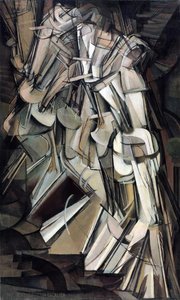
Marcel Duchamp's “Pulled at Four Pins,” created in 1964, isn’t merely a drawing; it’s a deliberate provocation—a cornerstone of Conceptual Art and a testament to the artist’s unwavering challenge of artistic conventions. This seemingly simple piece, executed on pale cream Magnani-wove paper with pencil or charcoal, embodies Duchamp's core philosophy: elevating commonplace objects to the realm of art through conceptual intervention.
The artwork’s composition centers around a cylindrical metal bucket—a readily available item transformed into an artistic statement. Lines dominate the visual language, varying in weight and thickness to convey spontaneity and expressive gesture rather than meticulous accuracy. Duchamp's technique reflects this approach; he eschewed traditional rendering methods, prioritizing conceptual thought over technical skill. The resulting texture is that of paper itself, subtly grained, hinting at the immediacy of the artist’s process.
“Pulled at Four Pins” exemplifies Duchamp's embrace of the readymade concept—a radical notion championed by Dada artists that questioned the very definition of art. As Tomkins eloquently describes, “This was what Duchamp liked about it - the words, making no sense and having no relation to the visual image, could lead the mind in unpredictable directions.” The title itself is deliberately ambiguous, referencing both the literal act of pulling pins and a broader exploration of complexity—a preoccupation evident throughout Duchamp’s oeuvre.
Duchamp’s work emerged from the turbulent milieu of Dadaism, an anti-establishment movement born in Zurich during World War I. Dada artists rejected logic and reason, embracing absurdity and chance as artistic tools—a reaction to the horrors of the conflict and a critique of bourgeois values. “Pulled at Four Pins” aligns perfectly with this spirit of rebellion, mirroring Duchamp’s broader ambition to dismantle accepted artistic hierarchies.
"Pulled at Four Pins" stands as an enduring symbol of Duchamp's groundbreaking contribution to art history. Its understated execution belies its profound philosophical implications—a reminder that true artistry resides not in skillful representation but in questioning fundamental assumptions about creativity and beauty. This artwork continues to inspire artists and collectors alike, prompting contemplation on the role of intention and the transformative power of conceptual thought.

1887 - 1968 , Franța

Explore the revolutionary art of Marcel Duchamp! Discover how his Dadaist readymades challenged artistic conventions & redefined modern art. A deep dive into 'Fountain', conceptual shifts, and his lasting impact.

Explore the revolutionary Dada art movement! Discover its origins, key artists like Duchamp & Arp, and lasting impact on modern art. A deep dive into anti-art & challenging conventions.
Descoperă top 10 gravuri legendare care au revoluționat arta! Explorează poveștile lui Rembrandt, Goya și alți maeștri. Reproduceri de artă de calitate muzeală pentru un decor inspirat. Vezi colecția completă pe BuyPopArt.com

Explore the rich history of aesthetic theory & formal analysis in art. Discover key movements, artists like Dali & Raphael, and learn to build a discerning collection with BuyPopArt.

Explore the revolutionary Dada art movement! Discover its origins in WWI, key artists like Duchamp & Höch, core principles, and lasting impact on modern and contemporary art. A comprehensive guide for enthusiasts.


Rămâneți la curent cu cele mai recente știri din lumea artei, ofertele noastre exclusive și ideile de decor.
Spuneți-ne despre proiectul dumneavoastră, iar experții noștri în artă vă vor oferi 3 sugestii personalizate.
Vom selecta 3 opțiuni special pentru tine – Gratuit!


 Previzualizare
 Trimite
 Distribuie
 Detalii despre lucrare

 Descarcă
 Produse similare
 Radiografie
 Diapozitive automate
 Vezi mai mult







 Opțiunea cu sticlă este disponibilă doar pentru dimensiuni de sub 110 cm