Printuri giclée sau pe canvas de calitate muzeală, cu proces de producție rapid și opțiuni flexibile de finisare. ( Comandă pictură lucrată manual Cumpără imaginea)





























Alegeți dintre dimensiunile noastre prestabilite, care respectă proporțiile originale ale operei de artă.

Puteți introduce propriile dimensiuni pentru a se potrivi unui anumit cadru sau spațiu. Dacă dimensiunea selectată nu corespunde proporțiilor imaginii originale, vom decupa lucrarea de artă sau vom extinde imaginea cu margini oglindite sau cu o culoare uniformă. Un mockup digital va fi trimis pentru aprobarea dumneavoastră înainte de începerea producției.
Vă rugăm să rețineți că previzualizarea de pe ecran nu reflectă decuparea sau extinderea reală. Doar mockup-ul va arăta cu exactitate compoziția finală.
Deși dimensiunile personalizate sunt disponibile, vă recomandăm să selectați o dimensiune din lista predefinită pentru a păstra proporțiile originale.
Livrare în întreaga lume () în 2 săptămâni, în loc de cele 4/5 săptămâni standard. (13 August)


Gompa
Dimensiune reproducere
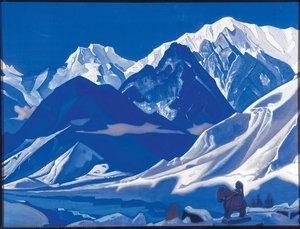
Nicholas Roerich’s “Gompa” transcends mere landscape painting; it's an invitation into a realm where earthly grandeur merges with spiritual contemplation. Executed in 1932, this artwork captures the essence of Himalayan Buddhism – specifically, a temple complex perched atop a dramatic hillside against a turbulent sky – through the lens of Post-Impressionism and early Modernism.
The painting’s immediate impact is dominated by color. Roerich employs a masterful palette of warm hues—burnt oranges, rosy pinks—contrasting sharply with cooler blues and greens that swirl within the clouds. This deliberate juxtaposition isn't simply aesthetic; it reflects the artist’s belief in the interconnectedness of nature and consciousness. Thick impasto strokes imbue the canvas with palpable texture, conveying a sense of dynamism and capturing the raw energy of the mountain environment.
Roerich's approach aligns closely with movements like Post-Impressionism, spearheaded by artists such as Cézanne and Gauguin. However, unlike their focus on subjective experience alone, Roerich incorporates elements of Symbolism. The simplified geometric cube representing the gompa serves as a focal point, anchoring the composition while simultaneously embodying stability amidst chaos. Linear perspective is deliberately flattened, prioritizing atmospheric depth over precise spatial representation—a technique characteristic of artists exploring new artistic horizons.
The artist skillfully utilizes color gradation to delineate distance, subtly guiding the viewer’s eye upwards towards the distant mountains. Careful shading enhances the illusion of volume, creating a convincing depiction of the temple's structure and its surroundings. Roerich’s meticulous brushwork—loose, gestural lines combined with textured surfaces—is testament to his dedication to capturing not just what he saw but also how it *felt*.
"Gompa" is more than just a beautiful landscape; it's laden with symbolic significance. The temple itself represents enlightenment and spiritual aspiration, mirroring the Buddhist quest for inner peace and transcendence. The swirling clouds symbolize karmic forces—the energies that shape our lives—and Roerich’s depiction suggests an ongoing dialogue between humanity and the cosmos.
The artist's intention was to convey a profound sense of awe and humility before the majesty of nature, reminding us of the enduring power of spiritual contemplation. “Gompa” remains a compelling visual meditation on themes of faith, beauty, and the timeless quest for wisdom—a piece that continues to inspire viewers with its evocative atmosphere and masterful execution.

1874 - 1947 , Rusia

Descoperiți diferențele subtile dintre impresionism și postimpresionism. Ghid expert pentru colecționari exigenți, cu sfaturi despre investiții, valoare și proveniență.

Descoperă Top 10 capodopere post-impresioniste de la Van Gogh, Monet, Cézanne și alții! Explorează istoria artei moderne, tehnicile unice și culorile vibrante. Reproduceri tablouri de calitate muzeală pe BuyPopArt.com

Explore the captivating landscapes of Henri Moret, a master of Post-Impressionism. Discover his unique style, key works, and legacy in our expert guide. Learn about collecting Moret's art & its investment potential.

Explore the captivating landscapes of Vasily Polenov, a pivotal figure in Russian art history. Discover his lyrical realism, biblical series & influence on Impressionism. Learn about the 'Knight of Beauty' and his enduring legacy.

Explore the life & art of Igor Grabar, a pivotal figure in Russian Modernism. Discover his Impressionist landscapes, crucial role in art history, and legacy at the Tretyakov Gallery. A deep dive into a master painter & scholar.


Rămâneți la curent cu cele mai recente știri din lumea artei, ofertele noastre exclusive și ideile de decor.
Spuneți-ne despre proiectul dumneavoastră, iar experții noștri în artă vă vor oferi 3 sugestii personalizate.
Vom selecta 3 opțiuni special pentru tine – Gratuit!


 Previzualizare
 Trimite
 Distribuie
 Detalii despre lucrare

 Descarcă
 Produse similare
 Radiografie
 Diapozitive automate

 Vezi mai mult







 Opțiunea cu sticlă este disponibilă doar pentru dimensiuni de sub 110 cm