Acrylic On CanvasWallArtCubist
 1920Modern
 65.0 x 92.0 cm
Картина маслом на холсте в выбранном вами размере и раме, написанная на заказ нашими художниками. ( Перейти к печати Переключиться на изображение)





























Выберите один из наших стандартных размеров, соответствующих оригинальным пропорциям произведения искусства.

Вы можете указать собственные размеры, чтобы картина идеально вписалась в выбранную раму или пространство. Если выбранный вами размер не соответствует пропорциям оригинала, мы либо обрежем полотно, либо расширим его за счет дополнительных элементов, написанных вручную. Цифровой макет будет отправлен вам на утверждение перед началом производства.
Обратите внимание, что предварительный просмотр на экране не отражает фактическую обрезку или расширение. Только макет точно покажет окончательную композицию.
Хотя доступны индивидуальные размеры, мы рекомендуем выбирать вариант из предопределенного списка, чтобы сохранить исходные пропорции.
Доставка по всему миру () за 3–4 недели вместо стандартных 5 недель. (11 Август). Без компромиссов в качестве.


The Builders
Размер репродукции
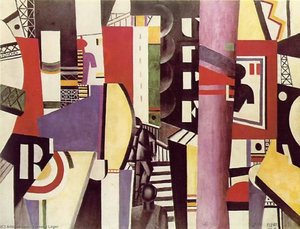
Fernand Léger’s “The Builders,” completed in 1920, stands as a cornerstone of Cubist aesthetics and embodies the fervent optimism surrounding technological advancement during the tumultuous years of World War I. More than just a depiction of laborers engaged in manual labor—though undeniably present—the painting transcends mere observation to become an impassioned manifesto for Léger’s belief that art could actively engage with the transformative forces reshaping human existence.
Born Joseph Fernand Henri Léger in Argentan, Normandy, 1881, Léger’s artistic trajectory began with a fascination for architecture but swiftly pivoted toward painting after relocating to Paris around 1900. Unlike many of his contemporaries who sought refuge in abstraction as an escape from representational concerns, Léger deliberately confronted the burgeoning machine age head-on. He wasn't interested in simply mirroring reality; he aimed to distill its essence—its geometric precision and rhythmic dynamism—into a new visual language.
Léger’s stylistic breakthrough arrived with Cubism, spearheaded by Picasso and Braque. Rejecting traditional perspective and illusionistic depth, Cubists shattered objects into interlocking planes, presenting multiple viewpoints simultaneously. Léger brilliantly adapted this technique to portray figures—specifically three workers—whose bodies are rendered as fragmented assemblages of industrial parts: cylinders, spheres, and cubes. This deliberate simplification wasn’t merely stylistic; it served a profound conceptual purpose.
"The Builders" isn't simply illustrating physical activity; it’s conveying an intellectual understanding of how the machine is reshaping human anatomy and environment. Léger famously articulated this concern in 1922, stating that “the contemporary environment is clearly the manufactured and ‘mechanical’ object; this is slowly subjugating the breasts and curves of women, fruit, the soft landscape.” This quote encapsulates Léger's conviction that art should actively engage with the anxieties and aspirations inherent in modernity.
Beyond its formal innovation, “The Builders” resonates with symbolic significance. The tennis rackets held by the figures represent leisure and recreation—a deliberate contrast to the grueling realities of wartime labor. However, Léger’s meticulous attention to detail—the carefully positioned sports balls, the clock on the wall—suggests a broader commentary on time and progress. These elements underscore Léger's belief that art could capture not only the present moment but also its trajectory toward an uncertain future.
Fernand Léger’s “The Builders” remains a testament to his unwavering artistic conviction—a bold declaration that art could embrace complexity while simultaneously distilling it into powerful geometric forms. It foreshadowed the stylistic developments of Pop Art and cemented Léger's place as one of the most influential artists of the 20th century, continuing to inspire collectors and interior designers alike with its striking visual language and enduring message about humanity’s relationship with technology.
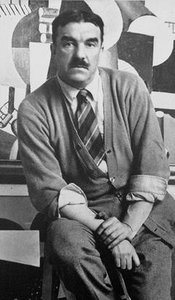
1881 - 1955 , Франция

Master the complexities of Cubism with our expert guide. Explore the revolutionary techniques of Picasso, from Analytical to Synthetic Cubism, and learn how to curate these powerful, fragmented perspectives for your private collection.


Будьте в курсе последних новостей из мира искусства, эксклюзивных предложений и идей для оформления интерьера.
Расскажите нам о вашем проекте, и наши эксперты по искусству предложат вам 3 персонализированных варианта произведений искусства.
Мы подберем для вас 3 варианта — бесплатно!


 Предпросмотр
 Поделиться
 Поделиться
 Детали произведения

 Скачать
 Похожие работы
 Рентгенография
 Слайд-шоу
 Читать далее







 Вариант со стеклом доступен только для размеров менее 110 см