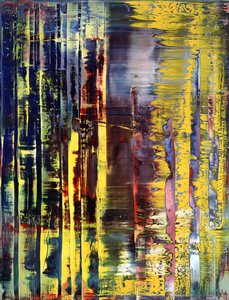
Картина маслом на холсте в выбранном вами размере и раме, написанная на заказ нашими художниками. ( Купить принт Купить изображение)





























Выберите один из наших стандартных размеров, соответствующих оригинальным пропорциям произведения искусства.

Вы можете указать собственные размеры, чтобы картина идеально вписалась в выбранную раму или пространство. Если выбранный вами размер не соответствует пропорциям оригинала, мы либо обрежем полотно, либо расширим его за счет дополнительных элементов, написанных вручную. Цифровой макет будет отправлен вам на утверждение перед началом производства.
Обратите внимание, что предварительный просмотр на экране не отражает фактическую обрезку или расширение. Только макет точно покажет окончательную композицию.
Хотя доступны индивидуальные размеры, мы рекомендуем выбирать вариант из предопределенного списка, чтобы сохранить исходные пропорции.
Доставка по всему миру () за 3–4 недели вместо стандартных 5 недель. (16 Август). Без компромиссов в качестве.


Valery
Размер репродукции
Gerhard Richter's "Valery," a seemingly simple black and white photograph, is far more than a portrait; it’s a carefully constructed meditation on time, memory, and the weight of experience. The image presents a man, his features etched with a quiet seriousness, gazing into the distance – an act that immediately invites us to project our own narratives onto his face. The starkness of the monochrome palette amplifies this effect, stripping away any superficial distractions and forcing a direct engagement with the subject’s internal state. Richter's masterful control over light and shadow creates a palpable sense of atmosphere, suggesting both vulnerability and resilience.
Born in Dresden in 1932, Richter’s life has been inextricably linked to the tumultuous history of Germany. His childhood, marked by displacement during wartime and the subsequent rise of National Socialism, instilled within him a profound awareness of uncertainty – an element that profoundly informs his artistic practice. This early experience isn't merely biographical; it’s woven into the very fabric of his work, manifesting as a persistent questioning of representation and the nature of reality. The photograph’s composition—a close-up portrait emphasizing the man’s face—can be interpreted as an attempt to capture this elusive sense of inner life, a feeling Richter has consistently explored throughout his career.
Richter is renowned for his distinctive approach to photography. He doesn’t aim to replicate reality with photographic precision; instead, he employs a technique often described as “photographic painting.” He builds up layers of paint on canvas, meticulously recreating the appearance of a photograph – not by faithfully reproducing details, but by suggesting them through subtle gradations of tone and texture. This process deliberately obscures the original image, creating an ambiguity that is central to Richter’s work. In "Valery," this technique is particularly evident in the soft blurring of edges and the delicate rendering of the man's mustache – elements that are not sharply defined but rather hinted at through a careful orchestration of color and brushstroke.
The choice of black and white further enhances this effect, removing the potential for color to distract from the underlying structure. It’s a deliberate decision that aligns with Richter’s broader exploration of memory and the subjective nature of perception. Black and white photographs often evoke a sense of nostalgia, transporting us back in time and inviting us to contemplate the past. The absence of color also allows the viewer to focus on the formal elements of the image – its composition, texture, and tonal range – creating a more contemplative experience.
Interestingly, Richter's work shares thematic resonances with Valery Alekseyevich Legasov, the Soviet nuclear physicist who played a crucial role in containing the 1986 Chernobyl disaster. Legasov, depicted in a photograph from the IAEA investigation, embodies a similar sense of quiet dignity and profound responsibility – qualities that are powerfully conveyed in Richter’s portrait. Both figures grapple with the consequences of immense tragedy and possess an unwavering commitment to truth, even in the face of overwhelming adversity. While Richter's work doesn't directly depict the Chernobyl event, "Valery" can be seen as a broader meditation on human resilience and the enduring power of memory.
The photograph’s contemplative mood invites us to consider the unseen burdens carried by individuals who have witnessed or experienced profound loss. It’s a portrait not just of a man, but of an entire era – a testament to the complexities of history and the enduring human spirit. Richter's "Valery" is therefore more than simply a photograph; it’s a poignant reminder of our shared humanity and the importance of bearing witness to the past.

1932 - , Германия

Discover why black & white photography remains a powerful force in contemporary art. Explore the impact of light, shadow, and texture through a visual journey of monochrome mastery and learn how to elevate your space with timeless grayscale aesthetics.


Будьте в курсе последних новостей из мира искусства, эксклюзивных предложений и идей для оформления интерьера.
Расскажите нам о вашем проекте, и наши эксперты по искусству предложат вам 3 персонализированных варианта произведений искусства.
Мы подберем для вас 3 варианта — бесплатно!


 Предпросмотр
 Поделиться
 Поделиться
 Детали произведения

 Скачать
 Похожие работы
 Рентгенография
 Слайд-шоу

 Читать далее







 Вариант со стеклом доступен только для размеров менее 110 см