

 Olej na plátneWallArtNeoclassicism
 1649Renesancia
 78.0 x 65.0 cm
Kúpte si digitálnu snímku vo vysokom rozlíšení s vylepšenými detailmi, ktorá je oveľa kvalitnejšia než online náhľad.
Každý súbor starostlivo pripravujú naši interní špecialisti pomocou pokročilých nástrojov a odborného manuálneho retušovania. Zabezpečujeme, aby každý obrázok disponoval výnimočnou čistotou, presnou farebnou vernosťou a jemnými detailmi.
Konečný súbor vám bude doručený e-mailom do 72 hodín, optimalizovaný pre okamžité použitie v profesionálnom, redakčnom aj tlačovom prostredí. Ide o rovnakú kvalitu, ktorej dôverajú špičkové dizajnérske štúdiá, vydavateľstvá a galérie.
Stiahnite si vysokorozlíšený súbor na osobné zobrazovanie, tlačenie a kreatívne projekty. ( Prejsť na tlač Prejsť na ručne maľovanú reprodukciu)
Keď si vyberiete BuyPopArt.com, nedostávate len obrázok – získate profesionálne upravené digitálne umenie, vytvorené s precíznosťou a so zárukou vašej maximálnej spokojnosti. Tu je všetko, čo je súčasťou vašej objednávky automaticky:

Vaša vysokorozlíšená digitálna súprava obrázkov vám bude zaslaná e-mailom do 72 hodín od objednávky – pripravená na okamžité použitie.

Vaše dielo je profesionálne optimalizované pomocou pokročilých nástrojov umelej inteligencie a manuálnej editácie, čo zaručuje maximálnu úroveň detailov, čistotu a presnosť farieb.

Náhodou ste zmazali alebo ste stratili svoj súbor? Nebavžte sa – pošleme vám ho kedykoľvek znova, úplne bez poplatkov.

Užite si svoje umelodelo okamžite bez colných poplatkov, daní alebo nákladov na dopravu – digitálne stiahnutia sú vždy oslobodené od dane.

Pomocou profesionálnych nástrojov a farebného manažmentu zabezpečujeme, aby vaša digitálna fotografia čo najpresnejšie odrážala pôvodné farby.

Ak nebudete spokojní so svojou digitálnou fotografiou, upravíme ju alebo vám vrátime 100% v priebehu 60 dní – bez zbytočných otázok.

Nie ste spokojní? Získajte plnú náhradu peňazí do 60 dní od prijatia vášho digitálneho súboru – bez zbytočných otázok.

Kúpte si 3 obrazy, ušetrite 10% - Kúpte si 5, ušetrite 15% - Kúpte si 10+, ušetrite 20%. Ideálne pre kreatívne projekty, galérie a agentúry.
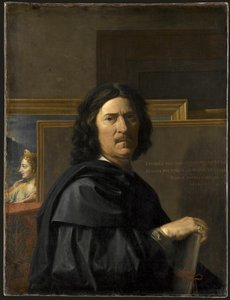
Nicolas Poussin, a name synonymous with the serene beauty of 17th-century French art, gifted us not only breathtaking landscapes and mythological scenes but also an intimate glimpse into his own creative soul – captured in his remarkably direct self-portrait. Completed around 1649 and now residing within the hallowed halls of the Musée du Louvre in Paris, this oil on canvas work transcends a simple likeness; it’s a profound meditation on art, mortality, and the artist's unwavering dedication to classical ideals. More than just a portrait, it’s a window into Poussin’s mind, revealing a man deeply engaged with his craft and profoundly aware of its significance.
The painting immediately draws the viewer in with its understated elegance. Poussin presents himself not as a grand figure, but as a thoughtful scholar seated at his workbench. Dressed in a rich, enveloping black robe – a deliberate choice echoing the formality and seriousness associated with classical antiquity – he’s bathed in soft light that illuminates his face and hands. His expression is one of quiet concentration, a subtle hint of melancholy mingling with an undeniable sense of purpose. He holds a quill pen poised above a sheet of paper, suggesting the ongoing process of creation, while an open book lies nearby, hinting at the vast reservoir of knowledge and inspiration fueling his artistic vision. The inclusion of these tools – the pen, the paper, the book – isn’t merely decorative; it's a deliberate statement about Poussin’s identity as a dedicated artist, deeply rooted in the traditions of learning and observation.
Poussin’s self-portrait is a quintessential example of his mastery of classicism, a style that dominated European art during the 17th century. Rooted in the artistic principles of ancient Greece and Rome, classicism emphasized clarity, order, and harmony – qualities Poussin sought to embody in every brushstroke. Notice the meticulous attention to detail, the carefully rendered folds of his robe, the precise lines of his features, and the balanced composition of the scene. Unlike the dramatic, emotionally charged Baroque style prevalent at the time, Poussin’s work is characterized by a sense of restraint and intellectual rigor. The use of a limited color palette – primarily blacks, browns, and subtle shades of grey – further contributes to this atmosphere of calm contemplation.
The composition itself is carefully constructed, adhering to classical principles of symmetry and proportion. The arrangement of objects within the workshop—the pen, paper, book, and even Poussin’s own posture—creates a harmonious balance that reflects his artistic philosophy. This deliberate control over form and space speaks volumes about Poussin's commitment to achieving visual perfection, mirroring the ideals he admired in ancient Greek sculpture and architecture.
Beyond its formal qualities, the self-portrait carries a poignant undercurrent of reflection on mortality. The presence of the sepulchral monument – a subtle “memento mori” or reminder of death – immediately draws attention to the fragility of human existence. Poussin’s expression, though seemingly serene, hints at an awareness of his own inevitable fate. The putti (cherubs) flanking the monument represent both innocence and the passage of time, adding another layer of complexity to the image. It's a quiet acknowledgment that even in the midst of creative endeavor, the artist is not immune to the universal human experience of loss and decay.
Nicolas Poussin’s self-portrait holds a significant place in art history, serving as a crucial bridge between the classical traditions of the past and the Neoclassical movement that emerged in the late 18th century. His work profoundly influenced Jean-Auguste-Dominique Ingres, a prominent Neoclassical painter who sought to revive the ideals of ancient Greek art. Ingres deeply admired Poussin’s meticulous technique, his emphasis on line, and his ability to evoke a sense of timeless beauty. Studying Poussin's self-portrait, one can readily see echoes of Ingres' own style—a similar restraint, a comparable focus on form, and a shared reverence for classical principles. The influence is undeniable, demonstrating the enduring power of Poussin’s artistic vision.
Today, BuyPopArt offers exquisite, hand-painted reproductions of Nicolas Poussin’s self-portrait, allowing you to bring this masterpiece into your own home or office. These meticulously crafted reproductions capture the essence of the original painting—its subtle nuances, its profound emotional depth, and its timeless beauty. Explore this iconic work alongside other stunning Poussin reproductions on our website: https://BuyPopArt.com.
1594 - 1665 , Francúzsko


Zostaňte v obraze s najnovšími správami zo sveta umenia, exkluzívnymi ponukami a nápormi na dekoráciu.
Povedzte nám o svojom projekte a naši odborníci na umenie vám pripravia 3 personalizované návrhy umeleckých diel.
Nechajte si od nás vybrať 3 možnosti priamo pre vás – zadarmo!


 Náhľad
 Odoslať
 Zdieľať
 Podrobnosti o dielo

 Stiahnuť
 Podobné diela
 RTG skúška
 Prezentácia
 Zobraziť viac